Swim Lesson Photos Without Distracting from Supervision
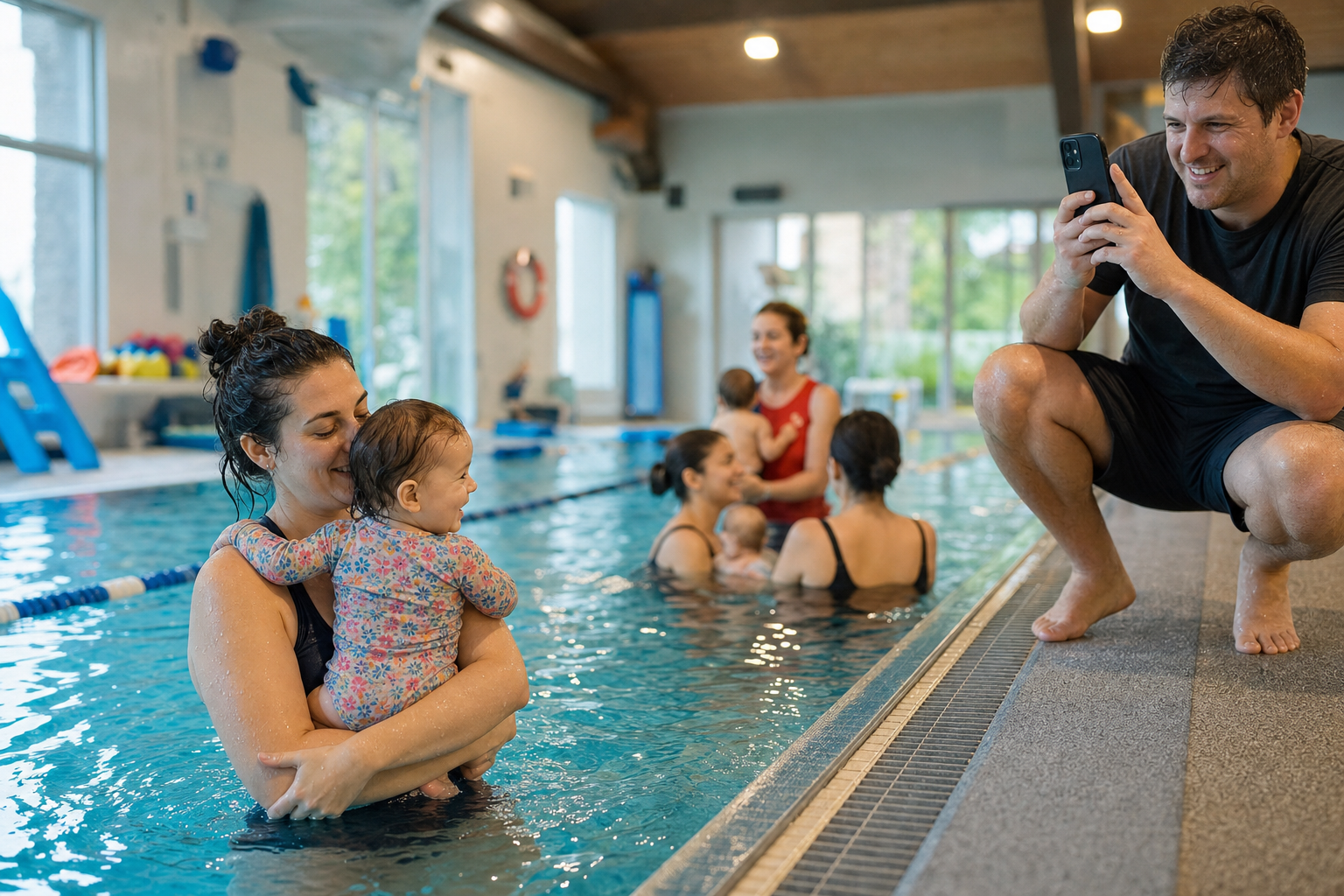
Capturing your baby’s swim milestones feels special. But trying to take photos or videos while supervising in the pool can be risky. If you’re holding a wet, slippery baby or multitasking underwater, your full attention shifts away from their safety. “Parent baby swim class pictures” should come after you’re fully hands-on—not while squeezing the shutter mid-splash.
Here’s how you can enjoy “baby swim lesson photos” safely, respect instructors, protect privacy, and avoid common pitfalls.
Why Supervision Counts More Than the Perfect Shot
Whenever infants or toddlers are in or near water—especially between birth and 36 months—experts agree that touch supervision is non-negotiable. That means you stay within arm’s reach of your child to help them immediately if needed. Indoor or outdoor, shallow or deep ends, letting go of that supervision lapse even for a moment can lead to slips, submerged eyes or nose, or worse. Certified infant-toddler swim guidelines require adult presence and qualified instructors to reduce risks.(healthychildren.org)
Holding your baby and trying to snap a photo—or worse, film—makes it harder to support their head, keep them steady, and respond fast. Plus, wet phones and slippery hands don’t mix.
Assign a Dry-Land Photographer Before Class
Rather than trying to juggle phone and baby, decide ahead of time who gets the “photo duty.” If a partner, friend, or nearby grandparent can stay dry and capture your baby’s progress, you’ll keep your full attention on supervising.
This setup doesn’t just improve safety. It also helps you avoid blocking instructors during lessons. No dropped phones, no awkward-shaking arms, no accidentally stepping into the path of the swim teacher. Everyone learns with less disruption, and you get great photos to share later.
Plan for Photo Opportunities—Without Sacrificing Safety
Swimming programs for babies often follow structured plans: warm-up time, skills like supported floating, kicking, or gentle submersion. Watching how your baby responds during class gives you moments you’ll want to capture. But save photos for breaks or when the instructor invites parents forward. Let the instructor complete their work.
If your program uses a structured routine like the 10-Week Plan, then you’ll know exactly when progression happens. You can schedule your dry-land photographer to be ready at milestone moments like the first back float, the first unassisted kick, or a confident dunk. No need to risk distraction.
[[ctababy]]
Protect Privacy—Yours and Others’
Sometimes you get caught in the frame—or worse, other children do. Posting swim pictures that show other kids without permission can cross privacy lines. Children under 13 are protected under laws like COPPA in the US, and many countries require parental consent for photos shared online.(ftc.gov)
Always blur or crop out others if you didn’t get their consent, avoid uploading metadata like location tags, and think twice before posting photos publicly. Use private social media settings or share with close family. Respect pool or class policies—often there are rules forbidding photography in changing rooms or during lessons.(cy.ico.org.uk)
Practical Tips to Stay Fully Present
Never try to take photos while cradling your baby with one hand. It reduces your ability to prevent slips or dips. Slip-resistant grip towels and swim diapers help—but they don’t replace keeping both hands free when your infant needs steadying or when unexpected waves arrive.
Observe water temperatures and class duration carefully. Babies 0–36 months have trouble regulating body temperature and fatigue quickly. That’s why classes are often limited to shorter times, and warm water is recommended.(scienceinsights.org)
If the facility has a guard, swim instructor, or staff member, communicate ahead that someone will be photographing—but only during non-instructional moments. That way the instructor can plan accordingly and keep safety central.
Final Thoughts
“Pool photo safety baby” isn’t just about blocking the sun’s glare or capturing a cute splash—it’s about keeping your little one safe and your eyes on them first. By assigning a photographer outside the water, planning photo moments rather than trying impulsively in the action, and making privacy a priority, you can document every swim lesson with joy and responsibility.
You’ll look back at those “baby swim lesson photos” with pride—and with peace of mind that you did everything safely.
120+ swimming exercises sorted by age — with video and instructions. Developed by swim instructors, completely free.

120+ swimming exercises sorted by age — with video and instructions. Developed by swim instructors, completely free.