Swim Class With Twins or Siblings: Planning Smart for Babies, Toddlers & Just One Adult
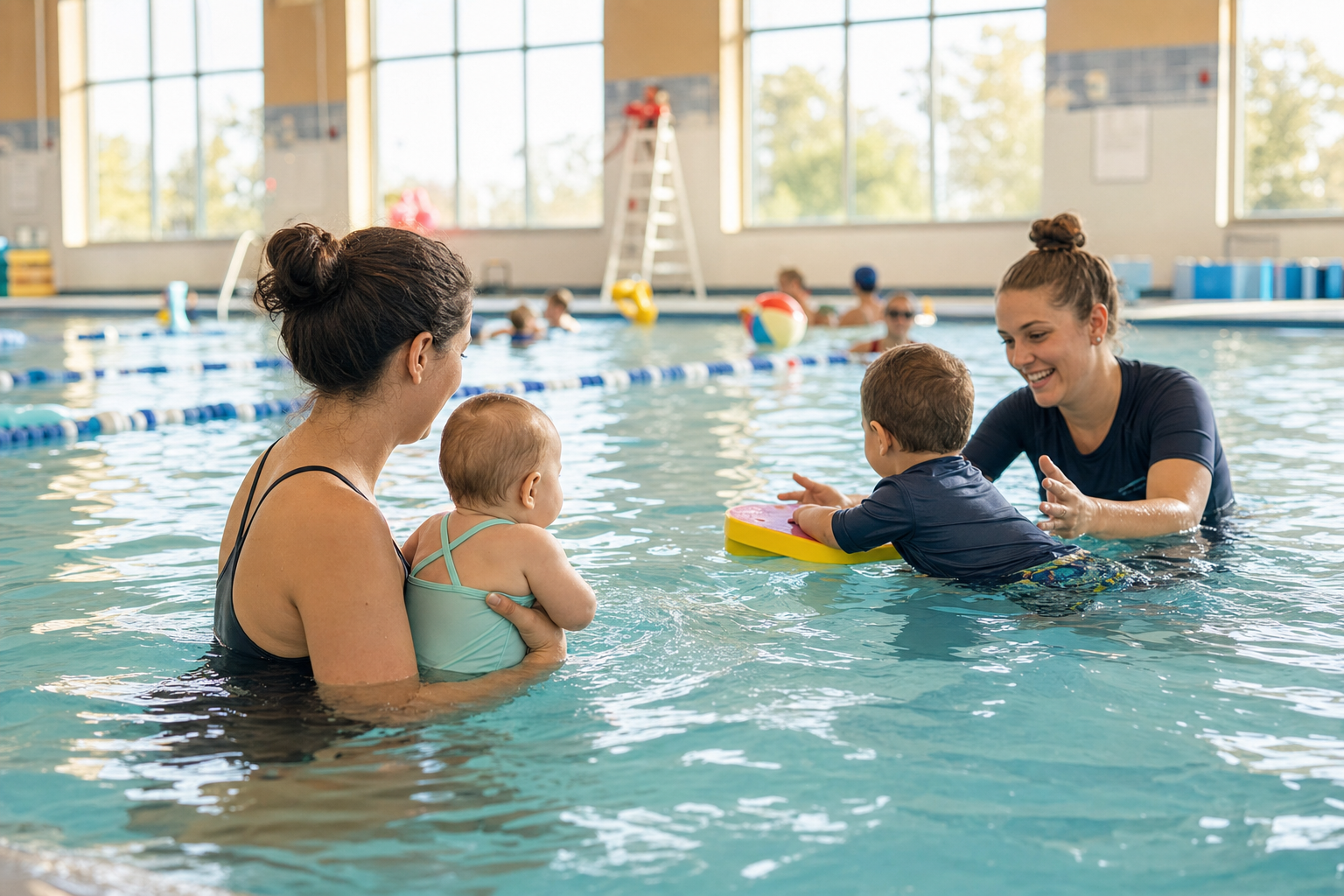
Balancing swim lessons with twins, a baby and toddler, or only one caregiver takes more planning than you might think. Safety and learning hinge on supervision, class structure, and realistic expectations—especially for infants and non-walkers. Here's your quick guide to making swim class a success in these challenging but rewarding situations.
How Much Supervision Is Safe When You Have More Than One Young Child?
When you're juggling two or more children under 36 months—non-walkers and mobile toddlers—it's tough to meet safety standards with just one adult. Many pool policies require an adult to be within arm’s length—or “arms reach”—of babies or weak swimmers at all times. For example, D.C. Parks rules state one adult can accompany only up to two children under six in water, and must stay within arms reach if they're in the pool. (dpr.dc.gov)
Tupelo Aquatic Center has a similar requirement: children 6 & under need a 1:1 adult-child ratio in the water. (swimtupelo.com) Relying on float seats or leaving one child poolside isn’t a reliable substitute. If your intended class or facility can’t confirm its caregiver-to-child ratio and expectations around support, don’t risk it—bringing another caregiver is usually essential.
Is Private or Semi-Private Swim Lessons Worth It?
Yes, for most families in your situation, private or semi-private lessons offer huge benefits. With twins or an older toddler plus a baby, group classes often limit the time the instructor can focus on each child. Private or small-group settings mean tailored support, faster skill development, and more flexibility. (inspiredswim.com)
These lessons are especially effective if one or more children are fearful, quieter by nature, or need extra help staying focused. According to local swim schools, toddlers and infants often learn safety skills faster in private contexts than in group classes where waiting turns can dominate the 30-45 minute time slot.
If private lessons are financially or logistically tough, semi-private pairings (or sibling slots) are a great compromise—but make sure both kids are similar enough in age or stage so the instructor isn’t pulled in two different directions. Seattle Swim Academy shows how combining siblings of similar skills in a single slot can work well, as long as the instructor can balance their needs. (seattleswimacademy.com)
If you want a structured way to build water confidence at home, the 10-Week Plan guides you step by step.
How to Choose Class Times & Structure Wisely
Some pitfalls are common for parents with more than one little one. Book back-to-back lessons and you’re exhausted; swap children between classes and you waste time. Instead, coordinate so there’s changing time, warm-ups, and even rest periods between swim slots.
[[ctababy]]
Also, find Parent-Child or Parent/Tot classes—designed for ages 6 months to about 3 years—so both you and your little ones are in the water together. Swimming programs like the one at Alper JCC offer formats where the ratio is explicit (private lessons 1:1, semi-private 2:1, group up to 4:1) and classes for toddlers and infants include you in the water with them. (alperjcc.org)
Bring items like swim diapers, towels, a change of clothes, snacks—and never assume float seats alone are enough. Bringing another caregiver means one adult can focus on class while the other handles prep or toddler logistics.
What Parents Should Ask Before Booking
• What is your official caregiver-to-child policy for children under 3, or non-walkers? Is one adult allowed with two infants or one infant and one toddler? If not, consider private lessons or bringing someone.
• How many children per class and how many instructors? What is the instructor-to-child ratio during water time, not counting show-and-tell or games?
• Will I be in the water? Many centers require adults with very young or weak swimmers to be in water and within arms reach. (gwrymca.org)
• What happens between classes for siblings? Is there space to change toddlers, dry off babies, and manage childcare? Are transitions fast enough that one adult isn’t overwhelmed?
• What’s the provider’s policy on flotation devices, float seats, and swim diapers? And are those safe or merely supportive?
DIY: Teaching at Home Before or Between Classes
You don’t have to rely entirely on swim school. The 10-Week Plan from Swimy.org is a great framework where parents gradually build skills with their little ones. It’s not a substitute for professional supervision, but it helps boost confidence and comfort in the water. You can integrate warm-ups, blowing bubbles, submersion games, and floating practice at bath time or in a kiddie pool while waiting for optimal swim lesson timing. 10-Week Plan
This type of home support makes formal lessons more effective once you’re in a class that’s safe and supportive of your family setup.
Swimming with twins or a baby plus toddler when you're the only adult is doable—but only if you prioritize safety, realistic supervision ratios, and formats that let each child get attention. Private or semi-private lessons, careful scheduling, and asking the right questions up front let you enjoy swim class rather than just survive it.
120+ swimming exercises sorted by age — with video and instructions. Developed by swim instructors, completely free.

120+ swimming exercises sorted by age — with video and instructions. Developed by swim instructors, completely free.