Noodle-Only Drills: Balance and Rotation Made Fun for Kids
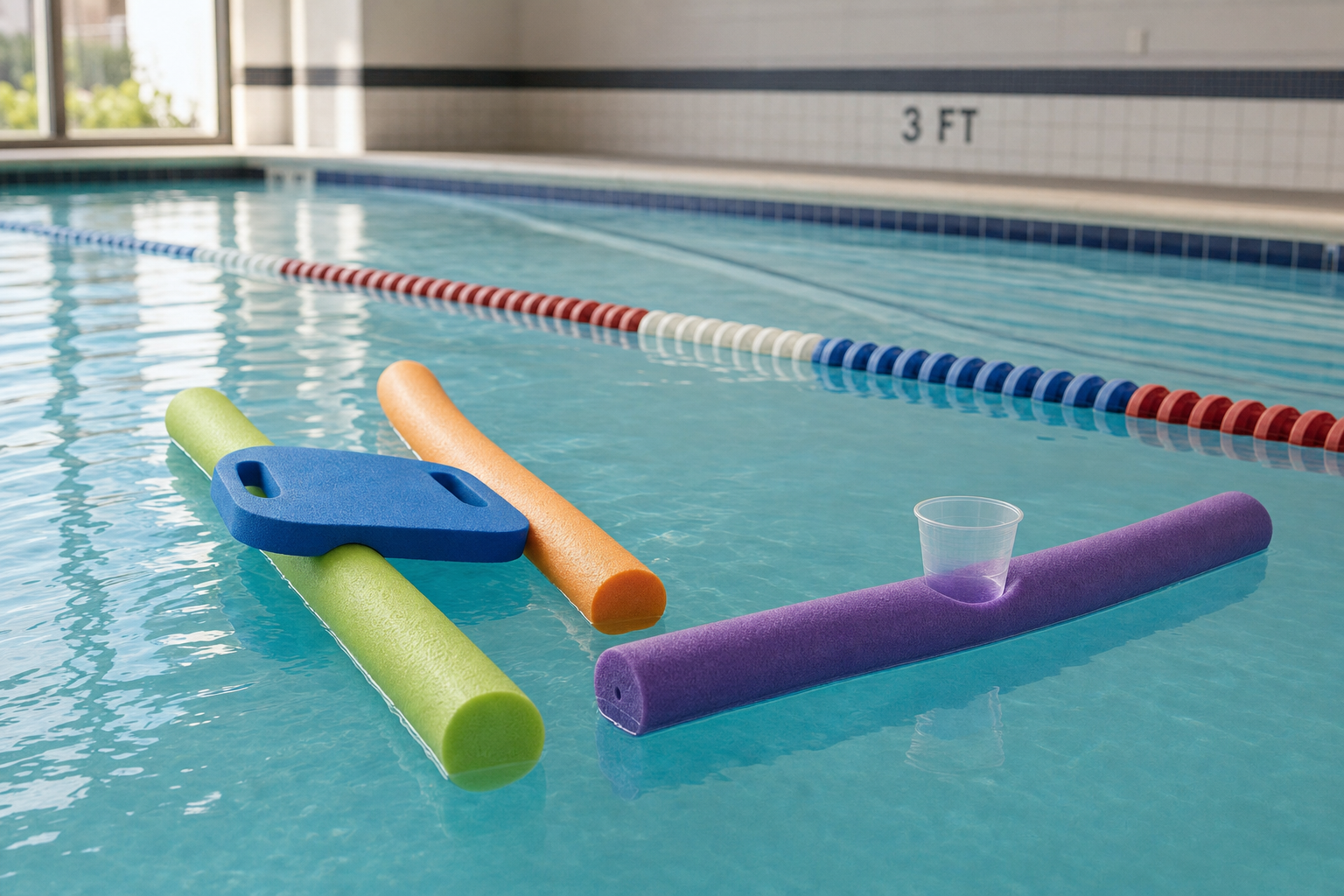
Get your child feeling confident and flowing in the water with these seven noodle-only drills that target body position, side balance, and roll control—the secret foundation for rock-solid freestyle and backstroke. Designed for ages 3-10 (adaptable to 11-12), these games build technique without making kids feel like they’re doing lessons.
Why These Skills Matter from Day One
Kids who lift their head too high end up sinking their hips; those who keep a flat body don’t rotate enough and lose power in freestyle and backstroke. Good body position means keeping the head in line, lungs supporting buoyancy, and the torso rotating along its long axis. In backstroke, legs tend to drop if the head is tilted wrong.(usms.org) These core skills let strokes flow better, speed up learning, and reduce fatigue.
Quick transition to safety: noodles are fun and helpful, but they are not life-saving devices. Always stay within arm’s-reach of non-swimmers. Use noodles as support—not as flotation reliance.(waterwisekids.com)
Seven drills follow. Each drill plays a game to teach technique under the surface: balance, rotation, and rolling. Mid-article we include how to build these into longer routines or lesson plans like the swimy.org 10-Week Plan for consistent weekly progression.(swimy.org)
Seven Playful Noodle-Only Drills
1. Streamline Glide with Noodle Under Arms
Have your child tuck a noodle under their armpits while facing down with arms extended overhead. Push off the wall and glide as far as possible without kicking. The noodle holds them up so they can feel what a straight, horizontal body feels like. Encourage relaxation—if hips drop, adjust head slightly so waterline is near the forehead. Use this for ages 4-10.
2. Supine Flutter Kick Roll
Child lies on their back with a noodle wrapped under the shoulders and arms outstretched, head resting gently back. Practice flutter kick while gently rotating from one side to the other: left arm brushes side, then right arm, eyes looking up. This builds side balance and awareness of body roll needed in freestyle and backstroke.
3. Noodle “Horsey Ride” Vertical Balance
Place a noodle between the legs or under the hips so the child straddles it like riding a horse. They must balance upright in chest-deep water while you support or stand next to them. Let them experiment with lifting one foot slightly, using arms for balance. This strengthens core balance and control.
4. Back-to-Front & Front-to-Back Rolls
Child lies on back with noodle under shoulders or neck, then rolls forward onto their front while keeping noodle steady. Then reverse back. The aim is a smooth rotation along the spine’s long axis. It helps children get used to flipping body position—useful when recovering in freestyle or changing stroke direction.
If you want a structured way to help your child progress at home, the 10-Week Plan guides you step by step.
5. Side Kick Drift
Child holds onto the noodle under one arm (side-lying position), face in water. Kick with bottom leg, and upper arm can rest along side. They drift, then switch sides. Builds hip and shoulder rotation, teaches balance on each side—key for symmetric stroke, breathing rhythm, and even hand entry.
6. Cup-On-Forehead Backstroke Challenge
Lie on back, noodle under shoulders, with a cup or soft toy resting on the forehead. Swim backstroke while trying not to drop the cup—or if it tips, roll over to front, reset, try again. Encourages head-still alignment and reduces over-lifting the chin, which otherwise causes drag. Adapt this especially to ages 6-10.
7. “Green Light / Red Light” Rotation Freeze
Call out “Green Light”: child swims freestyle or backstroke with noodle support. “Red Light”: freeze in a rotated glide on one side or float on back maintaining alignment. Helps kids notice when rotation is too little or too much, when balance shifts, and correct it. Great game to integrate into regular family swim time.
[[ctakid]]
Tips to Keep Drills Safe, Effective, and Age-Appropriate
Never let group sizes get so big that kids tangle noodles or rely more on others than on themselves. Avoid using noodles only in deep water, especially with non-swimmers—it’s dangerous if they let go. Make sure head isn’t lifted out of line; keep ears near water surface. If you see heads high, cup under forehead drills or supine floats can help reset posture.(usms.org)
Use shorter durations (5-10 minutes per drill) for younger ones. Frequently rotate through drills so attention stays fresh. Celebrate small wins: good glide, staying on side, slow controlled rollover. When kids feel success, technique sticks.
Building a Progression Around these Drills
Pair up two or three of these noodle drills each week. For example: Week 1 could be Streamline Glide, Supine Flutter Kick Roll and Noodle Horsey Ride; week 2 add Side Kick Drift and Cup-On-Forehead; as confidence grows, replace noodle support gradually until child can do the movement unaided.
If you want structure, follow the swimy.org 10-Week Plan which introduces one or two games each week, layering in drills like balance walks, streamline position, side balance so growth feels smooth and motivating.(swimy.org)
Also mix in non-noodle work: dryland core strength (e.g. planks, “superman” holds on land), breath control practice (bubble blowing under shallow water), and watching age-appropriate demo to help kids reflect on what their body should feel like.
Why These Games Work
Because learning rotation, side balance, and body alignment early gives children better freestyle and backstroke later. Research and coach guidance show that head position affects hip height; incorrect rotation wastes energy; and basic balance below the water is often overlooked until too late.(usms.org)
Noodles are simply tools to feel what ideal positions feel like—once children internalize those, strokes become cleaner, breathing smoother, speed builds naturally. And because these drills are games, kids don't resist; they enjoy the feel of gliding or floating, so real technique sneaks in.
Swimming confidence and good technique grow together. Use these swim noodle drills for kids to make balance drills swimming children grab hold of rotation and position in a playful way. Your child will swim smoother, breathe easier, and enjoy each stroke more—freestyle, backstroke and beyond.
120+ swimming exercises sorted by age — with video and instructions. Developed by swim instructors, completely free.

120+ swimming exercises sorted by age — with video and instructions. Developed by swim instructors, completely free.