Waterfalls & Gorge Pools: Why Families Should Skip the Swim
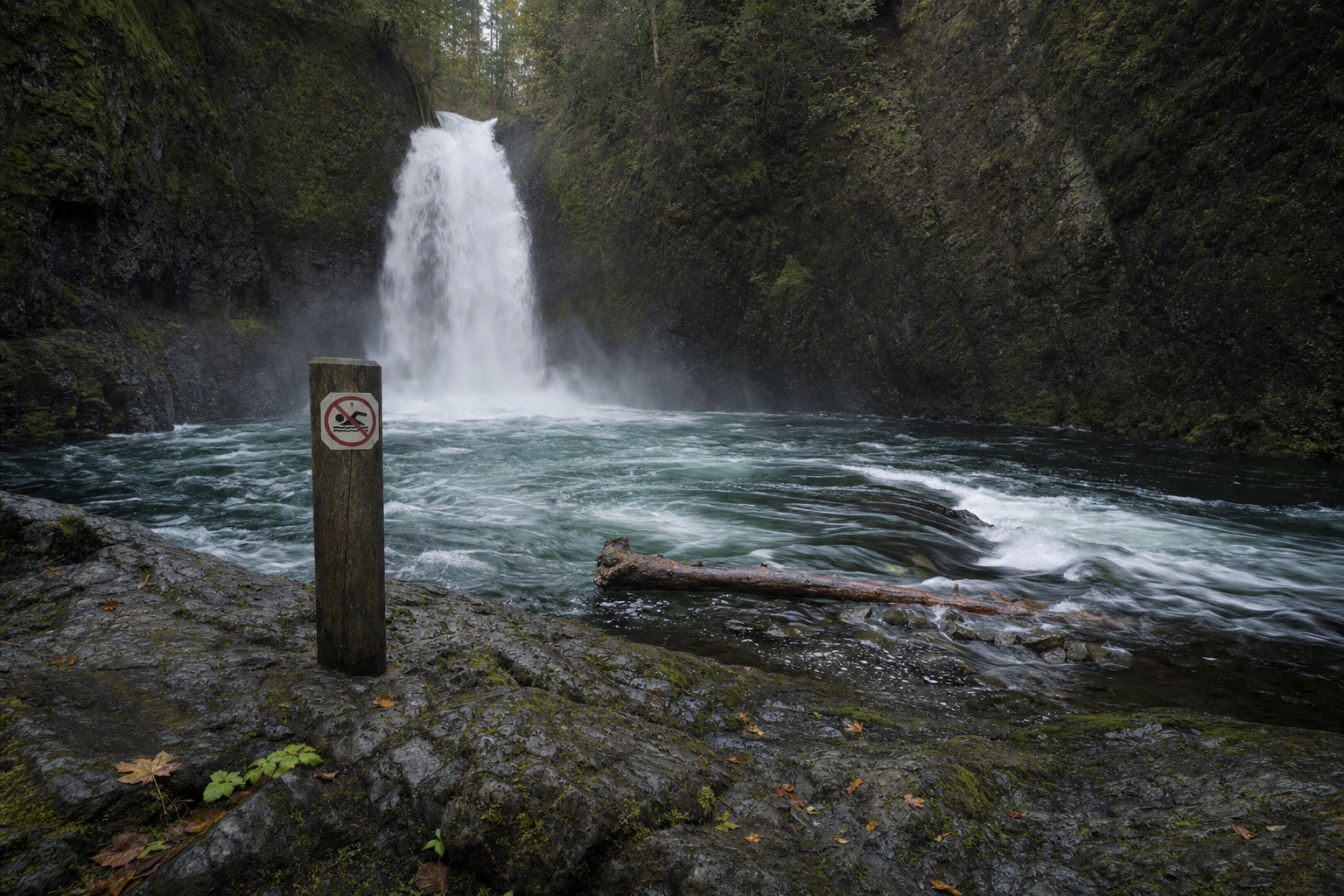
If you’re asking yourself, “Is waterfall swimming with kids safe?” the answer is often no—at least when it’s a plunge pool at the base of a waterfall or above a drop-off. Many hazards hide behind that calm surface: recirculating hydraulics, slippery rocks, sudden drop-offs. Here’s how to spot the danger, when to say no, and where to find safer alternatives this summer.
Understanding the Hidden Dangers
Recirculating Hydraulics: The Invisible Trap
Water plunging over a cliff doesn’t just fall—it pushes into the pool, then flows back under itself and pushes up again, creating a powerful loop called a hydraulic or “roller.” These recirculating currents can trap even strong swimmers by dragging them underwater repeatedly. Near low-head waterfalls or dam spillways, these hydraulic jumps are a well-known cause of fatal drownings.(damsafety.org)
Sudden Drop-Offs & Cold Shocks
A plunge pool may look shallow at the edges but often descends quickly to dangerously deep levels. You or your child might slip or misjudge heading in feet-first. Moreover, water at the bottom may be much colder—cold water shock can make breathing difficult and muscles weak, increasing drowning risk.(fs.usda.gov)
Slippery Rocks, Steep Slopes & Hidden Hazards
Rocks around waterfalls are smooth, water-wet, often covered in algae. One slip and kids—or adults—can fall onto sharp rocks or be knocked into the water. Submerged objects, uneven floors, trees, or strainers (fallen logs underwater) can trap hands, clothing or limbs. The US Forest Service warns explicitly: “slippery rocks, steep slopes and undercurrents can catch you by surprise… Don’t jump off of waterfalls. Don’t swim in waterfall pools.”(fs.usda.gov)
Red Flags Parents Should Never Ignore
When scouting a spot, watch out for these cues. If you see any, it’s time to say no—even if everyone else seems to be going in:
- Waterfall pool is directly under a falling stream of water—a hydraulic may be lurking.
- No signage or warnings about unsafe water or restricted areas.
- Sudden steep drop just below the surface; you can’t see the bottom.
- Rocks or ledges around the edge feel slippery, no safe entry or exit path.
- People jumping from heights into unknown depths (often encouraged by social media).
- New strong currents or murky water after rainfall so nearby cliffs or tributaries feed in fast.
If you want a structured way to help your child progress at home, the 10-Week Plan guides you step by step.
Seasons, Behavior & Why Social Media Lies
Summer’s heat calls everyone to streams and waterfalls. But conditions change—snowmelt, storms upriver, tide surges. One day a gorge pool looks calm; the next it is deadly. One common pitfall: copying social media videos of cliff jumps or waterfall plunges. These are often edited or showing spots with hidden support, calm water flow after dry seasons, or people trained in rescue. What looks easy and fun may hide massive danger.
[[ctakid]]
Alternatives: Where to Say Yes Instead
Here are safer ways families can enjoy nature and water, without risking waterfall plunge pool danger:
- Designated swimming areas—lifeguarded beaches, outdoor pools, or official “bathing waters.” In the UK, more than 400 bathing water spots are regularly tested for both pollution and safety risk.(environmentagency.blog.gov.uk)
- Rivers with “designated swim areas” monitored by local authorities, with signs posted, emergency access, and shallow calm zones.(watersafetyusa.org)
- Swimming lessons or programs that build water confidence. For example, the 10-Week Plan of swimy.org builds essential skills before kids are ever near natural waters; strong swim ability + education empowers safer choices.
- Wild-swimming clubs and groups with local knowledge—these can point out hazards, show safe entry/exit points, and help you assess current water conditions.(nationalwatersafety.org.uk)
Teaching Kids to choose safer spots; What Parents Can Do
To help school-aged kids (6-12) make safer decisions:
Start by teaching them what calm but dangerous water looks like versus clearly safe places. Explain what recirculating currents mean—even draw it. Make saying no (to jumping, swimming near falls) part of the family safety talk. Choose swim spots together so children see good examples.
As a parent or guardian, never allow swimming under waterfalls or above drop-offs. Always obey posted signs or closures. Supervise closely—no phone scrolling, no distractions. If there are life jackets available, use them. It’s okay to be the only one who says no.
Safety Checklist for Natural Water Adventures
Before heading out, run through this mental checklist: Is the spot a designated swim area with signs and lifeguards? Can you see the bottom or judge depth safely? Are there clear exit points? Is the waterfall causing turbulence, foam, hiss of fast water? Are rocks dry or slippery? Has there been recent rain upstream? Do you have ways to call for help or someone outside who knows where you are?
Let’s be clear: waterfall swimming with kids safe? Only in very specific conditions, with proper supervision, shallow calm water, no drop-offs, and every hazard controlled. But in typical plunge pools and gorge settings, the danger is real: hydraulics grabbing, sudden plunges, rocks waiting. Skip it. Go instead to supervised sites, teach your kids what danger looks like, and build their swim skills so they always spot signs that mean “NO.” Safety first makes for a summer full of fun—not tragedy.
120+ swimming exercises sorted by age — with video and instructions. Developed by swim instructors, completely free.

120+ swimming exercises sorted by age — with video and instructions. Developed by swim instructors, completely free.