When Baby Gets Cold in the Pool: Spotting Distress & Taking Action
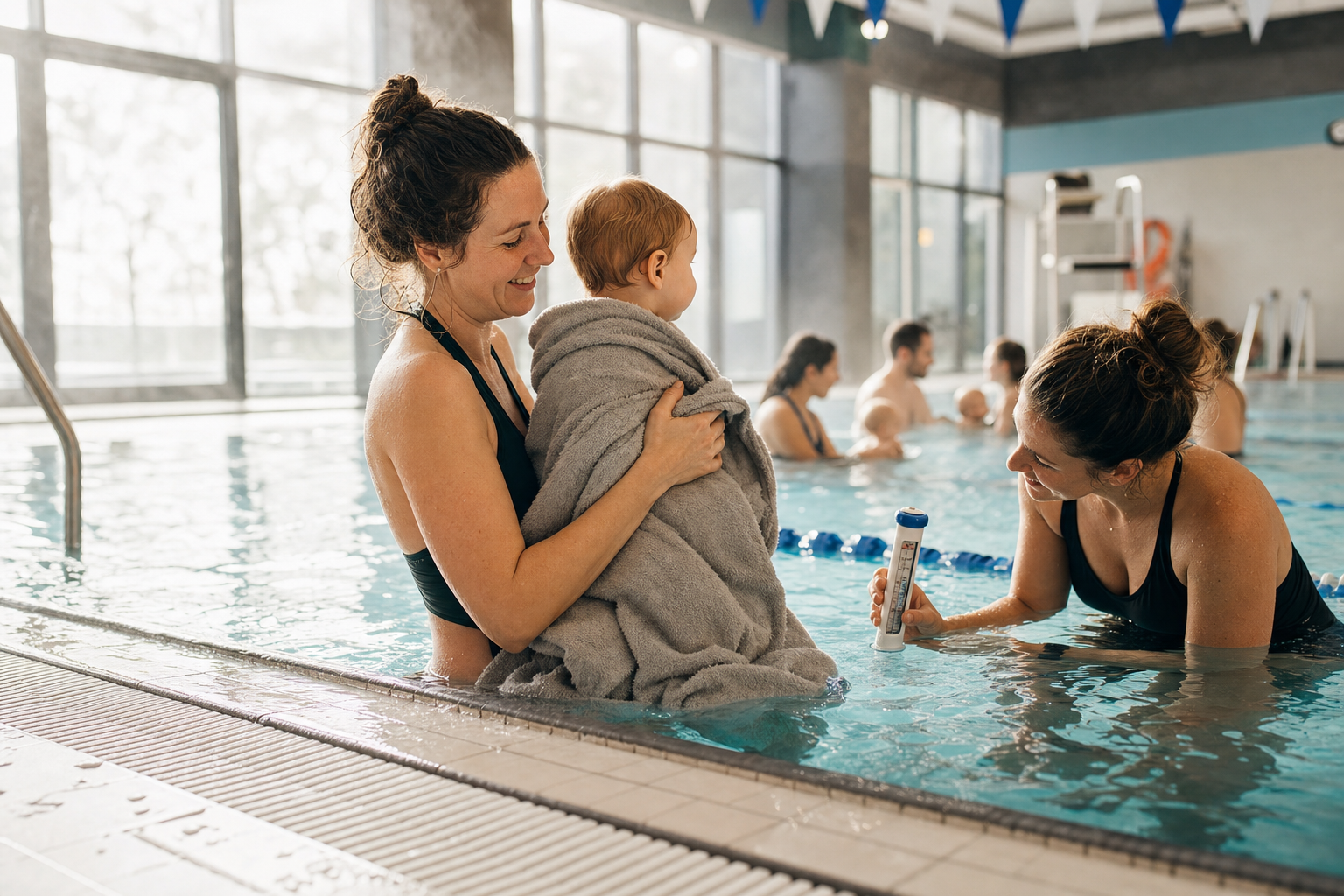
When you’re at the pool with your baby or young toddler (0–36 months), it helps to know exactly when they’re too cold, overstimulated, or ready to leave the water. Babies regulate temperature much less well than adults, so understanding warning signs and managing warm pools, short sessions, and recovery routines can make swimming safe and fun.
What’s the Right Pool Temperature for Baby?
Pools used with little ones—especially first swims, winter lessons, or outdoor/public pools—should be much warmer than typical adult pools. Experts and organizations like HealthyChildren.org recommend water between 87°F and 94°F (30.5°C–34.5°C) for infants and toddlers under age three.(healthychildren.org) Water cooler than that—say, 78°F or 80°F—feels fine to adults but can chill a baby quickly.(boystownpediatrics.org) Very warm pools and especially hot tubs (above about 100°F) are also unsafe for babies.(healthline.com)
When taking your little one to swim classes, outdoor public pools, or experiencing cool days, aim for that 87–94°F sweet spot to avoid sudden cold stress. Warm, shallow pools are best. And for structured programs, following something like the 10-Week Plan from swimy.org can help you build comfort and learn signs of distress gradually.(scienceinsights.org)
Recognizing Signs Your Baby Is Too Cold, Overstimulated or Ready to Exit
Babies can’t tell us with words when they’re chilling—or when the fun’s gone too far. These are expert-recommended cues to watch out for:
- Shivering, chattering teeth, or trembling limbs. If these appear in the water (or shortly after), body heat is being lost fast.(health.clevelandclinic.org)
- Skin that looks cold, pale, blotchy, or even bluish—especially on lips, fingers, toes. Fingertips or lips turning blue are strong warning signs.(boystownpediatrics.org)
- Fussiness, irritability, or crying—instead of being playful and engaged. Overstimulation can go hand in hand with being too cold.(health.clevelandclinic.org)
- Lethargy or reduced motor activity. If your toddler stops kicking or splashing, seems heavy in your arms, or hard to rouse, it’s time out.(babywellnessfoundation.org)
If you want a structured way to build water confidence at home, the 10-Week Plan guides you step by step.
These signs can escalate into more serious distress if ignored. Hypothermia in babies can develop quickly; shivering is an early response, but if it gets worse, or if your baby displays confusion, extreme sleepiness, or blueness in skin or lips, seek medical attention.(cdc.gov)
[[ctababy]]
How Long Should Swim Sessions Be?
Short and sweet is the rule. Even with warm pool temperature, limit swim time to 30 minutes or fewer especially for babies under one year.(boystownpediatrics.org) First swims should be even shorter—10-15 minutes to begin with.(healthline.com) As babies grow, you can gently increase time as long as all cues above are absent and the environment remains warm. Outdoor pools and public facilities often struggle to maintain heat, so keep sessions tighter and monitor for cold air or breeze that may chill baby after leaving the water.
How to Prep, Recover & Keep the Fun Going
To reduce risk of getting cold in the pool, here are expert-backed practices you can use:
• Check pool temperature ahead of swimming. Always test water with your hand or elbow; if it feels cool to you, it’s too cool for baby.(healthline.com)
• Keep recovery gear ready: towels (big ones), warm dry clothes, hats, and perhaps even a warm blanket. As soon as you leave the water, wrap baby well and minimize wet skin exposure.
• Between swims, warm spaces matter. If the pool area has cool air, make sure there’s somewhere warm and draft-free to rest. Wind and wetness combine to drop body temperature after exiting water.(parentingmentor.com)
• Gear helps: snug swim diapers, baby wetsuits or swim caps can offer extra insulation. Sun shirts help outdoors not just for sun but for wind and splash protection.
• Follow age-appropriate program guidelines. For babies and toddlers, look for swim lessons held in pools heated to the 87–94°F range.(healthychildren.org) Always use high quality supervision: “touch supervision” (you stay within arm’s reach of your child) is non-negotiable at this age.
Bottom Line: Safety First, Comfort Always
Baby cold in pool situations happen fast—but they’re preventable. Aim for warm pool temperature (87–94°F), watch for warning signs like shivering, blue lips, or fussiness, keep sessions short, and recover quick with towels and warm clothes. Babies love water, but they also need protection from overstimulation and cold stress. If in doubt, get out early. A calm short swim builds happy memories far better than a long chilled one that ends in tears.
120+ swimming exercises sorted by age — with video and instructions. Developed by swim instructors, completely free.

120+ swimming exercises sorted by age — with video and instructions. Developed by swim instructors, completely free.