Rescue Gear Every Baby Pool Needs: Safety Checklist for Ages 0–36 Months
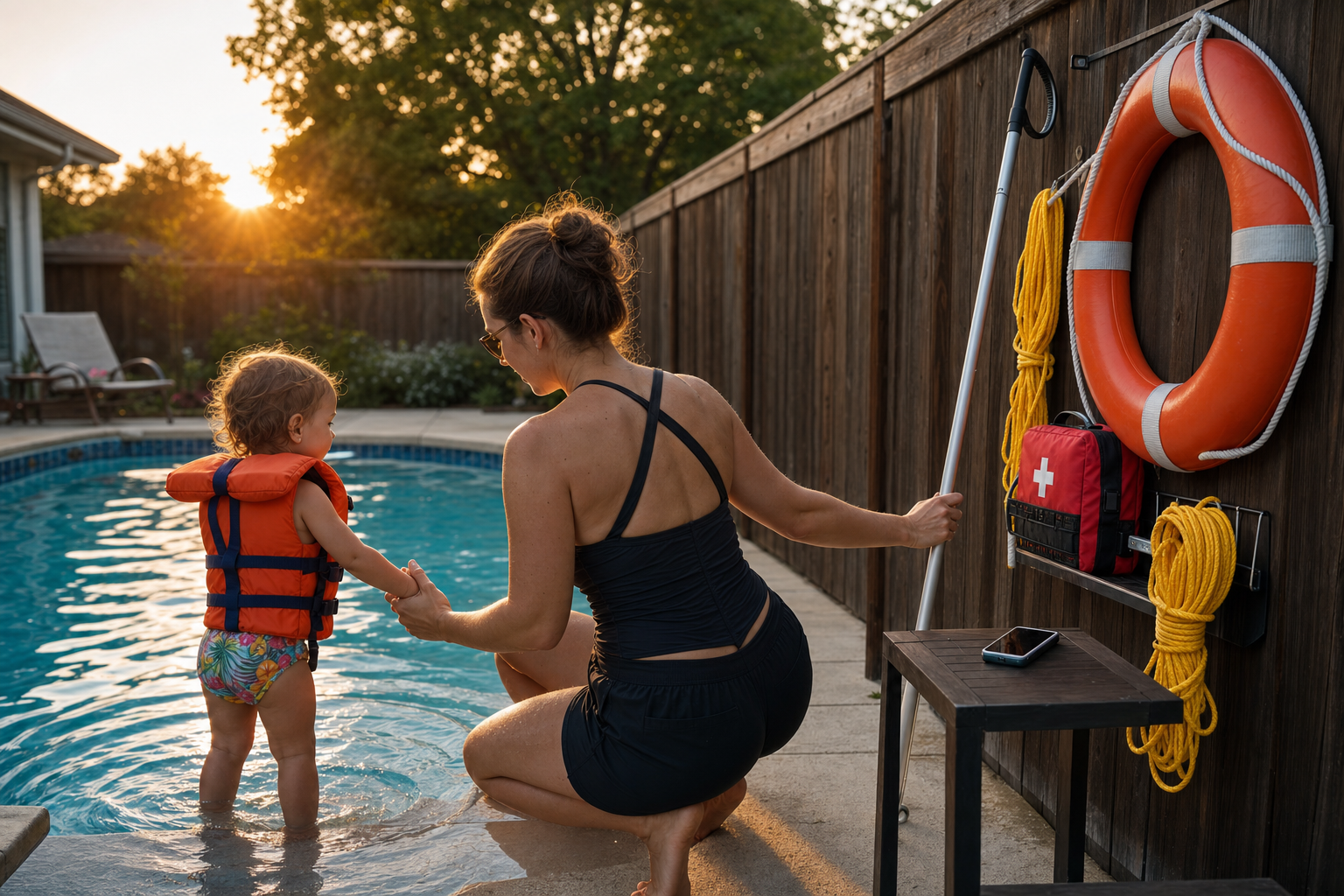
Your baby’s safety around water depends on having rescue gear ready before dipping toes into the pool. Every item should be within reach, not locked away in a shed or garage. Parents, here’s what you need poolside for ages 0–36 months to react fast, stay calm, and keep your child safe.
What Must Be Within Reach
Phone and Emergency Contacts: A fully charged phone is non-negotiable. You should have local emergency numbers posted where anyone using the pool can see them. In the US that might be 9-1-1; in the UK it’s 999. Having that info visible and your phone poolside means you don’t waste seconds when it matters most. According to the Red Cross, a telephone kept poolside with emergency numbers posted by it is part of basic home pool safety. Red Cross also emphasizes that children and adults alike should know when and how to call for help. (redcross.org)
Reaching Pole or Shepherd’s Crook: Get one strong and long enough so you can reach the centre of your pool without stepping into the water. A reaching pole lets you pull a child up without putting yourself at risk. The American Red Cross lists reaching equipment—such as a pole or hook—as essential rescue gear. RLSS UK also says a reach pole helps in serious emergencies. (redcross.ai)
Throw Aid (Ring, Rope, or Buoy): For toddlers who cannot swim or lose balance, a throw aid thrown to them is lifesaving. A throw line, buoy ring, or other floating device gives them something to hold while you pull them in. Don’t overlook having ropes with brightly colored throw bags attached—Red Cross includes throwing equipment in its pool safety checker. (redcross.ai)
Life Jackets or Coast Guard/U.K.-approved Floatation Devices: When toddlers or babies are near water, always have proper floatation gear. These aren’t just cute accessories. They’re lifesavers. Make sure the device is certified, fits properly, and never assume a life jacket replaces supervision. Red Cross guidelines demand close, active supervision even when children wear floats. (redcross.org)
If you want a structured way to build water confidence at home, the 10-Week Plan guides you step by step.
First Aid Kit + Basic Skills: An accessible first aid kit with items like bandages, antiseptic, gloves (PPE), scissors, and gauze should be within arms reach. Equally important is knowing how to use it. At least one adult should be trained in infant/child CPR and first aid—and be ready to act. The Red Cross’s manuals make clear that CPR and first aid are not optional but essential parts of home pool safety. (redcross.org)
[[ctababy]]
Practiced Plan from a Safe Spot: Gear alone isn’t enough. Every adult in your home pool routine should know exactly what to do in an emergency: who grabs the reaching pole, who calls for help, who cares for the child. Practice the plan so everyone acts without hesitation. Red Cross and RLSS UK both say having an emergency action plan plus supervision is vital. (rlss.org.uk)
Bringing It All Together With Regular Practice
Since toddlers change fast, and pools bring risks every time someone swims, mix rescue gear with action. Use the American Red Cross advice and your gear to build a small “rescue station” by the pool: phone, pole, throw aid, life jackets, emergency numbers, first aid kit—all stored in obviously visible spots. Red Cross even outlines how to build a safety post that organizes throw rings, reaching poles, the kit, and emergency info all in one place. (redcross.ai)
Training makes a huge difference. Parents can take classes in CPR, water safety, and first aid. Following a structured program like the 10-Week Plan at swimy.org helps parents gain confidence in handling pool emergencies. It walks you through gear placement, rescue techniques, and drills so you feel less panic, more action.
Common Mistakes to Avoid
Buying pool safety equipment and then storing it in a locked shed or forgetting it exists is pointless. If a reaching pole or throw ring is tucked away, it’s useless in a panic. Parents tell stories of fetching gear from garages while a toddler struggles. Keep the gear poolside, visible, weather-protected—but not hidden.
Letting kids play with rescue tools is tempting, but those tools aren’t toys. A reaching pole used incorrectly can knock over a child; ropes become strangulation hazards. Only adults should handle them. Store tools safely when pool is being supervised, and teach children the tools are for emergencies only.
Assuming rescue gear replaces CPR or supervision is dangerous. No matter how good the gear is, it doesn’t replace a grown-up keeping eyes on a baby at arm’s reach. Both Red Cross and RLSS UK stress that active supervision plus rescue equipment equals safer pools. (rlss.org.uk)
Summary: Your Checklist Before Baby Enters the Water
Here’s a quick memory jog you can run through every swim time: ensure your phone is poolside and emergency numbers are posted; reaching pole and throw aid in fixed, visible spots; life jackets ready and fitting; first aid kit filled and accessible; someone sober supervising; a practiced adult action plan in place. These steps might take minutes to maintain, but they can save a life.
Keep your rescue gear real, ready, and respected—and you’ll turn pool time into safe time.
120+ swimming exercises sorted by age — with video and instructions. Developed by swim instructors, completely free.

120+ swimming exercises sorted by age — with video and instructions. Developed by swim instructors, completely free.