Stroke Bingo: Fun Sets That Teach Real Skills
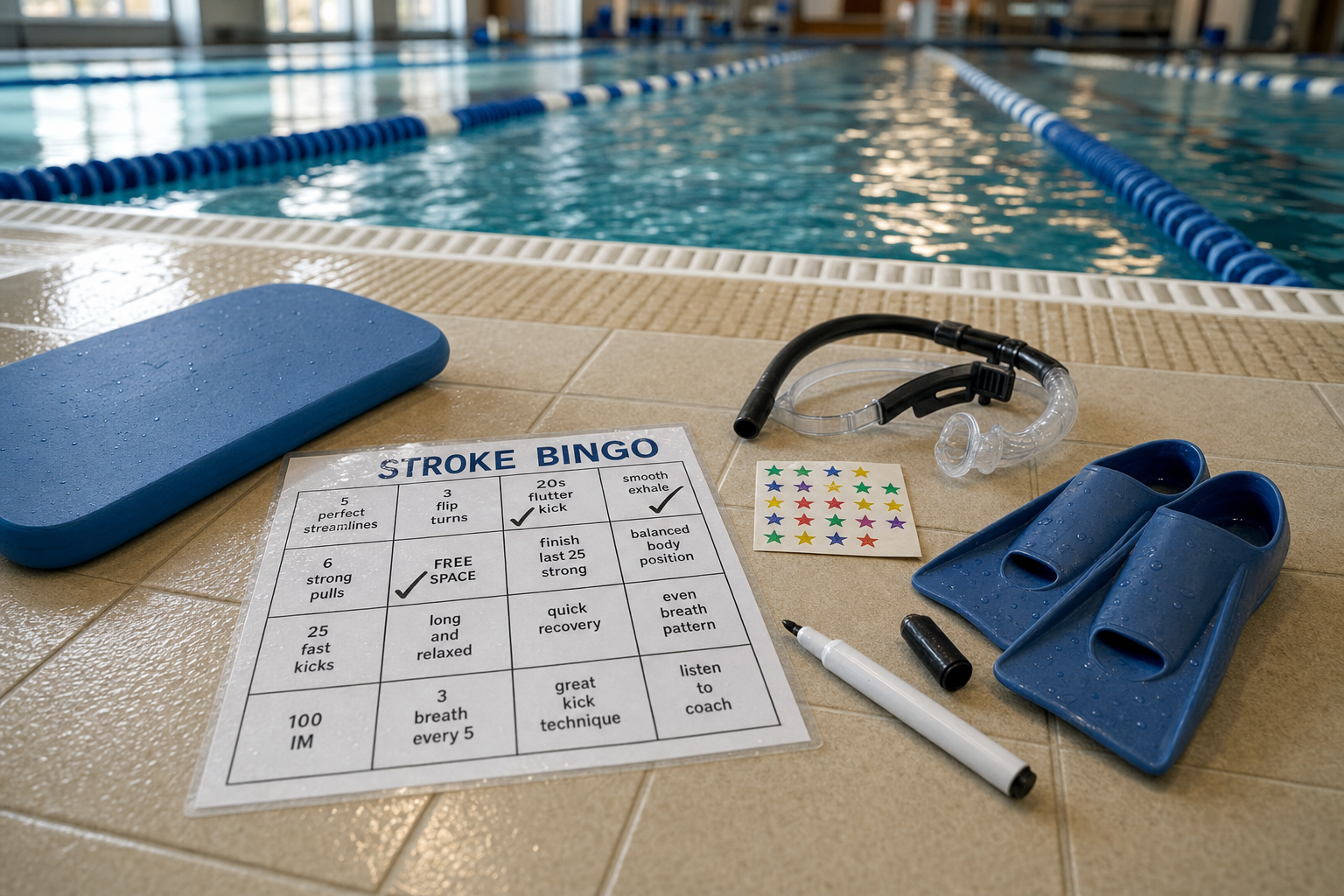
Every parent wants swim practice that sticks. What if your child could “win” at the pool not by being the fastest, but by mastering five perfect streamlines or completing three tidy turns? That’s the power of turning technique goals into a game board using stroke bingo—a swim game that teaches kids aged 5-10 to build good stroke habits.
What Is Stroke Bingo & Why It Works
Stroke Bingo is a fun, goal-based board for swim practice. Instead of laps or time, children get tasks: “do five perfect streamlines,” “perform three flip turns,” “flutter kick 20 seconds,” or “exhale underwater smoothly.” Each task completed earns a square. Fill five in a row? They win a small prize or treat. The magic here is scoring technique first—not speed or distance. According to expert advice, prioritizing form helps avoid bad habits that become hard to fix later. (ocaquatics.com)
Participation stays high when kids feel like the owners of their progress. Stroke Bingo lets parents gamify practice between weekly lessons. You don’t need fancy equipment—just a marker board, simple swim drills you’ve learned in lessons, and a clear technique checklist.
How to Build Your Stroke Bingo Board
Begin your board by selecting 9-or-16 tasks related to stroke technique: streamlines, turns, glides, balanced body position, breathing, kick drills. Each square is a small, achievable goal. Include a couple of challenges – not so hard they frustrate, but enough to push better technique.
To further level up, align your board with drills from reliable swimming guides. Resources like “Top Swim Drills for Kids” show how focused drills—catch-up freestyle, side-kick, one-arm backstroke—help shape stroke efficiency and coordination without overemphasizing speed. (ocaquatics.com) If you want a full plan to guide equipment use, timed goals, and weekly progressions, check the 10-Week Plan that outlines how to weave technique work into regular swim sessions. It’s a helpful roadmap for enriching stroke bingo practice. “10-Week Plan”
Sample Bingo Square Ideas by Skill
Streamline off a push-off—arms tight over head, body straight. Five of them in a row earns one square. Three tidy turns using proper flip or open-turn form count another. Excellent exhalation under water—bubbles steady and continuous—for fifteen seconds checks another. Add balanced flutter kicks while keeping hips near surface, or backstroke arms that don’t cross centerline. These skill drills mirror those Coaches use for stroke correction in Age-Group swimmers. (swimcoaching.com)
[[ctakid]]
Practice Safety & Age-Appropriate Tips
For ages 5-6 who are newer to swimming, always stay in the shallow end. An adult should be within arm’s reach at all times. Ages 7-10 can move into deeper water gradually as they gain confidence and ability, but still practice turns where feet can still touch the bottom if needed. Never allow games that push kids to exhaust themselves trying to win—I’ve seen kids rush through streamlines, dropping form just to win. That’s exactly what we want to avoid.
When & Where to Play Stroke Bingo
Use Stroke Bingo year-round. School holidays are a golden opportunity: more sessions, less rush. Home pools, local community pools, even indoor pools in colder weather work well. Each practice session can last 20-30 minutes, two to three times per week—these regular short bursts are more effective than long, infrequent sessions. (ocaquatics.com)
Pick a few squares to work on each session rather than trying to do all at once. As kids master skills, cycle in new ones: once turns are solid, add breathing technique or streamline hold time. Celebrate wins with stickers, extra play time, or letting the child design the next board.
Avoiding Common Pitfalls
One big mistake parents tend to make is rewarding speed or distance over perfect form. Make sure every square has technique-based criteria: what counts as “perfect streamline,” or a “tidy turn,” for example. Use video or mirrors at the pool, or ask swim instructors to show exactly what correct form looks like so kids know what to aim for.
Another pitfall is overusing swimming aids before technique is ready. Training aids like fins, kickboards, snorkels are helpful—but only when the child’s stroke shape and body position are already foundational. Wearing them too much can mask errors instead of correcting them. (swimy.org)
Don’t push too many tasks in one session; fatigue leads to sloppy technique. Also, celebrate progress even if a child doesn’t “win” the bingo—skill gain matters more than filling rows.
Stroke Bingo gives kids ages 5 to 10 something tangible to aim for, turning swim practice into a game where they win at getting better—not just faster. Parents gain clear ways to reinforce lessons, and kids enjoy the process. No special gear. Just a board, consistency, safety, and a focus on technique. Start your board this week and watch stroke habits improve between lessons like magic.
120+ swimming exercises sorted by age — with video and instructions. Developed by swim instructors, completely free.

120+ swimming exercises sorted by age — with video and instructions. Developed by swim instructors, completely free.