Adaptive Swim Options for Neurodiverse Kids Ages 3–12
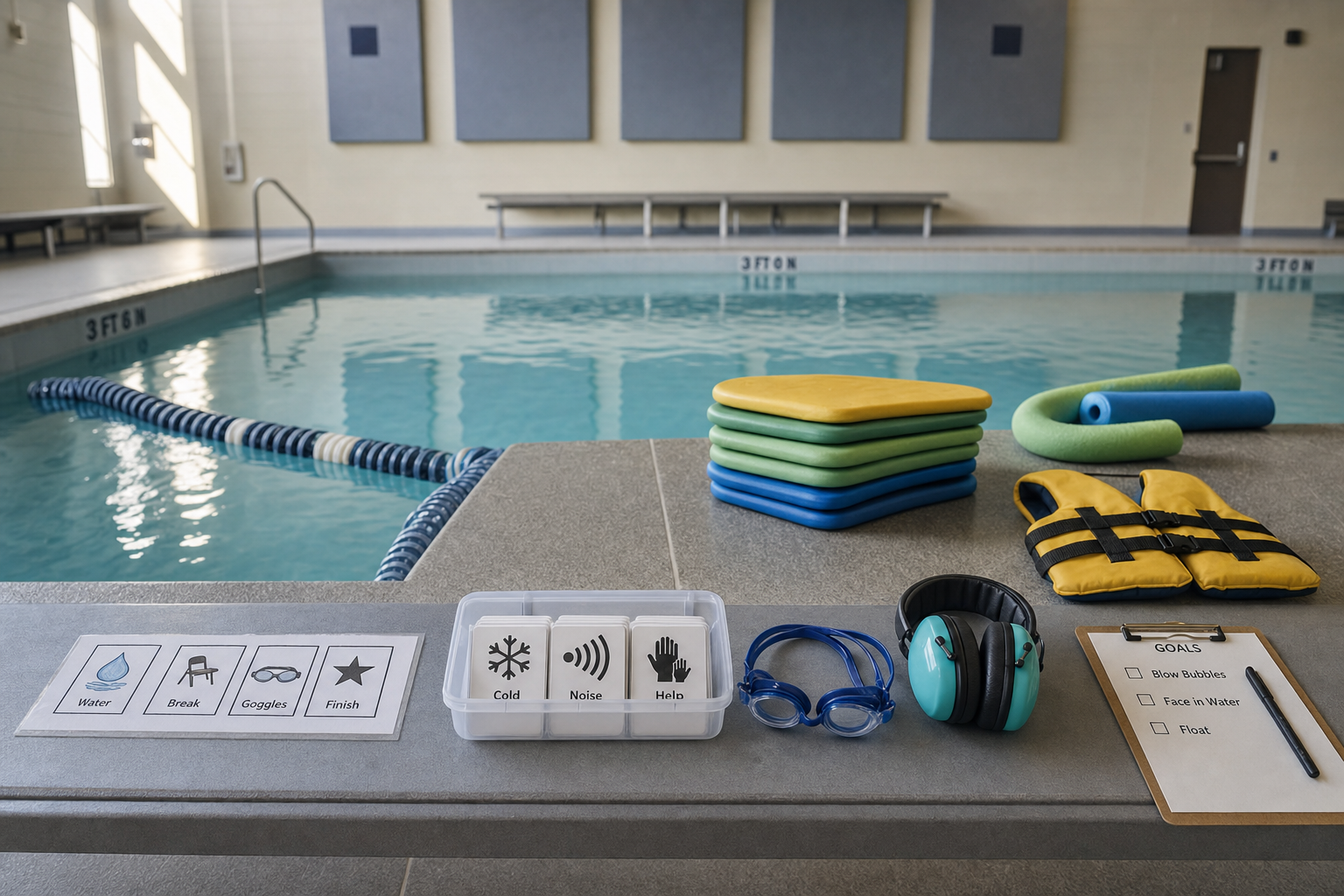
If you’re a parent of a child with autism, ADHD, or sensory differences, you likely want swim lessons that go beyond “just teaching strokes.” The best programs give your child both comfort and competence in the water, while helping you become an effective advocate for support that speeds progress. Here’s how to spot or shape adaptive swim lessons that work—what to demand, avoid, and expect in the journey.
Choosing the Right Instructor & Training Matters Most
Your child deserves more than a standard swim teacher. Seek instructors who’ve done specialized adaptive swim training—for example, the Swim Whisperers® Certification trains instructors to notice nonverbal cues, work with sensory overload, and adapt pool settings to meet each swimmer’s needs.(weaquatics.com) You should also ask whether they have credentials like Adapted Aquatics Certification via the Starfish Aquatics Institute, which covers autism, ADHD, behavior strategies, and safety modifications.(adaptedaquatics.carrd.co) If an instructor or swim school can tell you exactly which training they’ve had and show proof of experience, that’s a strong indicator of quality.
Lesson structure is equally important. Prioritize one-to-one or very small group lessons (no more than three or four students per instructor) so your child gets individual attention and the teacher can adjust in real time. Gradual submersion, minimal sensory input early on, and predictable routines should all be part of the plan. Avoid large classes where attention is split and sensory triggers are harder to manage.
Design of Lessons: Visuals, Routine & Sensory Support
Kids with neurodiversity often respond well to visuals, predictable structures, and routines that don’t surprise them. Programs that use communication cards or visual schedules help immensely—if your child is nonverbal or processing differently, this can let them say whether they're cold, need a break, or feel overwhelmed.(weaquatics.com) Also useful are picture storyboards of each lesson segment, regular cueing, and letting the child know what comes next so they feel safe and prepared.
Sensory differences show up in many ways—some kids dislike water on their faces or noises echoing in indoor pools. Make sure your swim school can adjust the environment (lower volume, calm lighting or quieter pool spaces), offer short warm-up periods, and let the student move at their own pace. Forgetting this can lead to overload, shutdowns, or avoidance—not rapid desensitization.
Parent Involvement & Goal-Setting Speeds Progress
You, as the parent, are a critical team member. Don’t skip goal setting. At the outset, meet with the instructor to talk about where your child is already, where you want them to go—and how you'll measure progress. Goals might range from putting face in water, blowing bubbles, floating or basic strokes. Shared goals make it easier to celebrate small wins, adjust when progress stalls, and avoid frustration.
If you want a structured way to help your child progress at home, the 10-Week Plan guides you step by step.
Many programs—like iCan Swim—use frequent assessments (for example, beginning and end of an intensive week) and volunteer or caregiver support in lessons.(pmc.ncbi.nlm.nih.gov) You can learn from these models: ask if your child’s program offers regular check-ins so you can track improvement in comfort, confidence, and skills. Also, ask whether the program allows caregivers or parents to stay nearby during lessons or review what was done, so you can reinforce skills at home throughout the week.
[[ctakid]]
Safety & Avoiding Common Pitfalls
Safety comes first. Always demand instructors trained in water safety, trained for behavior crises or sensory meltdowns, and equipped to supervise small groups safely. Lessons should allow for gradual submersion, never forcing dunking or underwater holds without complete readiness. Avoid sensory overload by limiting stimuli—start with shallow water, low noise, and avoid putting water in ears or face until the child requests or tolerates it.
Beware of two big pitfalls. First, expecting desensitization to happen fast. Kids with sensory sensitivity often need much more time to adjust to water on body or face. Pushing too hard too fast backfires. Second, skipping parent-instructor goal setting. If everyone just “goes with the flow,” progress is hard to measure, and support for specific needs hard to request.
Programs That Model Best Practices
Several examples stand out. WeAquatics, in partnership with Swim Angelfish®, trains instructors to use adaptive techniques for autism, ADHD, sensory processing differences, and more, including using communication cards and modifying lessons for nonverbal learners.(weaquatics.com) iCan Swim, a US-based program, runs a five-day adapted learn-to-swim camp with trained instructors, small groups, visual supports, behavior strategies, safety equipment, and regular progress tracking.(pmc.ncbi.nlm.nih.gov) Sea Otter Swim Lessons offers a 1:1 adaptive swim program for special needs learners that protects from overload and gives focused support.(seaotterswim.com) These are great benchmarks to compare any local option against.
Your Role as Advocate & What You Can Do
You can help shape your child’s swim experience in powerful ways. Ask prospective schools or instructors:
What training do you have in autism swim lessons, sensory integration, ADHD-friendly teaching?
What group size or ratio will my child have?
How will visuals and routines be used in lessons?
What is your plan for gradual submersion and sensory exposure?
Let them know your child's comfort level, sensory triggers, and what aids work at home or with other therapists. Also explore resources like swimy.org’s 10-Week Plan, which helps parents teach basic swimming to their children.(learn.autism-swim.org) Use these plans to reinforce instructor-led lessons. Be patient with progress—comfort and competence often grow slowly but steadily with consistent supports.
Final Thoughts & Encouragement
Adaptive swimming for kids isn’t about pushing to “learn strokes fast”—it’s about fostering safety, confidence, competence, and joy. When you choose a swimmobile that truly understands neurodiversity, trains instructors well, uses visuals and routine, keeps group sizes small, and involves you in goal-setting, your child gets the best chance to love water rather than fear it. Celebrate each step: the eye opening of bubbles, the first float, the moment they dive in (even just their face). Every moment counts towards water safety and confidence for life.
120+ swimming exercises sorted by age — with video and instructions. Developed by swim instructors, completely free.

120+ swimming exercises sorted by age — with video and instructions. Developed by swim instructors, completely free.