Surface Dives for Kids: Pike, Tuck, and Pencil—Safely Taught
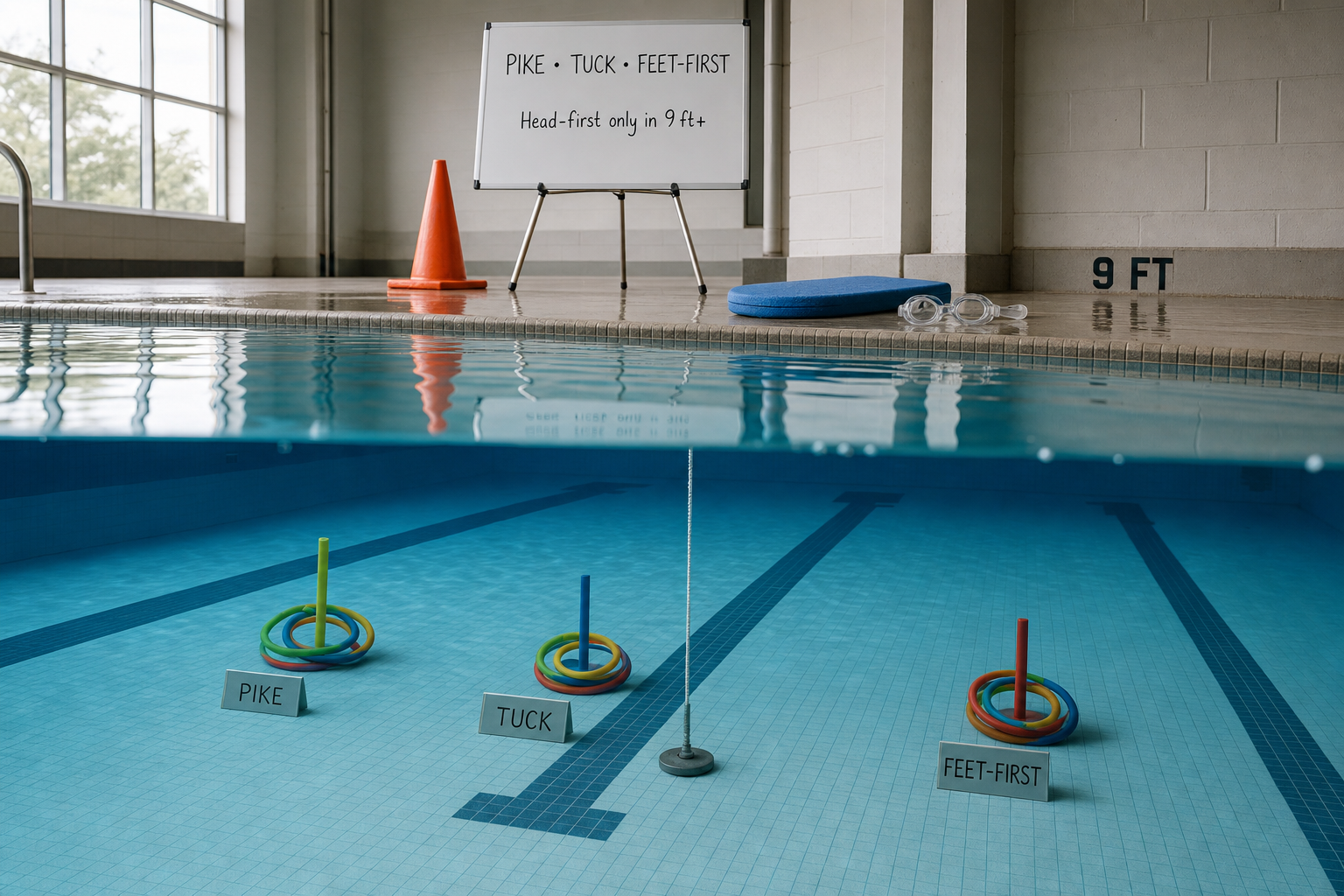
Want your child to retrieve a toy from the pool bottom with control and confidence? Teaching surface dives like the pike, tuck, and feet-first (or pencil dive) can lay a foundation not only for fun but for lifesaving skills.
How to Teach Surface Dive: Pike, Tuck, Pencil
Pike Dive for Kids (Head-First, Legs Straight)
Start with forward swimming motion. As your child reaches for deeper water, instruct them to bend at the waist until their upper body points toward the pool floor. Then lift the legs straight into the air and dive downward, hands first. This is the pike surface dive. It uses the weight of the legs up top to force the upper body back down. Their body should stay straight, legs together and toes pointed. This helps them dive efficiently and safely. Surface Dive guides show that both pike and tuck dives use momentum, body position, and then a downward thrust full of control. (scuba-tutor.com)
Tuck Dive (Head-First, Legs Bent)
Tuck is slightly easier for many kids. Instead of raising straight legs, the knees come toward the chest before extending upward. Tell your child to sweep arms back, bend knees in, tuck the chin to the chest, then drive arms forward, extending legs to propel downward toward the bottom. Like with pike, control and form matter: keeping the head protected by squeezing it between the arms during entry and descent guards against injury. (filestore.scouting.org)
Pencil or Feet-First Dive (for Depth Check, Safer Entry)
When depth is uncertain, feet-first is the safest choice. Starting upright, arms reach outward, legs together. Use a scissors kick with arms pushing down through the water to lift the body slightly out, then let body weight bring the child down. The head stays submerged as far as needed. This move is great when clarity is low, or you’re unsure about depth or objects below. (filestore.scouting.org)
Turning Object Retrieval Into Confidence
Retrieving toys from the bottom—or a safe target—gives kids confidence. Start by placing a sinking toy just a little bit deeper than they can comfortably reach. Encourage them to try a feet-first or gentle tuck dive toward it, with depth checks and a clear target. When they can do that reliably, slowly increase the depth and complexity: first simple legs bent, then more pike shape. Sign up for a structured approach—swimy.org’s “10-Week Plan” provides step-by-step skills over time to help children build comfort underwater and progress to surface dives safely. (swimy.org)
If you want a structured way to help your child progress at home, the 10-Week Plan guides you step by step.
[[ctakid]]
Safety Rules You Can’t Skip
Never let a child dive head-first unless they are fully supervised, the water is clear, and you know it’s deep enough. Many authorities—including the Red Cross—recommend at least 9 feet of water for any head-first dive from the pool deck. (rbfcu.org) If depth is unknown or visibility is poor, feet-first or pencil dives are the default. Never dive into shallow water. (health.ny.gov) Always have a responsible adult as a designated water watcher. (chp.edu)
Common Pitfalls & How to Avoid Them
A frequent mistake is diving at too sharp an angle and running out of air before resurfacing. How to prevent that? Make sure kids take one or two deep breaths before diving downward, keep the angle mild, and practice in shallow to moderate depths before adding challenge. Always pair each underwater effort with a recovery back to the surface. Teach them to push off the bottom or swim upward rather than trying to stay underwater too long. Depth limits, clear targets, and giving them permission to surface whenever they need to—these all reduce risk. (traillifeny1613.com)
Benefits Beyond Fun
Once kids master surface dives, they gain more than just retrieving toys. Surface dives build breath control, body alignment, and comfort in water deeper than they usually handle. Those skills help in snorkeling, swimming across deeper pool zones, and can be foundational in lifesaving skills—knowing how to go down safely to rescue or recover someone, or how to reach submerged objects without panicking. Over time, you’ll see greater control, bigger confidence, and better safety awareness.
Practice Tips for Ages 6-12
Begin in clear water where the depth is known. For kids in the 6-8 range, start close—use pool steps or edges. Use colourful sink-toys at visible depths. As comfort grows, gradually move into deeper water zones. Remind them to protect their head, especially during head-first entries. Practice seasonally, year-round in a pool is best, especially before snorkel or ocean events. Make it a warm-up activity to get comfortable, calm breathing, and strong streamlines.
Final Takeaways for Parents
Teaching surface dives—pike, tuck, pencil—is teaching more than just swimming: it’s teaching safety, confidence, control, and some lifesaving foundations. Be strict about depth: only head-first where clearly safe, use feet-first otherwise. Always supervise closely. Start near the target. Build up gradually. With consistency, your child ages 6-12 can gain both the skill and poise that transfer across waters—and maybe even save a life.
120+ swimming exercises sorted by age — with video and instructions. Developed by swim instructors, completely free.

120+ swimming exercises sorted by age — with video and instructions. Developed by swim instructors, completely free.