Poolside Meds Plan for Kids: EpiPens, Inhalers & Low‑Glucose—Your Swim‑Safe Checklist
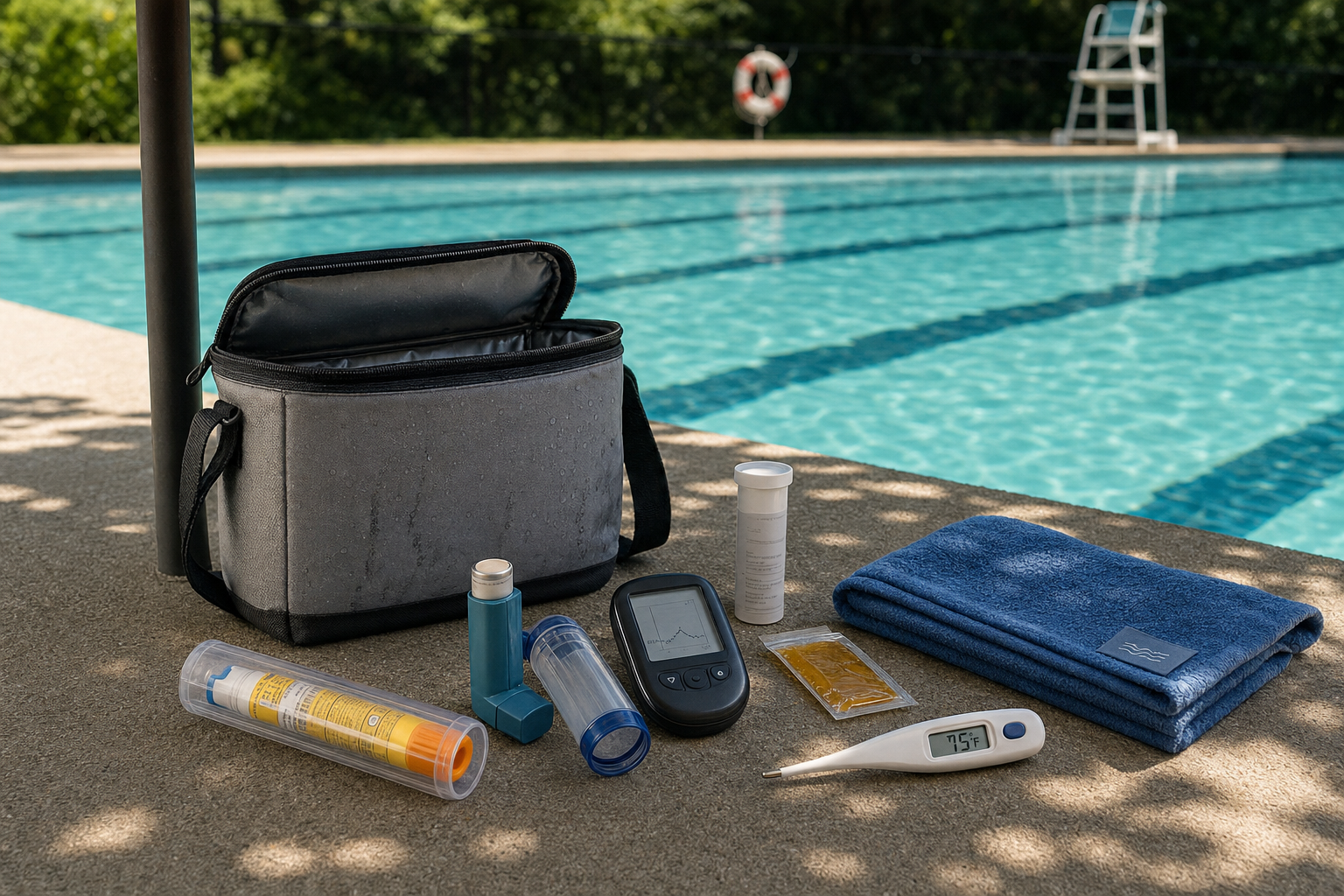
If your 5- or 7-year-old has asthma, a food allergy, or diabetes, swim days are full of fun—and risk. Here’s what you must know right now to build a heat-safe, quick-access medical kit that keeps children aged 3-12 safe while splashing in the pool, at swim meets, or on hot summer days.
How to Store EpiPens and Inhalers in Heat
First, keep emergency meds effective in the summer sun. EpiPens must be stored at room temperature: 20-25°C (68-77°F), with permitted short-time exposure to slightly higher or lower temperatures, between 15-30°C (59-86°F). Do not refrigerate them. Always leave them in their protective carrier tube and shield them from direct sunlight and light damage.(dailymed.nlm.nih.gov) Inhalers are also vulnerable: extreme heat can damage their propellants, cause them to burst, or alter doses. Never leave inhalers in locked cars or under deck chairs where temps soar. Implement storage in shade or in an insulated container.(cdc.gov)
Low-Glucose Risk When Swimming
Swimming is great exercise but for kids with diabetes on insulin, it can trigger hypoglycemia (low blood sugar) during, or even long after, activity. Before heading to the pool, check blood glucose. If it's below target (often below ~100 mg/dL for many kids), give fast-acting carbs like juice or glucose tablets.(diabetes.org) After swimming, re-check. Blood sugar can drop hours later, especially overnight. Plan accordingly with snacks and dosage adjustments.(diabetesjournals.org)
Want a simple plan that builds swim strength and safety for kids? The 10-Week Plan from Swimy.org offers swim training tips, habits and routines that can be paired with medical planning to boost confidence and safety.(ispad.org)
Building Your Poolside Med Kit & Storage Strategy
Here’s how to pack and store your essential meds so nothing fails when your child might need it most.
First, choose a durable, portable case with insulation—like a small cooler bag or a neoprene pouches. Inside, keep the following clearly labeled: one EpiPen in its carrier tube, an inhaler, extra spacers if needed, a glucose meter or CGM receiver, and fast-acting carbohydrates like glucose tables or honey packs. Always include a small wet/dry towel to wipe hands or moisture that could impact sensors or labels.
If you want a structured way to help your child progress at home, the 10-Week Plan guides you step by step.
Next, control the temperature: keep the kit in shade by the pool, never in direct sun or inside a closed car. If the kit has cooling packs, keep them wrapped so they don't freeze the inhaler or EpiPen during periods of low external temperature, while still keeping the overall pouch between about 60-85°F (15-30°C). Replace glass or metal cooling packs with fabric covers to prevent sharp cold spots. Also avoid internal condensation. Always carry a thermometer or temperature-monitor insert if possible.
Placement & Access: Where and Who
[[ctakid]]
Placement matters: the medical kit should be kept poolside, visible and unlocked, not in distant lockers or deep bags. Assign a reliable adult—coach, swim instructor, babysitter—to be the designated “meds guardian.” They need to know where the kit is, how to use each item, recognize signs of asthma attack, anaphylaxis, or hypoglycemia, and how to contact emergency services.
Bring two kits if possible—one by the water, one dry near shade—to cover wet conditions where labels or packaging might degrade. Make sure EpiPens are clipped to a bag strap or belt so they aren’t buried under towels or gear.
Communicating with Staff and Sitters
Staff and sitters are your team. Before the first swim day, walk them through:
- What triggers the child has: allergens, asthma triggers (chlorine? sweat? heat?), patterns for low blood sugar.
- How to use each emergency item: training EpiPen, inhaler technique, how to read CGM or check glucose.
- What symptoms to look for: wheezing, hives, dizziness, confusion, lethargy.
- Emergency protocol: when to use epinephrine, when to call 911, when to treat low blood sugar.
Always write these instructions out on the child’s medical action plan. Leave a photocopy with the facility or sitter, another in the pool bag. That way even on meet days you’re covered.
Key Safety Pitfalls to Avoid
One of the worst mistakes is leaving medications in hot cars. Temperatures in locked vehicles under sun can exceed 110°F (43°C), completely out of safe range for EpiPens or inhalers.(cdc.gov) Don’t leave the kit in lockers that trap heat, especially glass-edged ones near poolside; plastic tubs under sun can cook meds inside.
Another pitfall: letting glucose drop without prevention. Kids can’t always verbalize the early signs of low blood sugar. Skipping snack before a long swim set can lead to sudden hypoglycemia. Also watch for post-swim lows—that walk home or bedtime rest might bring another drop.
Finally, don’t ignore facility policy. Some pool venues require meds to be registered or locked in, or require staff training. Check ahead so you integrate your kit plan with how the pool operates.
Season & Swim Meets: Extra Tips
Summer heat spikes midday; swim meets often run early morning or late afternoon—still plan for heat stress and sun damage. Dress child in UV-protective clothing, apply waterproof sunscreen often, and ensure hydration—fluid affects blood sugar stability. Bring spare medications: inhalers and EpiPens can fail if storage window was breached or if device was used once. Replace them if solution in EpiPen turns pink, brown, or cloudy.(dailymed.nlm.nih.gov)
Swim meets often mean more excitement, more exertion, more risk of hypoglycemia during breaks between races. Carry fast carbs in easy-access pockets. Train child to self-recognize symptoms: sweating, hunger, behavior changes.
Swimming is a joy for kids, even with asthma, allergies, or diabetes—when you've got a solid meds plan. Store EpiPens between 68-77°F, keep inhalers safe from heat, pack carbs, brief everyone involved, and always keep emergency tools in reach. If you make these habits part of every swim day, your child enjoys the water—and you enjoy peace of mind.
120+ swimming exercises sorted by age — with video and instructions. Developed by swim instructors, completely free.

120+ swimming exercises sorted by age — with video and instructions. Developed by swim instructors, completely free.