How Smart Pool Monitors Help Parents Protect Babies Before They Swim
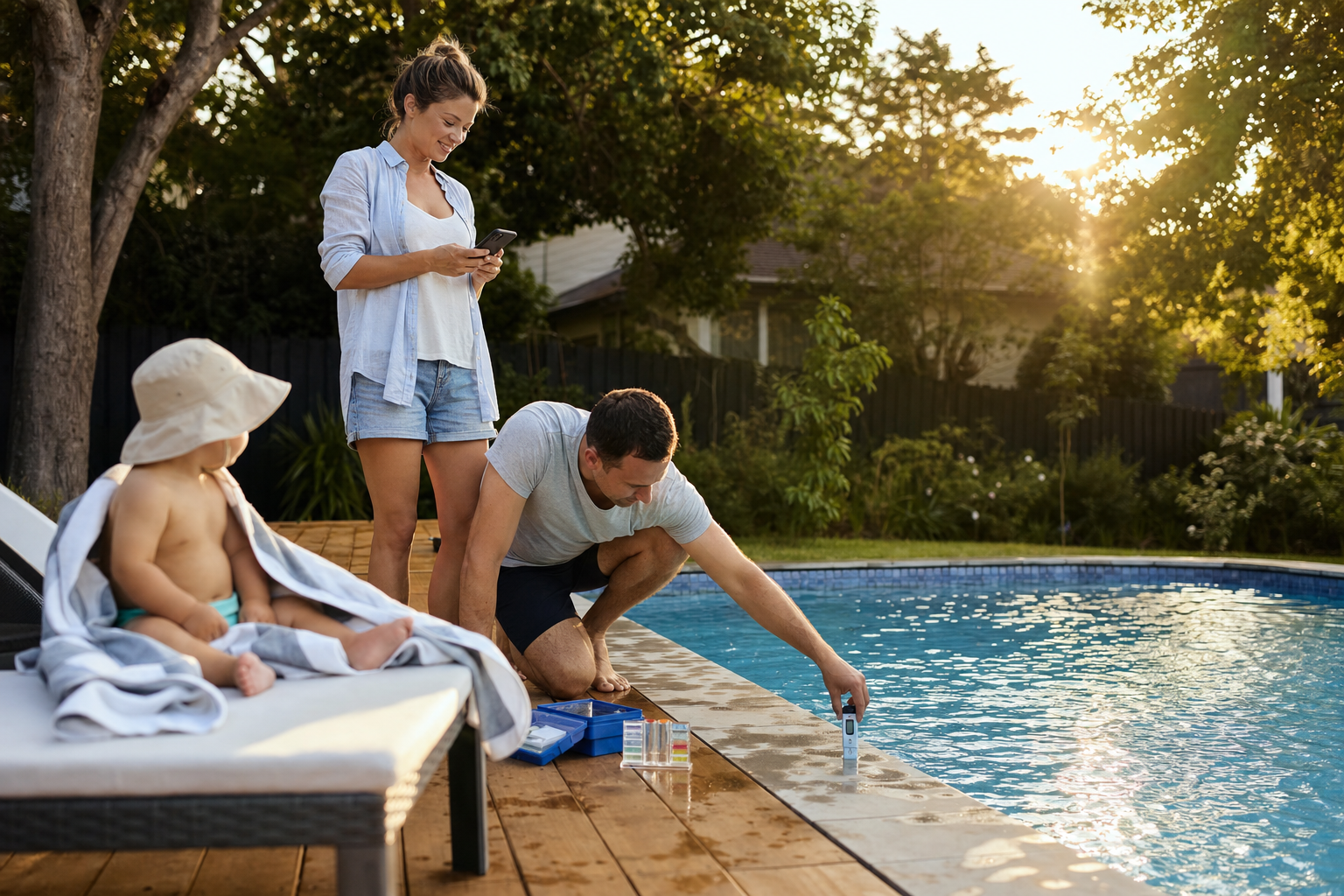
Getting your baby into the pool is magical—but only if the water is safe. Smart pool monitor apps and sensors track chemistry like chlorine, pH, salt, temperature every minute or hour. They show whether the water meets important safety ranges and alert you when things drift. But app readings alone aren't always enough. Parents need to use smart pool monitor baby tools as prompts to double-check directly—especially when babies aged 0-36 months are involved.
What Safe Levels Look Like for Tiny Swimmers
Experts agree: pool water for babies should have a chlorine level between 1.0-3.0 ppm when it’s a residential or family pool, with pH held at around 7.2-7.8. These ranges allow chlorine or similar disinfectants to kill germs without burning baby skin and eyes or damaging pool gear. If pH drifts above 8.0, chlorine becomes less effective; under 7.0, it can cause irritation. The CDC stresses home pool owners must “regularly check the chlorine concentration and pH of the water” to protect swimmers. (cdc.gov)
Temperature matters as much as chemistry. For infants, water should feel warm, not cold. Many guidelines suggest pools warmed to at least 82-86°F (about 28-30°C) are comfortable for toddlers and babies. Cool water saps heat quickly from little bodies, leading to chills, discomfort, or worse. (cdc.gov)
How to Use Smart Readings as Triggers—Not Guarantees
Smart chemical monitors do amazing work: sending notifications, showing pH, chlorine, ORP, salt levels in real time. Devices like ICO offer hourly data for chlorine, pH and disinfection levels; apps like Blueriiot and others bring continuous monitoring into your palm. (escaperobotic.com)
But there are situations when readings can mislead. Heavy rainfall, sunlight, debris, or recent chemical dosing can throw off sensors or dilute chlorine. Power outages or sensor damage may cause readings to bounce wildly. After such events, always use a manual test kit or take a sample to a pool professional—not just rely on the app. Monitoring should prompt action: it tells you when to re-test, adjust chemicals, or warm the pool.
If you want a structured way to build water confidence at home, the 10-Week Plan guides you step by step.
Around the midpoint of your pool care cycle—roughly 30-60% through your swimming season—you might consider enrolling in a structured approach to balance regular testing, temperature checks, and safe swim breaks. Programs like the “10-Week Plan” from swimy.org help parents develop routines of app-checking, manual verification, and scheduling warmer water times.
[[ctababy]]
Tips for Parents: Steps to Take Before Baby Gets In
First, check the app: does the chlorine fall within 1-3 ppm? Is pH between 7.2-7.8? Is the temperature warm enough—ideally 82-86°F (28-30°C)? If all lights green, move to verification. Dip a test strip or use liquid test kits to confirm free chlorine and pH. Feel the water with your elbow or a pool thermometer to detect if it's cooler than expected.
If reading is off: do not take baby in. If chlorine is too low, germs could thrive; if too high, skin or eyes may sting. High pH lowers disinfectant efficiency. If water is too cold, baby’s body loses heat fast. After heavy rain or when many people have used the pool, boost chlorine and retest. Store pool chemicals safely—away from children—and always follow label directions and manufacturer specs. CDC warns that mishandling pool chemicals causes thousands of injuries each year in children and teens. (cdc.gov)
Real Risks to Be Aware Of
Smart apps don’t prevent chemical storage accidents, sensor failures, or sudden temperature drops in shade-covered pools. Babies can suffer from skin irritation, eye stinging, respiratory discomfort if chlorine is too high or pH out of range. Cold water exposure can lead to hypothermia quickly. According to Boyd’s Town early childhood recommendations, infants under six months do better in pools heated to at least 89.6°F and swim time under 30 minutes. (boystownhospital.org)
Also, baby immune systems are immature. When free chlorine dips too low, certain germs like Cryptosporidium can persist for days. The CDC points out that both disinfectant and pH must be within safe ranges at least twice daily, and more often during heavy pool use. (cdc.gov)
Takeaway: Use Technology + Parental Judgement
In short: smart pool monitor baby tools are powerful reference systems. They reduce guesswork and give alerts. But they don’t replace hands-on checking. For babies 0-36 months, you need to use app readings as prompts: verify with manual tests, monitor temperature carefully, store chemicals safely, skip swimming if water looks unsafe. Pair real data with active judgement. That combo helps keep little ones safe, comfy, and smiling in the water.
When smart monitoring meets responsible testing and thoughtful care, home pools become places of joy—not risk—for babies and toddlers.
120+ swimming exercises sorted by age — with video and instructions. Developed by swim instructors, completely free.

120+ swimming exercises sorted by age — with video and instructions. Developed by swim instructors, completely free.