How to Shift Toddlers from Upright to Horizontal Swimming
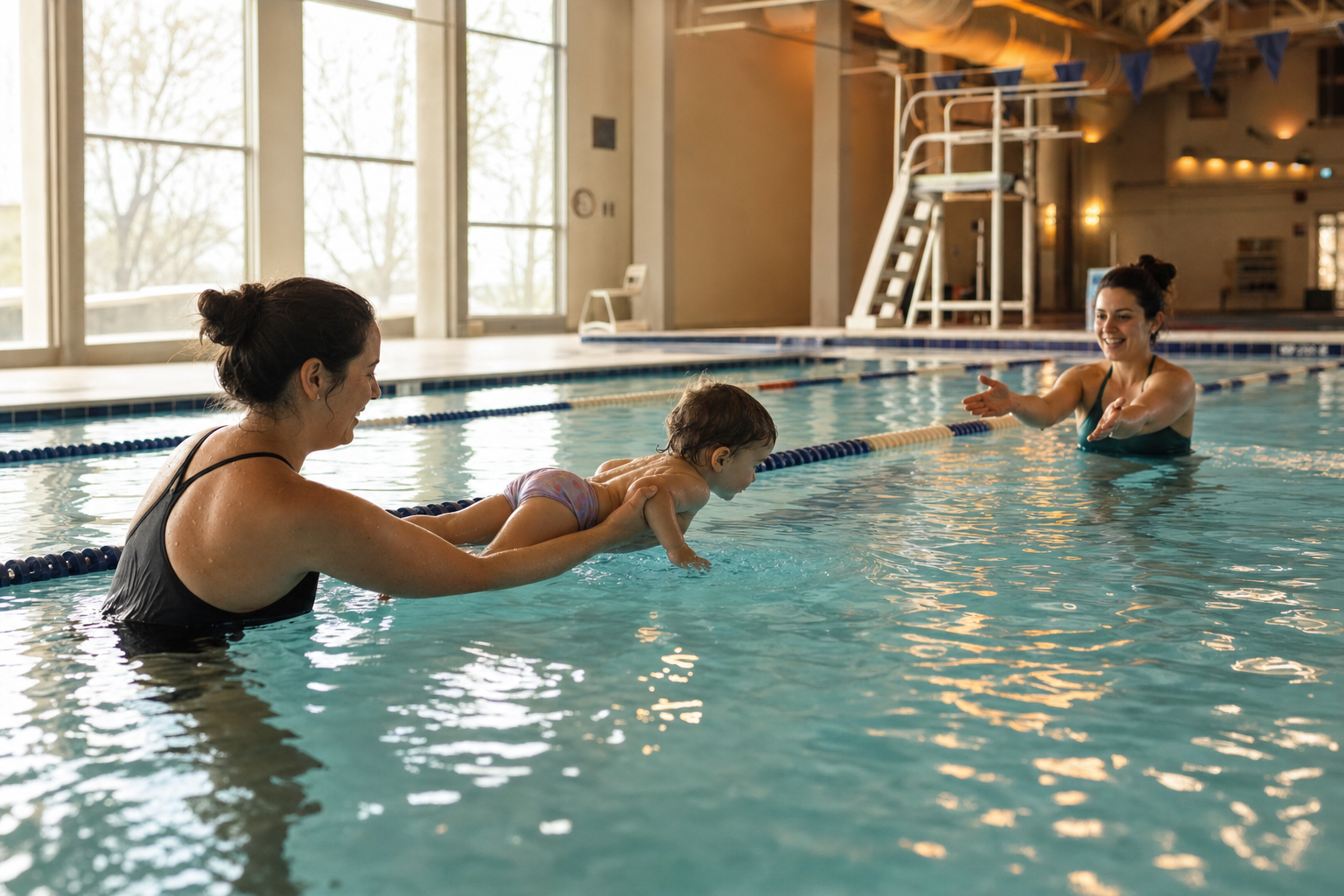
Many parents find their 12- to 36-month-old toddlers bobbing in the water like little vertical poles. Upright posture makes early swimming harder: legs drop, forward movement stalls, breathing becomes awkward. To help toddlers move from a vertical bicycling position to a flatter, safer posture, here are practical, supported games that build comfort, balance, and propulsion—without forcing underwater.
Why Upright Is a Blocker (And What You Can Do)
Toddlers naturally lift their heads and chests to breathe, which tips the hips downward and makes them sit upright in the water. This reduces propulsion and increases drag, so even with strong kicks or arms, very little forward movement happens. Experts in swim survival training stress that streamlined horizontal body position, with head in line with spine and feet near the surface, is key for early progress. (infantswim.com.au)
So before obsessing over kicks, bubbles or floating, focus first on getting that horizontal alignment. Teach the toddler to lower chin, keep eyes down or forward into the water, and gently raise the chest so hips stay up.
Playful Supported Games That Encourage Horizontal Posture
Here are parent-led water games to make that shift feel fun, not forced. All are supported, child-led, brief. Stop if your child panics, swallows water, or shivers.
Glide and Pass
Hold your toddler horizontally under the chest, face above water at first. Say “Ready, Set, Go” and glide them forward across the surface to you. Keep hands under chest or armpits. Once comfortable, dip the face gently in (just for a moment), and glide again. This passes from parent to parent or parent to instructor. This helps them learn to lower their head without flipping upright. (liveabout.com)
Rock-and-Pause Floating
Support under arms or chest, lean your toddler slightly forward, then lean back, pause, side to side—rock gently. Let them feel how their body shifts and how buoyancy works. This helps core balance and awareness without pushing them underwater. (swimy.org)
Back Float Ease-In
Stand chest-deep, hold your toddler facing away from you against your chest or stomach, then gradually ease into back float support under upper back/shoulder. Use one hand under chin if needed. Let go for a short moment when tension is low—in those seconds, the child feels the body lying flat. Repeat often. (swimfoundations.com)
If you want a structured way to build water confidence at home, the 10-Week Plan guides you step by step.
Using Structured Progressions: From Upright To Floating
Structured plans help many parents move carefully and positively. For example, the 10-Week Plan from swimy.org guides caregivers through small steps over weeks, gradually reducing support and increasing horizontal posture. It weaves in games, glides, back floats, and head alignment. This kind of predictable, phased plan helps toddlers trust water more and upright posture less. (swimy.org)
[[ctababy]]
Begin every session with familiar rituals: entering the water, warm-ups, mild bouncing or splashing, breath control by blowing bubbles. Then introduce horizontal alignment: try the glide or supported float from the very first week. Don’t move on until your toddler becomes noticeably more comfortable keeping hips high, head stable, body long.
Expert Cues to Use — Gentle Signals That Make a Big Difference
What parents can say—or do—to gently correct posture without pushing underwater or causing fear:
- “Chin to chest, look at the floor”—helps lower the head and lift the hips.
- “Push your tummy down”—a cue to lift hips.
- “Turn, not lift”—for breath moments, teach rolling slightly instead of lifting head. (teachyourkidstoswim.com)
Use hands-on guidance: support under armpits or chest, help lift torso slightly so hips float. Demonstrate correct posture yourself: show him how it looks to glide horizontally, float back, or swim with minimal head lift.
Safety Caveats & When To Step Back
All the games above should be supported—never toss or force your toddler underwater. Always stay within arm’s reach. Sessions should stay short, fun, low-pressure. If your child swallows water, panics, or starts shivering, stop, warm them up, calm them down. Puddle jumpers, water wings, and other emergency floats may teach vertical position rather than safe horizontal posture; many parents and instructors caution against overuse of these. (reddit.com)
Age 12–36 months is ideal for building trust, feeling safe in the water, and developing early propulsion with head, body, and leg alignment. But every toddler moves through milestones differently. Celebrate small wins: a short glide, a flat body on back, a breath without lifting too much.
Putting It All Together
To teach toddler body position swimming:
- Start with supported alignment games like glide, rock-and-pause, back float.
- Use cues instead of force: chin down, tummy in, turn not lift.
- Progress slowly, using structure like swimy.org’s 10-Week Plan, and only reduce support when comfort is clear.
- Make sure safety comes first: stop if scared or uncomfortable, keep all play child-led, avoid forced immersion, minimize float devices that encourage vertical posture.
With patience, playfulness, and the right cues, you’ll help your toddler shift from upright bicycling to a flatter, more efficient body position in the water. It makes all the difference in safety, propulsion, and confidence. Happy swimming!
120+ swimming exercises sorted by age — with video and instructions. Developed by swim instructors, completely free.

120+ swimming exercises sorted by age — with video and instructions. Developed by swim instructors, completely free.