Observation Days for Nervous Toddlers: A Low-Pressure Strategy Before You Dive In
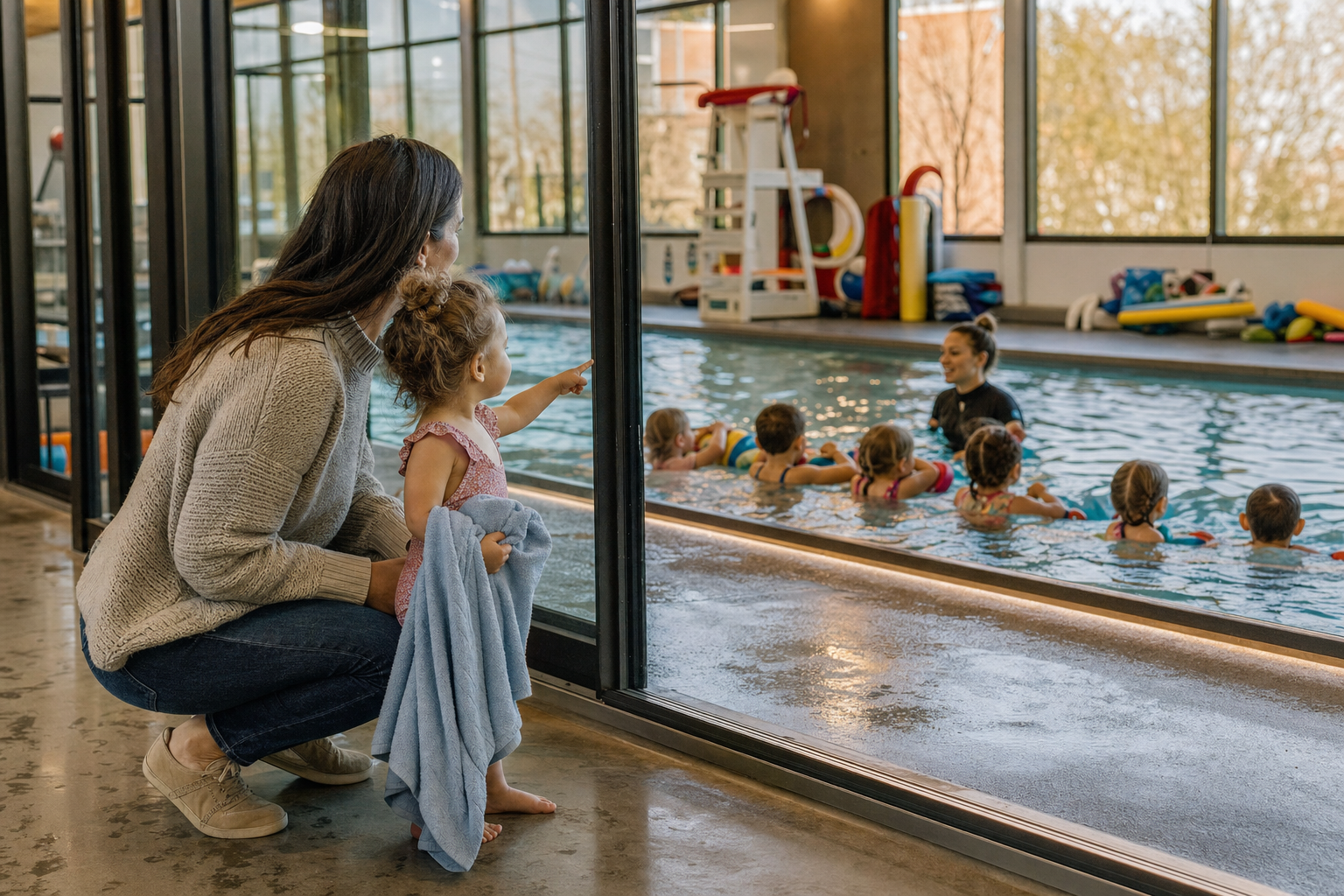
If your 18–36-month-old is anxious about swim class, refusing lessons, or just plain scared of swim lessons, observation days can be your secret tool. These no-pressure, behind-the-scenes walk-throughs are not about forced progress—they’re about familiarity. That transition from watching to joining can be gentle, nurturing both your child’s confidence and your trust in the process.
Why Observation Days Work When Toddler Swim Class Anxiety Hits Most
A toddler refusing swim class usually feels overwhelmed. Whether it’s after a long break, a failed trial, or joining a brand new swim school, the sensory overload—bright lights, echoing decks, cold water—can send their anxiety through the roof. Experts say seeing the place first, without the expectation to participate, helps reduce that fear of the unknown. (essentialswimacademy.com)
Observation gives your child a chance to process what a swim lesson actually looks like: teacher, water, other kids. That shift from imagining their anxiety to seeing something real is powerful. HealthyChildren.org even recommends programs where you can watch a lesson first to feel confident the environment is appropriate. (healthychildren.org)
Components of a Low-Pressure Strategy: How to Use Observation Days
Pool Visits without Pressure
Before formal lessons begin, spend time at the facility during non-class times. Let your toddler walk around, see the pool from the deck, watch other children splash, hear the sounds. Don’t force interactions. You might sit by the viewing windows or designated parent viewing areas so your child sees the teacher in action without needing to participate. (evoswimschool.com)
Boundary Observations and Pilot Visits
When possible, schedule short visits that mirror parts of the class but remain totally optional. For example, bring swimwear so you can sit by the pool edge and let toes touch the water if desired—not for full entry. For parents, defining poolside boundaries (e.g. staying behind the glass or in the visitor area) reinforces safe supervision. Importantly, observation is not wander-near-water time. Hold them or physically contain them away from pool edges. AAP stresses that toddlers need "touch supervision" when near water. (healthychildren.org)
Watch Classes before First Entry
Observation days might include actually watching full swim lessons from a comfortable distance. Let your child name instructors, see how others behave, understand routines. Then plan a first class entry based on what you both saw and what felt manageable. Perhaps toddler steps onto pool stairs with you at first, then teacher, then gradual transition. Sea Otter Swim Lessons suggests talking about what will happen so expectations feel safer. (seaotterswim.com)
If you want a structured way to build water confidence at home, the 10-Week Plan guides you step by step.
Use Viewing Windows Wisely
Some swim schools have parent viewing rooms or windows into the pool. These are great: you stay visible to your child without being poolside and potentially interfering with cues. Watching becomes a tool not just for your child's comfort but for your learning too—you begin to understand teacher style, language used, structure of class. (evoswimschool.com)
A Planned First Entry: When and How to Move From Watching to Joining
After a few observation sessions, when your toddler begins to show small signs of curiosity—pointing at kids splashing, showing interest in teacher, talking about water—it may be time for a planned first entry. Keep the first entry very short: parent-led contact, toy in hand, splashes, slow exposure. Don’t expect strokes or submersion yet. Focus on comfort, not performance. According to the American Academy of Pediatrics, water survival skills and comfort can begin at age one, but they build over time. (healthychildren.org)
[[ctababy]]
If your toddler is returning after a failed trial, don’t treat the new first entry like round two. Start fresh with observation again. Use low-stakes exposure: walk around the pool, visit empty days, soak toes. Rebuild familiarity before expecting them back in class. Use their own pace.
Supportive Practices for Parents and Caregivers
Your energy, tone, and expectations matter. Stay calm, positive, empathetic. Validating statements like “I know you feel unsure” or “It’s okay to take time” go further than pushing them forward. Experts at Swim Angelfish stress validating feelings first, offering touch when needed, then letting go to give them little moments of independence. (swimangelfish.com)
Practice swim-friendly play at home. Simple things like blowing bubbles in the bathtub, splashing in shallow water, pretend swim classes with toys all help build safe associations. Essential Swim Academy notes that many first lesson fears stem from sensory differences like unfamiliar smells, cold water, hot lights—getting used to those in a relaxed environment helps. (essentialswimacademy.com)
Also—set small goals. Maybe the first goal is just staying in the room where class happens. Or walking to pool stairs. Small wins give momentum. Sea Otter Swim Lessons encourages parents to celebrate even tiny steps: choosing a swimsuit, watching a class without crying. Progress, not perfection. (seaotterswim.com)
Putting It All Together: Observation Days + Structured Plans
One resource that weaves these ideas into a guided schedule is the 10-Week Plan offered at Swimy.org. This plan outlines gradual exposure—from observation and poolside visits through short entries—layered with playful practice and parental support. It gives clear steps for parents and instructors to follow at each stage, reducing uncertainty and allowing your toddler to move forward when they’re truly ready. By embedding observation days into this framework, you reduce chances of pushing too soon or creating swim class anxiety that lasts. Hyperlinking this plan: check out the structured support in the 10-Week Plan. (swimy.org)
Each week might add something new: week one, tour pool; week two, viewing another class; week three, toes in; week four, parent-assisted entry; weeks five to seven, standalone class-based time increasing bit by bit—whatever feels safe. With consistency and observation, many toddlers who once cried at doorsteps begin to walk in with courage.
Final Thoughts: Confidence Over Skill
If your toddler is scared of swim lessons, trying to force them through can backfire—making first swim lesson toddler anxiety worse or leading to a toddler refusing swim class entirely. Observation days give the space to lower fear without pressure. They let parents and instructors gauge readiness, build trust, and prepare both emotionally and physically.
Watching becomes familiar. Familiar becomes okay. And okay becomes fun. When participation finally starts, it doesn’t feel like a trial—it feels like a natural next step. Your toddler learns to swim not just in water, but in courage, curiosity, and confidence. That’s far more powerful than fast laps on day one.
120+ swimming exercises sorted by age — with video and instructions. Developed by swim instructors, completely free.

120+ swimming exercises sorted by age — with video and instructions. Developed by swim instructors, completely free.