Sailing Camps with Kids: A Water-Safety Checklist
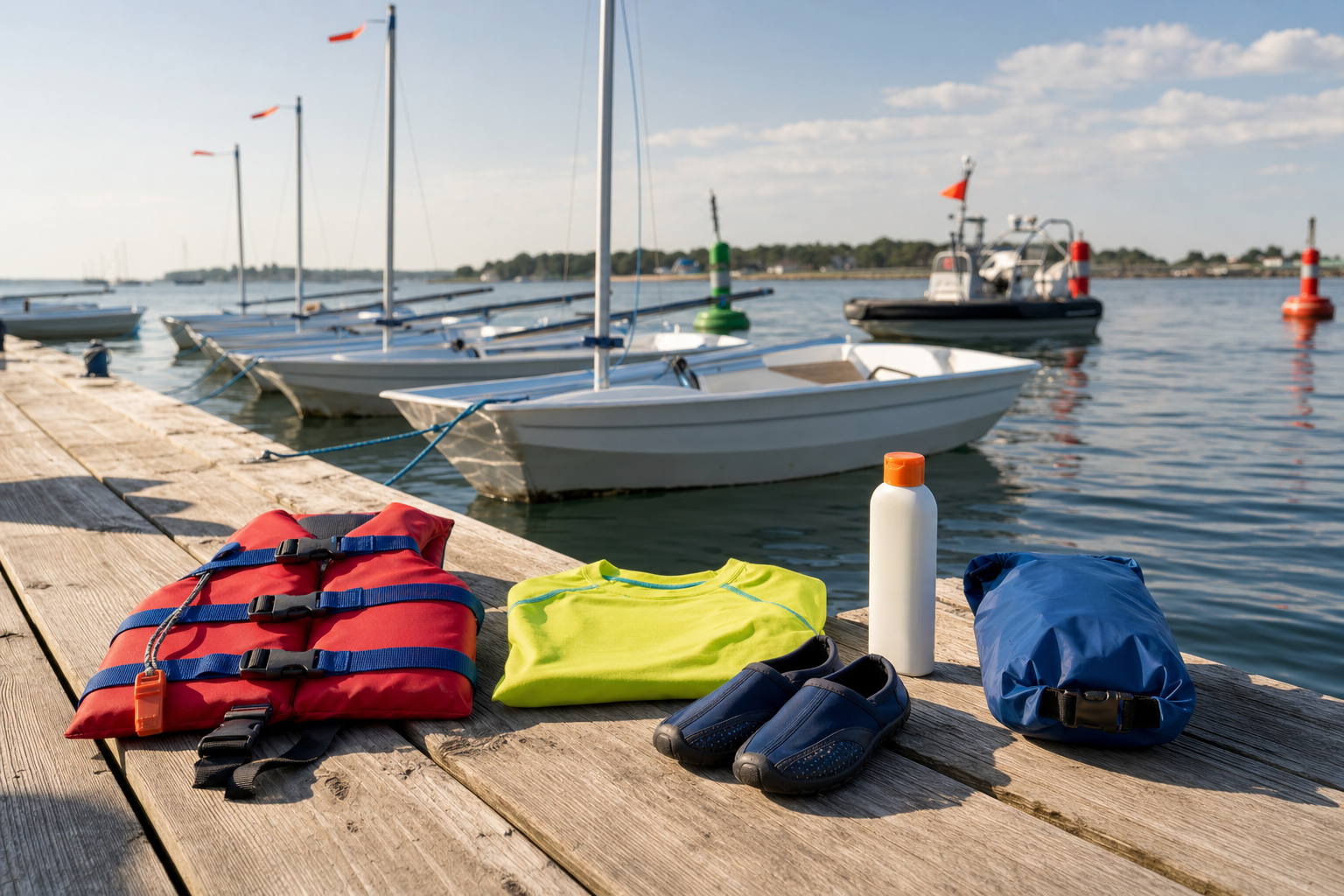
If your child is between 8–12 years old and going to sailing camp, you want strong safety layers—not just swim lessons. Coaches, motorboats, wakes, and traffic add risks beyond the pool. Below are the must-ask questions and safety protocols to press for now.
What to ask before signing up
Start by demanding clarity on four core concerns: swim tests, personal flotation devices (PFDs), coach-boat ratios, and collision/emergency plans.
Swim competency and rescue drills
Ask whether there is a swim test on day one, and what it involves. A common standard: wearing a PFD, floating or treading water, and swimming a short distance (often 20-25 yards) to assess real competency. For example, SailMaine conducts their swim test in ocean water off the dock, with everyone wearing PFDs and required to tread water for two-three minutes. (sailmaine.org) Camps like Encinal enforce this on day one—getting water safety sorted before sails go up. (encinal.org) Also ask about capsize recovery drills—kids should learn what to do when a boat tips over, how to reboard, and how to stay calm in such stress. (encinal.org)
PFD rules for children: fit, wear, quality
A PFD (personal flotation device) must be Coast Guard approved (for US camps) or meet ISO buoyancy standards (UK/AUS), sized to the child’s current weight, and snug so the PFD doesn’t ride up. It should include a crotch strap for younger sailors. Teach your child how to put it on, how it floats, and how to be safe wearing one in rough water. (paddleuk.org.uk) Ask: are PFDs worn at all times while on the water and docks? Do they require staff oversight to enforce this? Camps like AYC require PFDs on docks, on boats, always. (aycsail.org)
Coach‐boat ratios: supervision numbers that save lives
For ages 8-12, learn the student-to-instructor ratio and more importantly the sail-boat-to-coach-boat (or safety boat) ratio. According to US Sailing safety guidelines published through manuals like the Nashville Sailing Foundation and the US Sailing Center Accreditation standards, Youth Learn to Sail programs often run at 6-1 to 8-1 student-instructor ratios; safety boats may cover 3 to 8 sailors per coach boat in those age groups. (risk-strategies.com) Also double staffing in coach boats is often required. (readkong.com) Ask: how many safety boats will be out per class and what happens if boats capsize or drift out of reach.
If your child is just learning or improving swim skills, pursue regular swim programs. The 10-Week Plan of swimy.org provides a structured timeline building confidence, stamina, floating, diving, and rescue basics. Having been through something like this makes swim tests, swim drills, and unexpected water stress less scary for kids. 10-Week Plan helps parents and camps see exactly where readiness stands.
[[ctakid]]
Emergency and collision plans, weather cut-offs
Given recent tragic incidents—like the collision in Biscayne Bay that killed three young sailors—the importance of clear collision avoidance plans is critical. (apnews.com) Ask: what is the protocol if a powered craft is approaching? Who is assigned lookout duty? What are procedures if boats lose wind and stall in a busy waterway? Also demand weather cut-off rules: maximum wind and waves where sessions are cancelled or boats stay in harbor. In some US Sailing Center Accreditation guidelines, programs must include weather and environmental risk procedures and emergency action plans. (ussailing.org)
Building strong safety layers during camp
Ask camps about what they actually do, not just what they say.
Drills, supervision, and boundaries
On arrival, children should be taught capsize recovery and emergency pick-ups. On land, boundaries must be spelled out—what sections of marina, docks, and beach are off-limits. Staff should practice real rescue drills, check dock safety, and keep a constant headcount. Concord Yacht Club requires swim tests weekly, strict dock rules, propeller guards, and no dock jumping. (concordyachtclub.org)
Bright rash guards and visibility
Kids age 8-12 tend to move fast between boats, swim practice, shore breaks. High-visibility rash guards or coloured tops ensure coach boats can spot them against wakes or against glare from water. This is not just about comfort—it’s a visibility layer for safety around wakes and motorboat traffic.
Using frameworks like the 10-Week Plan
What to bring, and what you still need to double check
Even the safest camp may miss small details unless parents keep watch.
Ensure your child brings—filled, properly fitting PFD; whistle; closed-toe water shoes; sunscreen; extra clothes; and a bright rash guard. Ask: is there always first-aid trained staff present on the water and on land? Is there a lifeguard when swimming? Some camps assume swimming will be lifeguarded, but schedule limits may apply, and boats don’t count as lifeguards. This must be explicit.
Also double check: what authority does the marina have? Who controls traffic on the water? What liability do they accept versus the camp? In two recent US incidents, failure to clearly define who watches powered vessels was central to lawsuits. (miamiherald.com)
In summary
Sailing camp safety for 8-12 year olds isn’t just about learning to sail. It’s about layering: swim competency plus PFD fit, strong coach boat support and supervision ratios, collision and powered-boat plans, and weather thresholds. Ask the right questions, insist on specific protocols, check what’s in writing—and when your child steps on dock, they’ll be as safe as possible while chasing sun, wind, and adventure.
120+ swimming exercises sorted by age — with video and instructions. Developed by swim instructors, completely free.

120+ swimming exercises sorted by age — with video and instructions. Developed by swim instructors, completely free.