Family Pool Hand Signals: OK, Help & Stop for Safer Swim Days
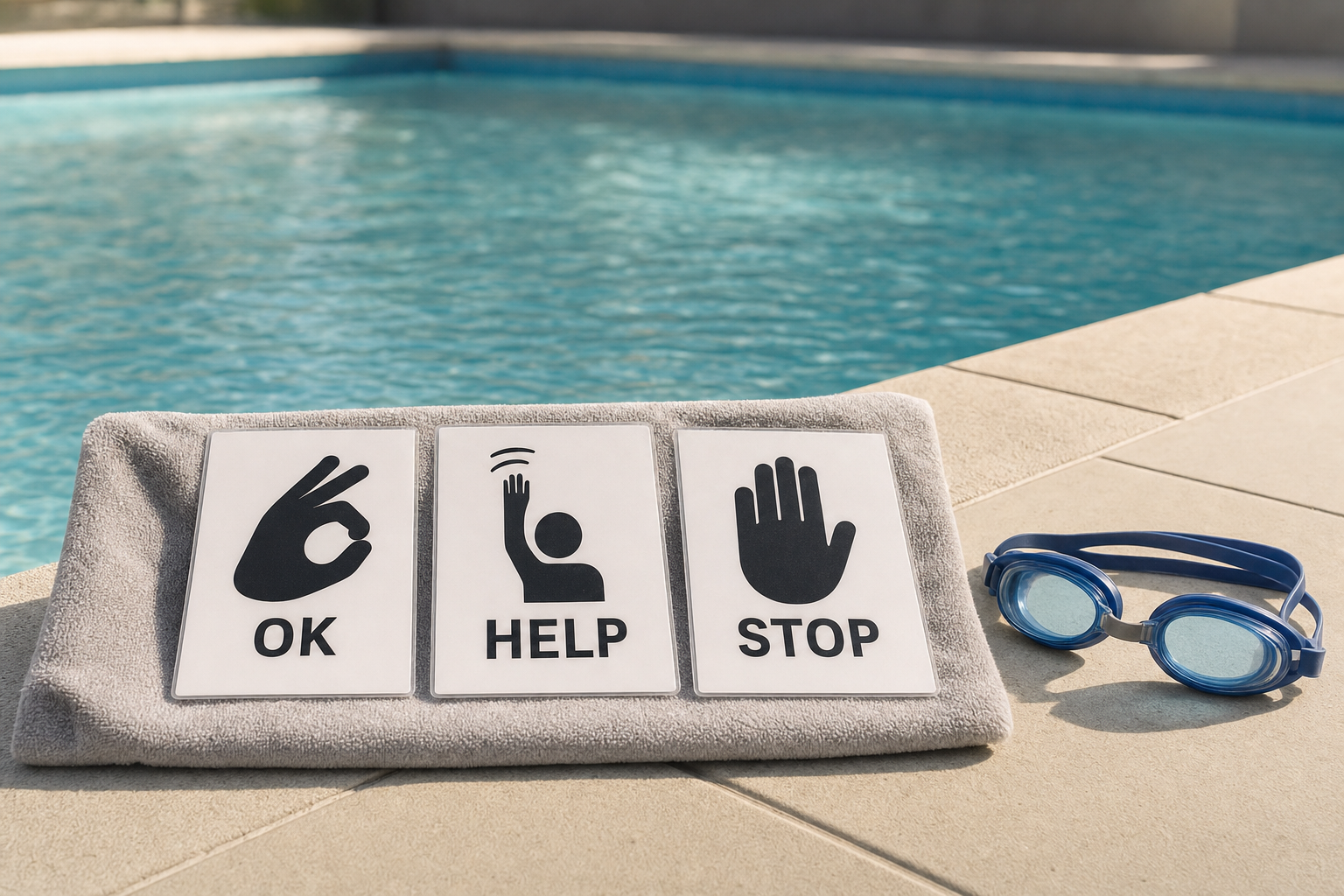
When voices echo off pool walls and whistles get lost in the chaos, simple hand signals can make all the difference. Teaching children ages 3-12 the “surface OK,” “wave for help,” and “palm-up stop” signals before swim days can cut confusion and speed response. This is essential, especially when you can’t rely on shouting or hearing clearly underwater or across busy surroundings.
What These Three Signals Mean
Surface OK: A child forms an “O” shape by touching thumb and index finger together, other fingers extended, raised above their head. This is both the question, “Are you OK?” and the answer, “I’m OK.” It’s borrowed from scuba diver safety practices, and is part of universally taught hand signals under agencies like PADI, SSI and others.(blog.padi.com)
Signal for Help / Distress: One or both arms waving overhead, as if waving “hi,” communicate urgent need for assistance. On the surface, this grabs attention even when sounds are muffled or when someone may not notice verbal calls. In diver hand-signal guides, this is the standard way to say “help me now” or distress.(scubapro.johnsonoutdoors.com)
Palm-up Stop: An open hand held up with palm facing outward like a traffic cop—no waving, just held steady. This signal is clear, says “stop,” “freeze,” “I need you to pause,” even when voices would be drowned out by splashes or distance. In many diving resources, the open palm flat hand is the same signal used for “stop/hold.”(scubapro.johnsonoutdoors.com)
Why Parents Must Practice Before Busy Swim Days
Before a crowded swim party, pool class, or public swim event, practicing these signals during calm warm-ups can make them second nature. Kids get less pressure, can ask questions, and you can correct sloppy versions. It’s similar to diving briefings, where divers agree on signals every time to avoid misunderstandings underwater.(thedivewarehouse.com)
Parents who work through a structured routine—like the 10-Week Plan from swimy.org—can build in signal practice along with foundational swim skills. Including signals as part of lessons helps reinforce what kids do instinctively when things are quiet. Then when things get loud—open water swims, busy pool settings—they don’t have to stop and think about what OK, Help, or Stop mean.
Keep practicing these signals in different settings: shallow ends, deep water, open water, pool slides, even when floaties or goggles are involved. The variations make the signals more likely to be remembered under stress.
If you want a structured way to help your child progress at home, the 10-Week Plan guides you step by step.
[[ctakid]]
Common Pitfalls and How to Avoid Them
One huge mistake is expecting kids to shout or call for help and assuming they’ll be heard. Even strong voices vanish underwater or get swallowed by echoing pool decks. Kids may hesitate to yell but will use a hand signal if that’s what they’ve practiced. Also, some adults assume grandparents, babysitters, or swim-instructors all share the same gestures. But they may not: what is obvious to you may be confusing to others.
Another mistake: not reinforcing the signals during non-swim or pre-swim moments. If practice happens only during formal lessons, but never during playtime pool dips or family vacations, kids may forget or misapply signals when it counts. Also, failing to check that signals are visible—dark goggles, long hair over hands, arm under water—can turn a clear “Help” into nothing at all.
How to Teach Signals to Kids Ages 3-12
Start with warm-ups, when energy is lower. During these moments, model each signal: show Surface OK, Help, Stop, then ask the child to mirror you. Use games like Simon Says: “Simon says show OK,” “Simon says wave for help,” etc. Gradually add surprises—no note, pretend signal lost its meaning, see if they remember response. Praise accurate signals: “Great job stopping when I raised my palm-up!” Keep language consistent.
Repetition matters. Use visuals: draw what each signal looks like, show underwater photos or diver guides. Explain why these are vital—maybe share a story where hand signals made a real rescue faster or cleared up confusion. In open water, during family swims, reinforce them again—waves have bigger echo, longer distance to shore, so signals really help there.
Teach both the signals and the recognition: parents, sitters, grandparents must understand every signal too. Before leaving a babysitter in charge at a pool, do a short “signal share” so everyone agrees: this means OK, this for Help, this for Stop. That way when parents are away, the whole safety network knows what to expect.
Bringing Expert Guidance to Your Practice
RNLI’s Beach Lifeguard Manual emphasizes hand signals as essential communication tools, especially when whistles or radios aren’t enough. Even when lifeguards work together, they need agreed signals to avoid delay.(rnli.org) Many diver training programs do a similar thing: agree on standard signals before every dive or swim. If everybody practices the same signals, everyone reacts faster.(siamdive.com)
Final Tips for Confident, Safe Swim Days
After practicing, make signals the first thing you review the day you swim. Even before goggles go on, ask: “What are the signs we use if you’re OK? If you need help? If you want me to stop?” Remind kids and caregivers. Use role-play: you pretend to need help, see how the child reacts; then switch. Pay attention to visibility and position.
Store visible reminders: write down the three signals on a waterproof card, stick it to your pool bag, locker, change room. Make sure everyone—babysitters, grandparents, substitute teachers—knows the meaning. Consistently involving all caregivers means there's no moment where someone else thinks they know but doesn’t.
Hand signals can’t replace swim skills, life jackets, or proper supervision. But when voices fade, echoes distort, or distance blurs speech, simple, practiced signals like surface OK, wave for help, and palm-up stop are lifelines. Teach them, practice them, and everyone knows what to do when seconds count.
120+ swimming exercises sorted by age — with video and instructions. Developed by swim instructors, completely free.

120+ swimming exercises sorted by age — with video and instructions. Developed by swim instructors, completely free.