Down Syndrome Baby Swim: Questions to Ask First
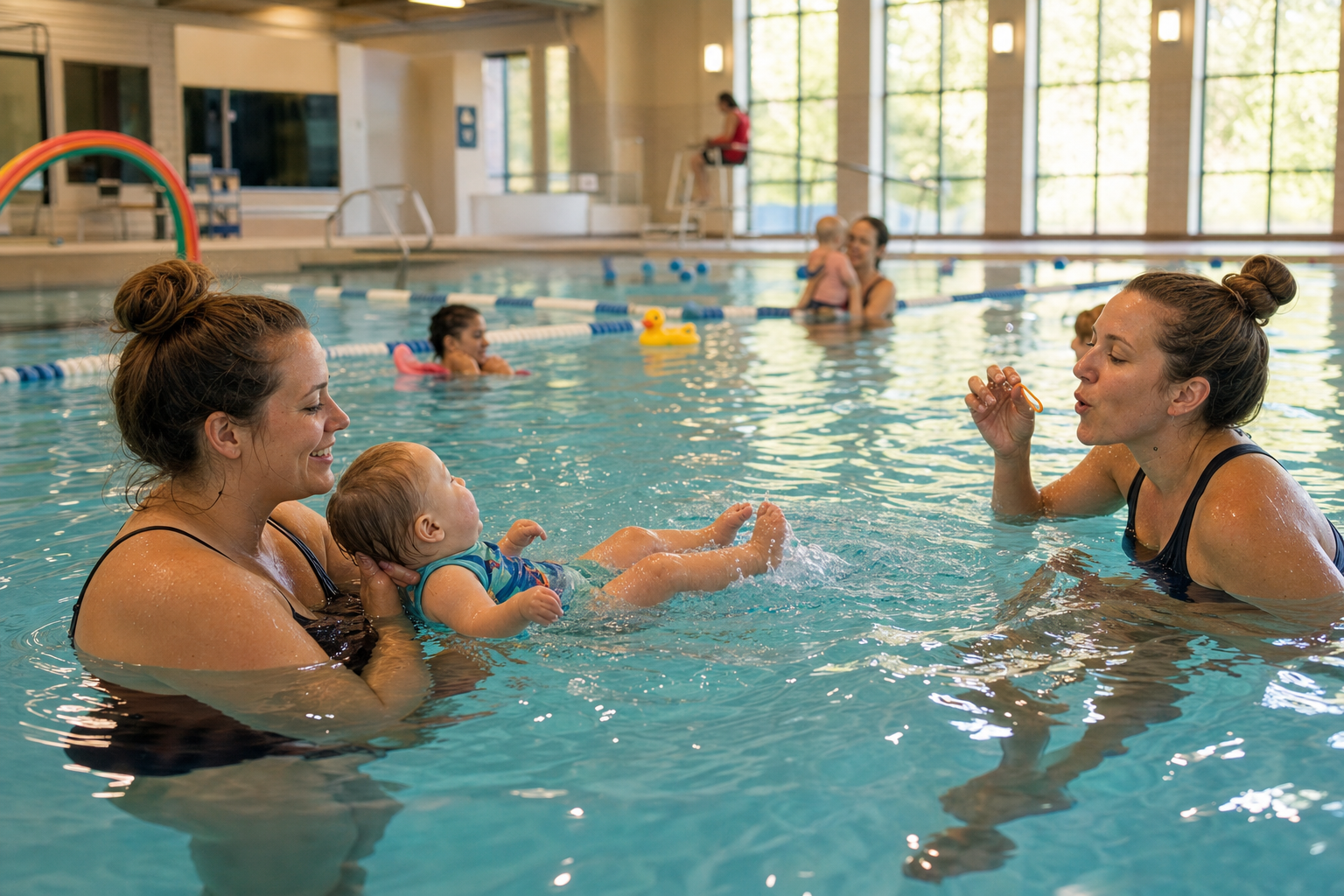
If you have a baby aged 6–36 months with Down syndrome and are thinking about introducing them to water, your very first step should be medical clearance. Ask their pediatrician or specialist whether swimming is safe given their individual health history—especially heart conditions, muscle tone, ear infections, respiratory issues, or recent surgeries. Nearly half of babies with Down syndrome are born with congenital heart disease; some need surgery, others may have pulmonary problems or low oxygen levels. (nichd.nih.gov)
What Medical Checks Come First
Heart History
If your baby has a heart anomaly—common in Down syndrome—get a cardiologist’s report before pool time. Make sure any surgical repairs have healed fully. Monitor for signs like rapid breathing, sweating during feeds, or blue lips, which may suggest not enough oxygen or overworked lungs. Doctors usually evaluate babies with Down syndrome for heart issues at birth and conduct follow-ups, though you may need fresh documentation before swim lessons. (dsacc.org)
Low Muscle Tone & Breathing
Babies with Down syndrome often have weaker muscle tone and may struggle to lift their heads or keep their mouths sealed underwater. Aspiration (accidentally inhaling water) is a risk. Before submersion, assess whether your baby can blow bubbles, close their lips around things, and manage swallowing. Speech therapists, feeding therapists, or medical providers may evaluate this. (chop.edu)
Ear Health & Infection Risk
Chronic ear infections are common, both inner- and outer-ear, and they can cause discomfort or dizziness when in water. If your baby recently had tubes placed or infections, consult the ENT specialist to decide when pool exposure is safe. Also ask whether water temperature and cleanliness matter—cool water or untreated bodies of water often raise infection risks. (healthychildren.org)
Choosing the Right Swim Instructor & Program
The best instructors for Down syndrome baby swimming are patient, familiar with special health needs, and open to adapt lessons to your child’s pace. Look for coaching or therapy programs that tailor lesson plans for low muscle tone, delayed milestones, and sensory sensitivity. Ask whether instructors have disability-specific training and whether they collaborate with your child’s therapists. (fossswimschool.com)
If you want a structured way to build water confidence at home, the 10-Week Plan guides you step by step.
Enroll in private or small group lessons to begin; one-on-one instruction gives your child the space to try new skills—floating, kicking, reaching at their pace. A program like the 10-Week Plan offered by swimy.org can be helpful for structured, incremental progress in Down syndrome toddler swim lessons when paired with medical approval. (u.osu.edu)
[[ctababy]]
Ask these specific questions: does the pool facility have warm water (ideally 87-94°F for infants and toddlers)? What’s the instructor-to-child ratio? Can the parent be in the water? Is there sensory overload when many children are in the pool? Programs that allow you to watch a class ahead of enrolling will help you feel safe and informed. (healthychildren.org)
Tone, Safety, and Expectations
Be ready to adapt your expectations. Babies with Down syndrome may take longer to master each skill. Tasks such as floating on back, holding breath underwater, or kicking while maintaining posture may require many more repetitions than typically developing peers. Repetition and positive reinforcement are key. According to CHOP, powerful benefits include not just water safety but improved breathing control, oral motor skills, and sensory awareness. (chop.edu)
While swim lessons can teach water skills and help build confidence, they do not drown-proof a child. Even toddlers in lessons need “touch supervision” — you should stay within arm’s reach in every moment during pool time. Always fence and secure pools at home. Keep distractions away. Formal lessons are only one layer of safety among many. (healthychildren.org)
When to Wait or Modify
If your child’s physician notes serious heart surgery within the past few months, severe respiratory infections, unstable ear issues, or other high-risk complications, delay full submersion until cleared. In the meantime, splash play at shallow ends, water therapy, or gentle caregiver-led water work can help with comfort in the water without the risks of full swimming lessons. If extubation, feeding tubes, or recent surgeries are factors, ask whether modest exposure is safer. Many children begin more structured aquatic work once these conditions are stable. (healthychildren.org)
Putting It All Together
Down syndrome baby swimming or Down syndrome toddler swim lessons can be excellent for health, confidence, and development—once safety is assured. First: medical clearance that covers heart history, ear health, breathing and muscle tone. Next: choose instructors who are trained, patient, and willing to custom-tailor lessons for your child. Set expectations modestly, celebrate small wins like blowing bubbles, kicking, or simply getting comfortable in warm water. Always supervise closely; lessons help but do not replace safety. With the right setup, your little one can splash, explore, grow stronger, and fall in love with water—without compromising their health or safety.
120+ swimming exercises sorted by age — with video and instructions. Developed by swim instructors, completely free.

120+ swimming exercises sorted by age — with video and instructions. Developed by swim instructors, completely free.