Side Glides Toward the Wall: A Gentle Toddler Swim Skill (18–36 Months)
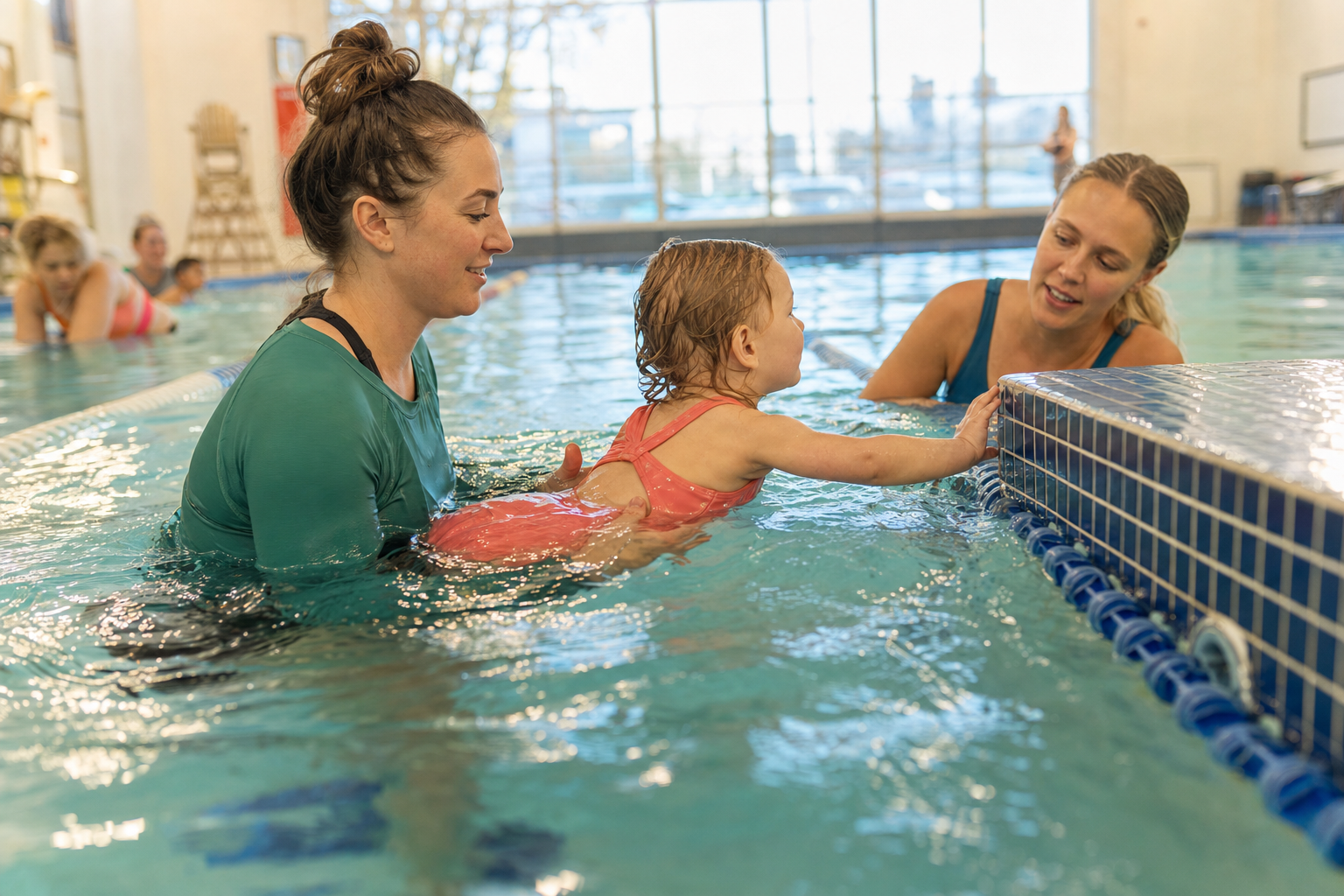
If you’re wondering how to teach your 18- to 36-month-old important swim skills without pretending they're swimming independently yet, side glides toward the wall might be the perfect bridge. These graceful movements sit between supported floating and real strokes. They help build body orientation, reaching, and wall awareness while keeping the child safe and supported. Read on for how to practice, what to watch out for, and why this skill matters for your toddler swim skills journey.
Why Side Glides Toward the Wall Are a Game-Changer
Side glides help toddlers shift from upright paddling or vertical postures toward more efficient, horizontal ones. Once body alignment improves, kicking and breath control follow more naturally. Experts suggest by age 2 to 3 children in lessons can “reach the wall from short distances in the water” while building comfort in the water, which is one of the realistic goals for that age range. (watervolleyball.com)
Learning how to glide sideways toward the wall also builds wall awareness—that instinctive idea that safety is nearby. It connects with “turn-to-wall” drills, which train toddlers to reorient toward the pool edge when disoriented. (swimy.org) These combined skills are fundamental swim lesson practice toddler parents are often encouraged to try.
How to Teach Side Glides Toward the Wall (Safely and Effectively)
Step-by-Step Practice
Start in shallow water with the child supported under the chest or armpits, torso leaning into a side position, head above water. Guide them toward the wall so they extend one arm forward, body long and legs together. Gradually release support while staying close enough to catch or guide. As they glide, encourage a reaching motion toward the wall, helping them move into contact safely.
Use cues like “chin to chest” to lower head, “stretch arms long” to improve reach, and “toes pointed” so legs stay aligned. These cues contribute to the body orientation needed before swimming strokes. (swimy.org)
During lessons, support visual and tactile feedback—show how a correct or “streamlined” glide looks. You can incorporate this into structured learning plans. For example, sw IMY’s 10-Week Plan leans into progression-based practice where skills like gliding, reaching the wall, floats, and gradual face-in water work build one upon another. (swimy.org)
Common Pitfalls to Avoid
One of the biggest mistakes is pushing the child too far from the wall. If fear or panic kicks in, the learning shuts down. Keep every glide within a distance where support still feels present.
Another is turning it into forced submersion. For toddlers 18-36 months old, maintaining face out or just lightly touching water is sufficient until they show comfort. Forcing face-under drills too early can backfire. Always watch for signs—coughing, holding breath, shuddering—and ease off when needed. (redcross.ai)
If you want a structured way to build water confidence at home, the 10-Week Plan guides you step by step.
Also avoid letting the posture collapse: hips sinking, legs bending, knees apart. When that happens, reset to supported glides or body alignment drills until the child regains strength and familiarity. Support under chest or armpits helps prevent hips from dropping. (villaparkil.gov)
[[ctababy]]
How Side Glides Fit into Toddler Swim Skills & Swim Lesson Practice
Side glide toward wall isn’t a standalone trick; it belongs in a progression. It builds off floating, supported front or back glides, and leads toward rolling or stretching into strokes. Programs for toddlers almost always include front and back gliding with support as core skills. (arlingtonva.us)
When your toddler can glide sideward toward the wall with guidance, that’s a sign they are ready for further swim lesson practice toddler programs such as assisted front glides, gentle kicking, or even super short swim-to-wall drills. Expect instructors to incorporate these over weeks—not days—so progress feels calm and real.
Safety Reminders & Expert Guidance
Always keep your child supported, close to the wall, and above water. This exercise is not a rescue substitute—never leave these skills to chance in deeper water or without supervision. HealthyChildren.org emphasizes toddlers should always be within arm’s reach when in water, even during lessons. (healthychildren.org)
Engage a qualified instructor when first trying side glides toward the wall. They can guide proper technique, posture, and pacing. Lessons that follow recognized swim-instructor curricula or safety programs are more likely to handle progression, distance, and support in ways that build skill without risk. (arlingtonva.us)
Make sure learning environments are warm, shallow, and free of distractions. Use routines—entry, warm-ups, glides, float, rest—to build predictability. If toddlers move through sessions in safe, structured ways, they often improve rapidly, and early frustrations diminish. Teachers in toddler levels commonly use games or cues to motivate side glides toward the wall while ensuring fun dominates. (lifesavingsociety.com)
When & Why Side Glides Should Be Introduced
The 18- to 36-month bracket is the sweet spot for this skill. Toddlers now can understand directions, hold brief horizontal alignment, and respond to gentle cues. By age 2, many children can work towards reaching and holding the wall from short distances, which signals readiness for side glide work. (watervolleyball.com)
Parents often tell me: once their toddler masters supported floats and front glides, trying side glide toward the wall feels like moving from baby steps to confident stepping. You’ll see body parts become more relaxed—legs trailing less, core engaging more, reaching arms stretching out. That deepening coordination sets them up for strokes later on.
Final Thoughts: How to Practice at Home & in Lessons
Start with tiny practice moments—during lessons, at home in a pool with you. Use short supported glides from just an arm’s length away from a wall. Celebrate when your toddler touches or holds the wall. Praise effort, not perfection. Over time, increase the distance or reduce support—but only when they seem ready.
Keep swim lesson practice toddler-focused: guided, safe, warm, and fun. Side glides toward the wall don’t replace floating or kicking, but they bridge the gap between simply surviving in the water and developing real swim readiness. When balanced with supervision, support, and patience, this skill builds confidence, awareness, and posture—all essential steps on the path toward independent swimming someday.
120+ swimming exercises sorted by age — with video and instructions. Developed by swim instructors, completely free.

120+ swimming exercises sorted by age — with video and instructions. Developed by swim instructors, completely free.