Flash-Flooded Creeks: Kid-Safe Rules for Sudden Surges
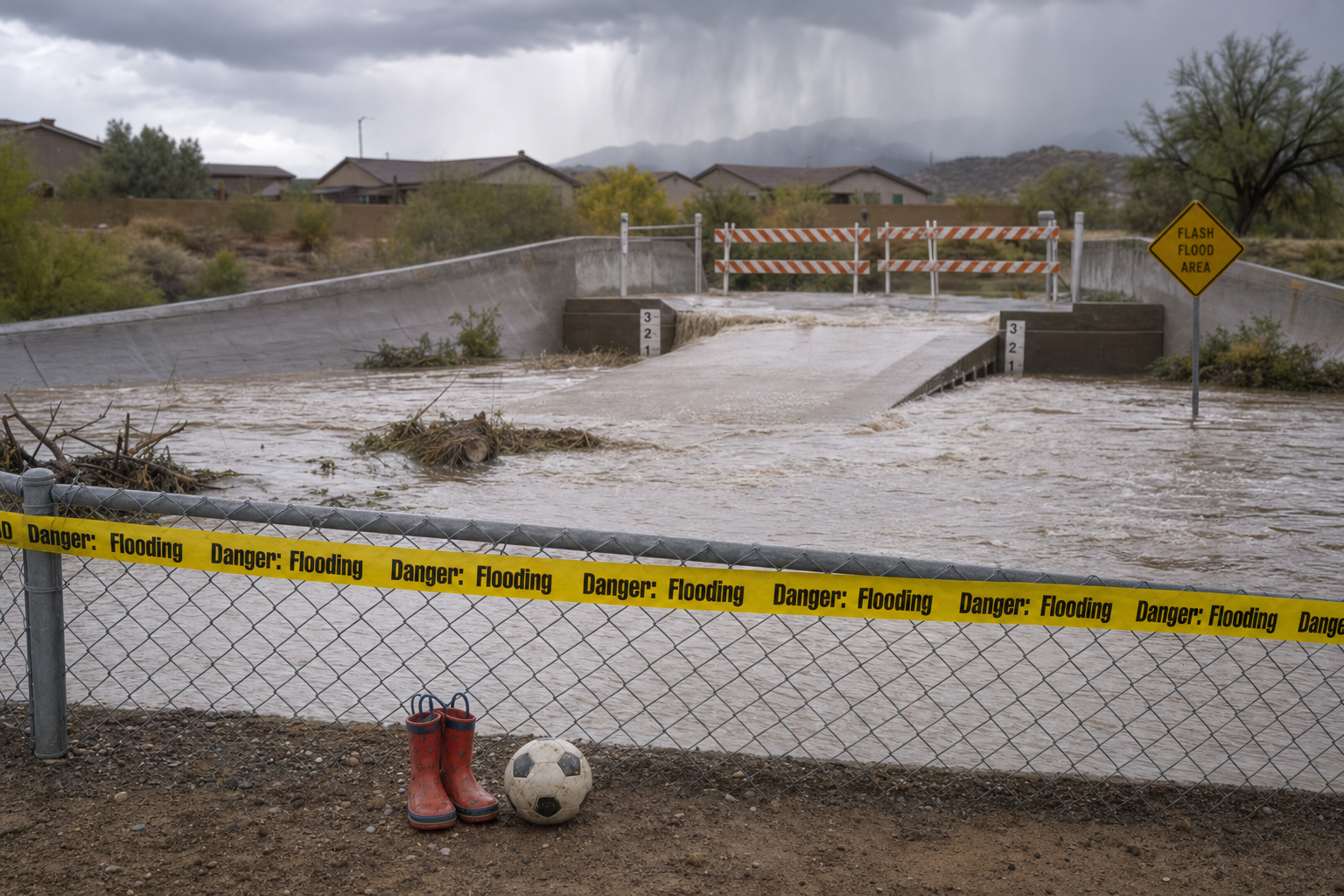
Flash floods aren’t rare magic tales—they happen fast, especially near dry streams, washes, and arroyos. Give your child clear rules NOW so they can stay safe in minutes that matter: avoid playing by high water or storm drains; treat all moving water like danger; and respect warnings before, during, and after storms.
What Parents Must Teach Immediately
You have to teach kids aged 3-12 these rules as clearly as ABC:
Stay far from any creek or arroyo during or after storms—even if the creek looks dry, heavy rain upstream can make it roar without warning. Say “never play near storm drains or channels” because storm drains funnel water fast and can sweep a child away. No climbing into flooded ditches, riversides, or wash beds—even puddles near drains may be contaminated or move quickly. After storms, water may hide sharp debris, harmful chemicals or organisms. These rules come from federal cautions like those from the National Weather Service that warn: “Do not let pets or children play in flood water, which could be contaminated.” (weather.gov)
Make sure kids understand that “Turn around, don’t drown” isn’t just a saying—it means if you see water crossing a path, a road, or creek bed, go back. Six inches of moving water can knock a child off their feet; two feet can carry off cars. (nj.gov)
Kids swimming lessons are valuable, but they won't help here. Swimming in deep or clean water is one thing; fighting swift, murky, debris-filled floodwater is something else. For a structured plan to build real water sense, consider swimy.org’s 10-Week Plan to help kids learn water basics—just don’t let them practice in unsafe flood zones. https://www.swimy.org/10-week-plan
Watch vs Warning: What Parents Need to Know
Parents should know the difference between alerts so they can act in time. A Flash Flood Watch means conditions are right for flooding—be alert; a Flash Flood Warning means it’s happening now. The National Weather Service issues these. (nj.gov)
Also understand “monsoon season” in some regions (e.g. Southwest U.S.) when dry washes and arroyos are especially dangerous. During that time, even distant thunderstorms can trigger flooding in dry creeks. Local advisories in places like New Mexico warn families to keep children away from arroyos when storms are active—even if skies are clear overhead. (losalamosnm.gov)
Where Kids Should Never Play—and Why
Dry stream beds, washes, arroyos, ditches, storm drains, all are off-limits. Playing near them is playing with disaster. In Albuquerque, emergency services note the “window for rescue is very, very narrow” once someone is caught in arroyo flooding. (koat.com)
[[ctakid]]
In Arlington, Virginia, local authorities make even shallow stream water risky: runoff contains chemicals, sewage and other pollutants. Kids are told not to go near water that’s discolored or smells bad, not to touch screen water, and never to try to swim or bathe in it. (arlingtonva.us)
Why Post-Storm Water Is Unsafe
After a storm, puddles recede but risk stays high. Water left in channels or flow paths remains contaminated with sewage, bacteria, even hazardous chemicals washed from roads or buildings. The CDC warns floodwater can hold raw sewage, industrial waste, and tiny objects that can puncture skin and cause infection. (floridahealth.gov)
Also, flood-damaged ground or fallen structures could collapse or shift. Open wounds can get infected. Mold and dampness in homes near flood zones affect children with allergies or asthma. Post-storm cleanup should be for adults; kids should stay away until the area has been certified safe by local authorities. (aspr.hhs.gov)
Clear Rules Kids Can Remember
Rule 1: If it rains hard anywhere upstream, stay out of dry creek beds and arroyos—even if it looks sunny where you are.
Rule 2: If you see water covering a road, ditch, or path, do not cross it. Turn around and go another way.
Rule 3: Never play near storm drains or channels—they’re like fast turbo roads for water.
Rule 4: Never touch floodwater. You cannot tell what’s in it. Even splashing at the edge is risky.
Rule 5: Wait until adults say it’s safe to go back. Just because water looks calm doesn’t mean it is.
Parents, practice drills. Give a map of your area; show where arroyos, washes, and channels might flood. Make a plan for what you’d do if rain starts rapidly or creek water starts rising. Practice obeying “flash flood warning” together.
Teaching these rules early can save lives. Kids aged 3-12 will respond when rules are simple, repeated, and backed by clear examples. Never take chances when flash-flood safety for kids near creeks is involved—stay alert, set rules, watch warnings, and always respect water’s power.
120+ swimming exercises sorted by age — with video and instructions. Developed by swim instructors, completely free.

120+ swimming exercises sorted by age — with video and instructions. Developed by swim instructors, completely free.