Wash Baby Swim Gear Without the Chlorine Smell
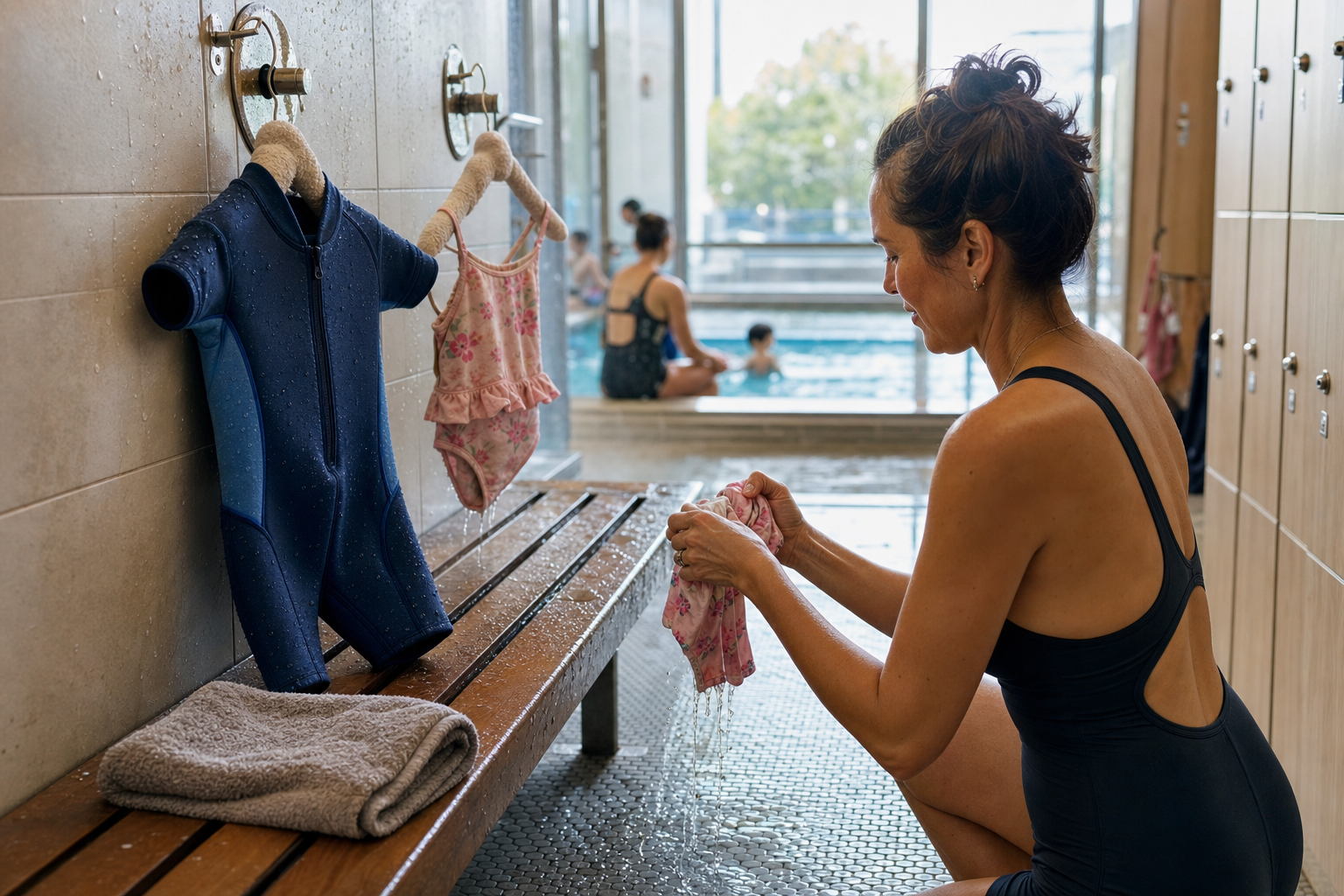
Parents of little swimmers know the drill: your baby’s swimsuit, neoprene wetsuit, and towels can reek of chlorine—even right after washing. Here’s a simple rinse-dry-wash routine that stops mildew dead and keeps your baby’s swim bag ready all week long.
Why That Chlorine Smell Lingers
That strong smell comes from chlorine breaking down fabric fibers, trapping sweat, sunscreen, and dead skin. Left damp in bags or under towels, the magic mix becomes a breeding ground for bacteria and mildew. Neoprene layers make it worse: they trap moisture inside where regular cotton lets it breathe easily.
But there’s good news: the trick is simple. Rinse fast, wash gently, dry well. Use cold or lukewarm water, skip harsh chemicals, and avoid heat. These care steps protect the delicate elastane, spandex or Lycra used in baby swimwear and neoprene, keeping stretch and colour intact. Scientists agree that rinsing immediately after swimming is a top rule to follow. (phys.org)
The Rinse-Dry-Wash Routine That Works
Step 1: Rinse ASAP
Right after swim time—on the pool deck, in the carport, or in the shower—rinse both inside and out with fresh water. No hot water: heat accelerates damage to elastane fibers and can make both swimsuit and neoprene smell worse later. (rei.com)
Step 2: Air It Out
After rinsing, gently squeeze out excess water (never wring). Shake the item open—especially inside seams or under neoprene folds—and lay flat or hang loosely somewhere breezy and shaded. Let airflow do its job. Don’t stash it damp in a swim bag or zippered pouch. That sealed, moist space is where mildew starts.
Step 3: Wash Properly
When it’s wash day—weekly or when smell returns—follow baby‐friendly methods. If the swimsuit or neoprene piece says “machine washable,” use a mesh laundry bag, gentle/delicate cycle, and cold water (never hot). Otherwise hand wash using mild soap—like baby shampoo or a neoprene-safe wetsuit cleaner. Avoid regular or scented detergents, bleach, and fabric softeners. These add residual oils, clog fibers, or strip stretchers. (neoprenecustom.com)
If you want a structured way to build water confidence at home, the 10-Week Plan guides you step by step.
Pro tip: letting items soak in a mix of cool water with a little baking soda or enzyme cleaner works great against stubborn chlorine smell after that first rinse. Neoprene brands and wetsuit care guides recommend this for deep cleaning. (neoprenecustom.com)
[[ctababy]]
Step 4: Dry Right
Lay flat or hang on thick, padded hangers in the shade. Turn neoprene suits inside-out halfway through drying so both interior and exterior air dry. Never tumble-dry, never dry in direct sun—heat and UV kill elasticity and fade colours. (evo.com)
Special Care for Neoprene Baby Wetsuits
Neoprene layers are fantastic for warmth, but harder to treat. After rinsing, gently hand wash using non-detergent soap or baby shampoo. Be careful around eyes for rubbery stretch, seams, and zippers. When storing, avoid folding—use a broad padded hanger—so you don’t crease the fabric permanently. (neoprenecustom.com)
Skip machine washing unless explicitly recommended. Skip tumble drying entirely. (neoprenecustom.com)
When You’re Doing Swim Lessons
If your baby is in weekly lessons—or taking part in a structured program—follow these habits to protect gear and skin. Part of how you wash swimwear, how you dry neoprene, how you avoid sealing damp suits in a zip bag are all in that rhythm.
You might have heard of the “10-Week Plan” by swimy.org; it cleverly combines weekly swim classes with tips for caring for baby swim gear so your swimsuit factory (you know, that smell) doesn’t need reopening every week. Including it in your routine—rinse, dry, wash, repeat—transforms the way gear holds up.
What To Avoid
Sealing a damp swimsuit in a wet bag or locker for days. That’s mildew’s invitation. Using harsh products like bleach, strong detergent, scented soaps. These can irritate baby skin, degrade elastic and leave residue that holds on to smells. Tumble-drying or placing swim gear in direct sun or hot dryers. Heat shrinks, warps and breaks down fibres.
Day-to-Day Sample Routine
Imagine Saturday swim class: as soon as the class ends, you rinse gear in cool water. Back in the car, you gently squeeze water out, shake open the seams, and drape items over the seats or hang shirt in an open bag so air circulates. On Sunday, wash the swimsuit by hand in cool water with mild soap; deep soak if smell still lingers. Dry everything flat in the shade. Monday: back in the swim bag only when totally dry.
Bottom Line
How to wash baby swimsuit and wash neoprene baby wetsuit doesn’t need to be hard. Rinse immediately, dry fully with airflow, wash gently—these steps stop chlorine smell before it becomes a problem. The sooner you build this rinse-dry-wash routine into your swim bag life, the happier you'll be when you pull out that little perfect suit for class—not the pungent one from last week.
120+ swimming exercises sorted by age — with video and instructions. Developed by swim instructors, completely free.

120+ swimming exercises sorted by age — with video and instructions. Developed by swim instructors, completely free.