Pool Dock Rules for Toddlers: Keeping Your 1–3-Year-Old Safe by the Water’s Edge
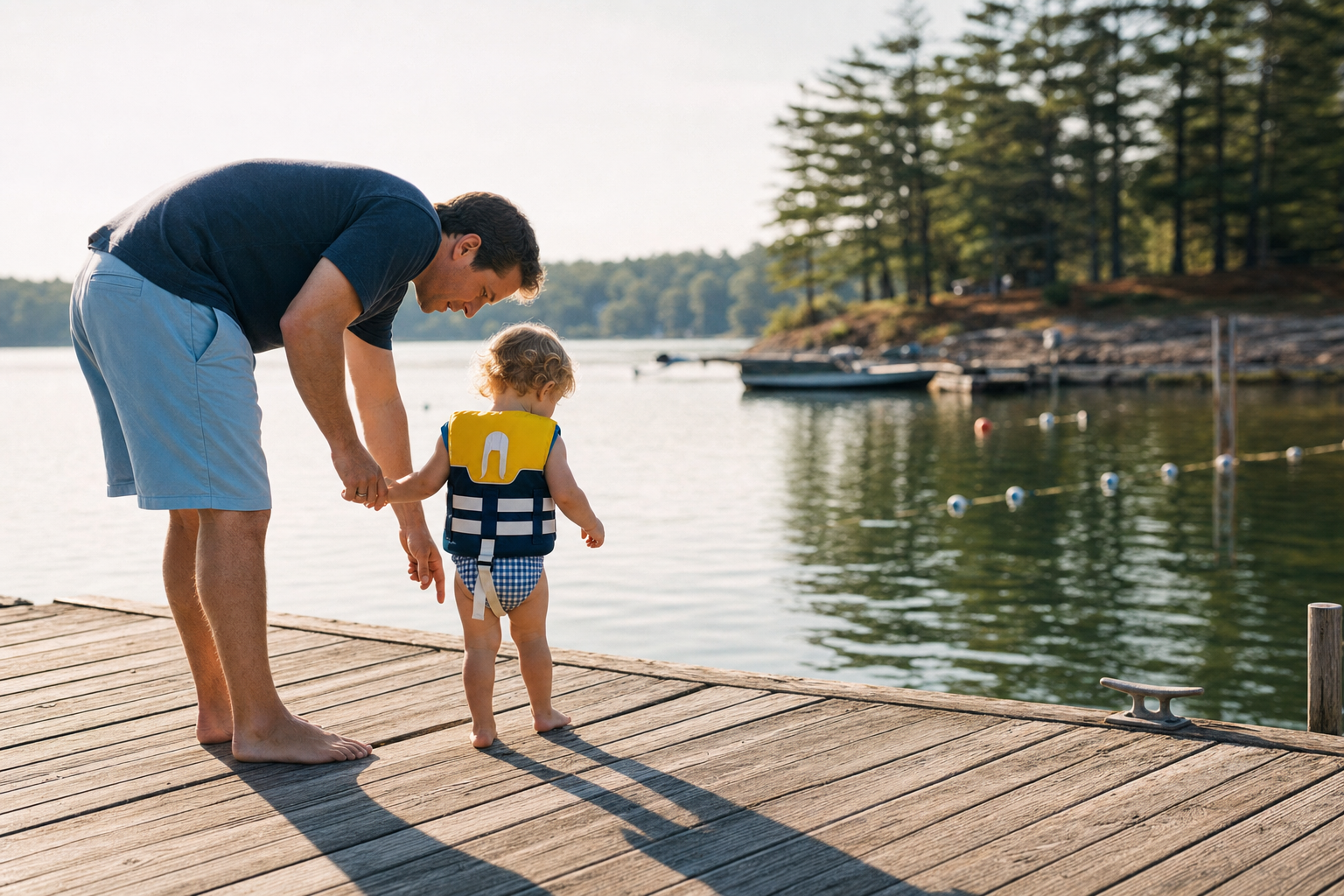
Imagine this: a calm summer morning by your favorite lake, your toddler playfully toddling toward the dock, excited to dip a toe into the water. That’s when dock safety becomes your top priority. With deep natural water just steps from land, many parents wonder: what rules should I follow to keep my child safe? Tunnel in with me and let’s talk toddler dock safety you can count on.
Why Pool Skills Don’t Work on Docks or in Open Water
Toddlers who float well or swim short laps in pools often look confident—but that confidence can be dangerous around docks. Unlike pool walls, docks or pontoons give no solid support if arms tire. Natural water hides sudden drop-offs, slippery algae, cold temperatures, underwater debris or strong current—none of which pool lessons prepare you for. According to water safety experts, pool swimming skills do not reliably transfer to open water because conditions are unpredictable in lakes, rivers, or even near marina edges.(waterwisekids.com)
That gap means swim lessons help, but do not replace hands-on supervision or protective measures like life jackets and firm hand-hold routines when near a dock.
Essential Life Jacket Checks: Fit, Function, Fasteners
When you’re at a dock or lake platform, a properly fitted life jacket is non-negotiable for toddlers between 12–36 months or for any mobile baby near water. The U.S. CDC recommends wearing a well-fitted United States Coast Guard–approved life jacket whenever a child is in, on, or near natural water.(cdc.gov)
Check the jacket: ensure it’s the right weight class, snug around the chin without rolling back, with all buckles fastened and straps tucked away. Let your child try it indoors first—practice putting it on and taking it off—so they accept it outdoors. Remember that paddling arms or splashing feet in a pool doesn’t confirm safety when water deepens abruptly off a dock.
Hand-Hold Rules, Stop-and-Hold Routines, and Crawling Risks
At around 12 months, many babies start pulling up and cruising; by 18-24 months they may run or wander. Docks don’t tolerate that freedom. Begin with a stop-and-hold routine: when entering dockside areas, stop the child, hold their hand, check for hazards (loose boards, gaps, slippery surfaces). Repeat constantly.
Set hand-hold rules: always holding an adult’s hand while near the edge, no running, no climbing through railings. Even toddlers who crawl open their bodies to risks—hands grip poorly, body is misbalanced, and crawl speed can send them too close to water before an adult reacts.
If you want a structured way to build water confidence at home, the 10-Week Plan guides you step by step.
These routines and rules create consistency for toddlers who respond well to repetition—they begin to understand expectations, and instinctively pause at the water’s edge.
Parent Skills: Supervision, CPR, Swim Lessons, and the 10-Week Plan
There’s a lot parents can learn. First, close, constant supervision is key. Pediatric associations urge caregivers to stay within arm’s length, providing what’s called “touch supervision” for infants, toddlers, and weak swimmers in or around water.(publications.aap.org) Second, enroll in swim lessons after your child turns one; these build confidence and basic skills, though they don’t replace dock-specific safety habits.(healthychildren.org)
A helpful tool I found is the “10-Week Plan” from swimy.org—a structured curriculum parents can use to introduce open-water awareness at home and around calm, supervised water. This plan teams swim readiness with life-jacket usage and repeated stop-and-hold habits so that toddlers begin to understand risk gradually without pressure.
Also, every adult supervising should know CPR and how to respond immediately should water entry result in trouble.
[[ctababy]]
Common Misunderstandings and Why They Matter
Many parents assume that once toddlers “can swim” in a pool, they’re ready for docks and lake visits—this is one of the most dangerous assumptions. Open water hides hazards like cold shock and dark water depths; a confident pool swimmer may panic in a lake.(waterwisekids.com) Others think flotation devices like water-wings will do. False: only properly certified life jackets are reliable near docks or boats. Water toys are no protection.(cdc.gov)
Some caretakers believe that occasional supervision is enough. Truth is, drowning happens quickly and silently—even during short lapses. The AAP stresses supervision must be physically close, constant, attentive, and performed by someone capable of rescue and CPR.(publications.aap.org)
Building Blocks of Rules You Can Enforce
Create rules as soon as your child is mobile. At home, role-play dock behavior on flat surfaces. At the lake, establish clear zones: “safe walking zone,” “hand-hold zone,” and “water edge zone” where life jacket and supervision are mandatory. Practice stop-and-hold at every new place—boat ramps, pontoons, marina edges—so toddlers learn before danger appears.
Teach toddlers to turn around when called, to recognize when water is too deep, and that adults lead the way. Reinforce routines daily, especially in summer holidays, boating trips, or lake cabin stays when the temptations to explore docks rise.
Safety Caveat: Docks Are Not Practice Spaces for Walking Alone
Even once they walk well, docks are not places to test independence. A child may balance fine indoors by a pool deck, but the dock’s height, gaps, movement, and steep drop mean falls can be life-threatening. Always stay very close, always hold their hand if the ground is unstable, and don’t assume that being mobile equals being safe.
Final Thoughts
In short, toddler dock safety hinges on layered protection: well-fitted life jackets must be worn, swimming lessons started early but not overvalued, hand-hold and stop-and-hold routines enforced, and supervision that’s truly constant and capable. Summer holidays, lake cabins, boating trips—all of that fun hinges on these safety rules. Teach them, repeat them, use tools like the swimy.org “10-Week Plan” to build habits. When toddlers and parents both know what to do, peace of mind replaces fear at water’s edge.
120+ swimming exercises sorted by age — with video and instructions. Developed by swim instructors, completely free.

120+ swimming exercises sorted by age — with video and instructions. Developed by swim instructors, completely free.