When Is It Safe to Swim Again? Parents’ Guide After a Pool Closure
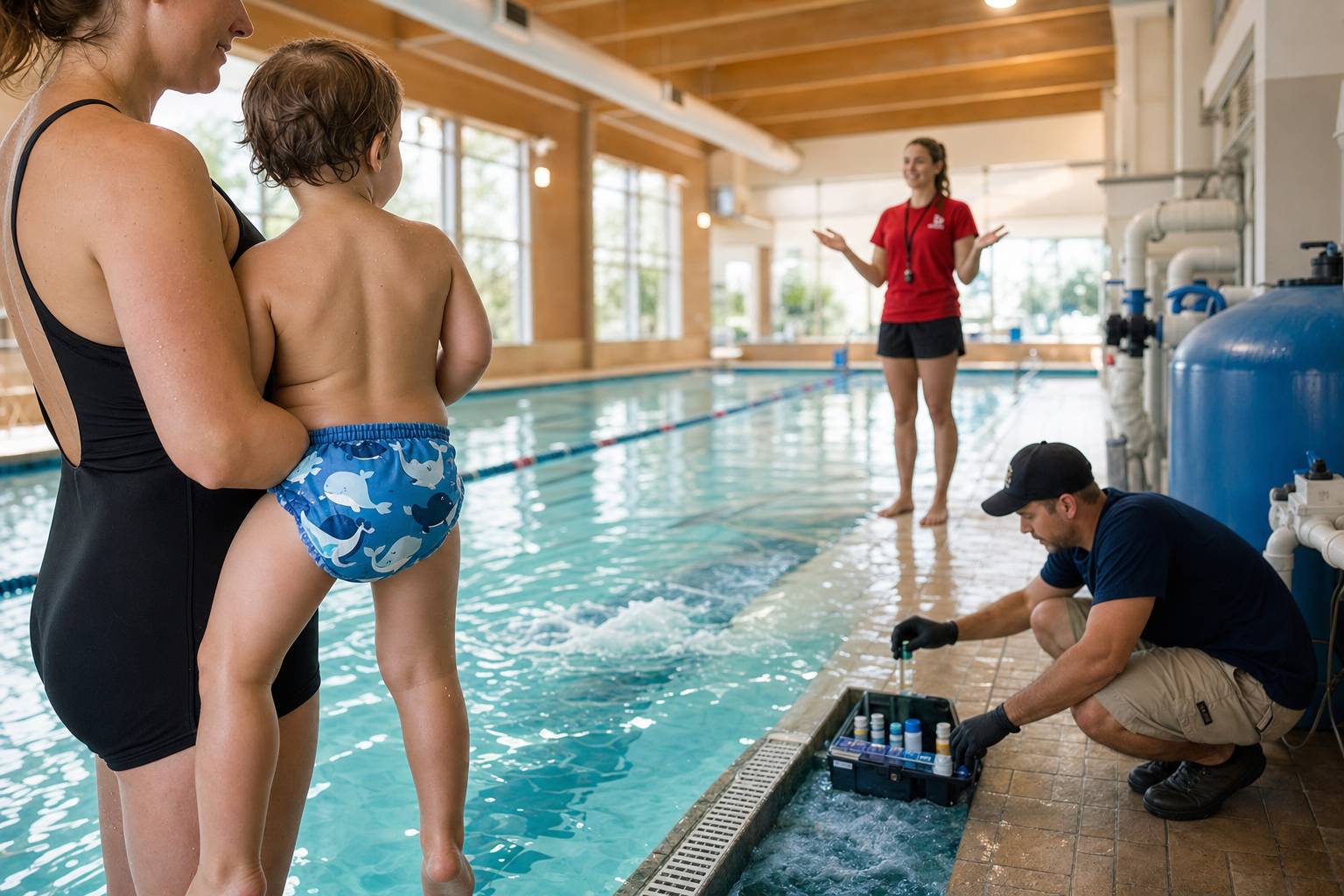
Right after a pool closes due to poop, vomit, blood, chemical imbalance, pump failure, or cloudy water, you're probably wondering: When can my baby or toddler safely return? Let’s get into the most important safety rules based on CDC guidance for babies aged 0–36 months. Then you’ll have the questions to ask staff before stepping in again—because clear water isn’t always clean water.
What the CDC Says Must Happen Before Reopening
When a public pool closes after contamination, certain steps aren’t just best practice—they’re required to protect health.
Poop or Diarrhea in the Pool
If there’s diarrhea in the water, it’s considered a high-risk event because of germs like Cryptosporidium that resist chlorine. The pool must be closed, the waste removed, and disinfected with a free chlorine concentration raised very high—using “chlorine shock”—for many hours. Only when a CT inactivation value (chlorine level × time) of 15,300 mg·min/L is reached and verified should the pool reopen.(cdc.gov)
Formed poop (solid stool) is less risky but still needs removal. The water chemistry should be lifted (free chlorine to about 2 ppm) and maintained, with pH at or below 7.5, for at least 25–30 minutes before swimmers can return.(cdc.gov)
Vomit and Blood
These incidents are taken seriously. For vomit with anything but plain pool water, or blood spills, the water must be skimmed clean, and free chlorine raised to ~2 ppm with pH managed (7.5 or lower) for about 30 minutes. The filtration system must be running properly.(cdc.gov)
Chemical Imbalance or Pump Failure
If chemical levels (chlorine, pH, disinfectant) are off, or the pump/filtration system isn’t working, those are automatic “pool closed” conditions. Circulation failure allows germs and toxins to build up—even if the water still looks blue. Until everything’s operating correctly, testing consistently, and water chemistry meets safe standards, kids should stay out.(cdc.gov)
Babies 0–36 months have developing immune systems and are more vulnerable to minor infections. They’re also more likely to swallow water accidentally. Re-entering the pool too early can lead to illnesses like Cryptosporidiosis or Giardia infections. Following the safety steps ensures reduced risk so your little one can swim and play with confidence. The guidelines in a strong teaching program like the 10-Week Plan emphasize keeping exposure low and safety high—especially when the pool has been reopened after contamination.
[[ctababy]]
Fast Checklist: When Can You Let Your Baby Swim Again?
Here’s what you, as a parent, should confirm before re-entering a pool after a closure—
You must ask whether the pool:
- followed the required procedure for the type of contamination (diarrhea vs solid poop vs vomit vs blood)
- raised free chlorine to the needed level (e.g. 2 ppm or higher), with pH at or under 7.5
- kept filtration and circulation system running perfectly, including any linked pools sharing circuits
- tested that the water chemistry returned to safe operable levels before letting anyone back in
- logged the incident so you can see when it was cleaned, what steps were taken, and by whom
Why Babies Need Extra Protection
How to Tell If a Pool Staff Did Things Right
It’s not enough that the water looks clear. Here are the right questions to get real answers:
- “Was this pool event tied to any other pool (i.e. shared circulation)? If so, were both closed and treated?”
- “What type of contamination caused the closure—solid poop, diarrhea, vomit, or blood?”
- “At what chlorine concentration and pH did you disinfect, and how long was the contact time (how long did water stay at those levels)?”
- “Did you use unstabilized chlorine (which works faster in disinfection)?”
- “Was the filtration system fully operational throughout the treatment?”
- “Do state or local health inspectors need to verify safety now before reopening?”
Common Mistakes to Avoid
Parents sometimes fall into these traps when deciding whether to return to pool after a closure:
Thinking water looks fine means it is fine. Clarity doesn’t guarantee that germs have been killed or chemicals are safe.
Ignoring shared circulation. If the pool shares a circuit with other pools, all connected pools must be treated.
Skipping the fine print on diarrhea rules. If anyone had diarrhea, the response must assume risk of Cryptosporidium, which resists many normal disinfectant levels.
Bottom Line
For babies, every precaution matters. A pool closed due to poop, vomit, blood, pump failure, cloudy water, or chemical imbalance must be cleaned and disinfected correctly before any toddler splashes again. CDC rules require specific chlorine levels, pH control, proper circulation, contact times for chemical disinfection, and transparency from staff.
When you know what questions to ask—and demand clear, consistent answers—you empower your child’s safe return to public pool fun during summer or holiday season. Clear water isn’t enough; clean and safe water is what you deserve.
120+ swimming exercises sorted by age — with video and instructions. Developed by swim instructors, completely free.

120+ swimming exercises sorted by age — with video and instructions. Developed by swim instructors, completely free.