Skimmers and Return Jets: Tiny Finger Safety Rules
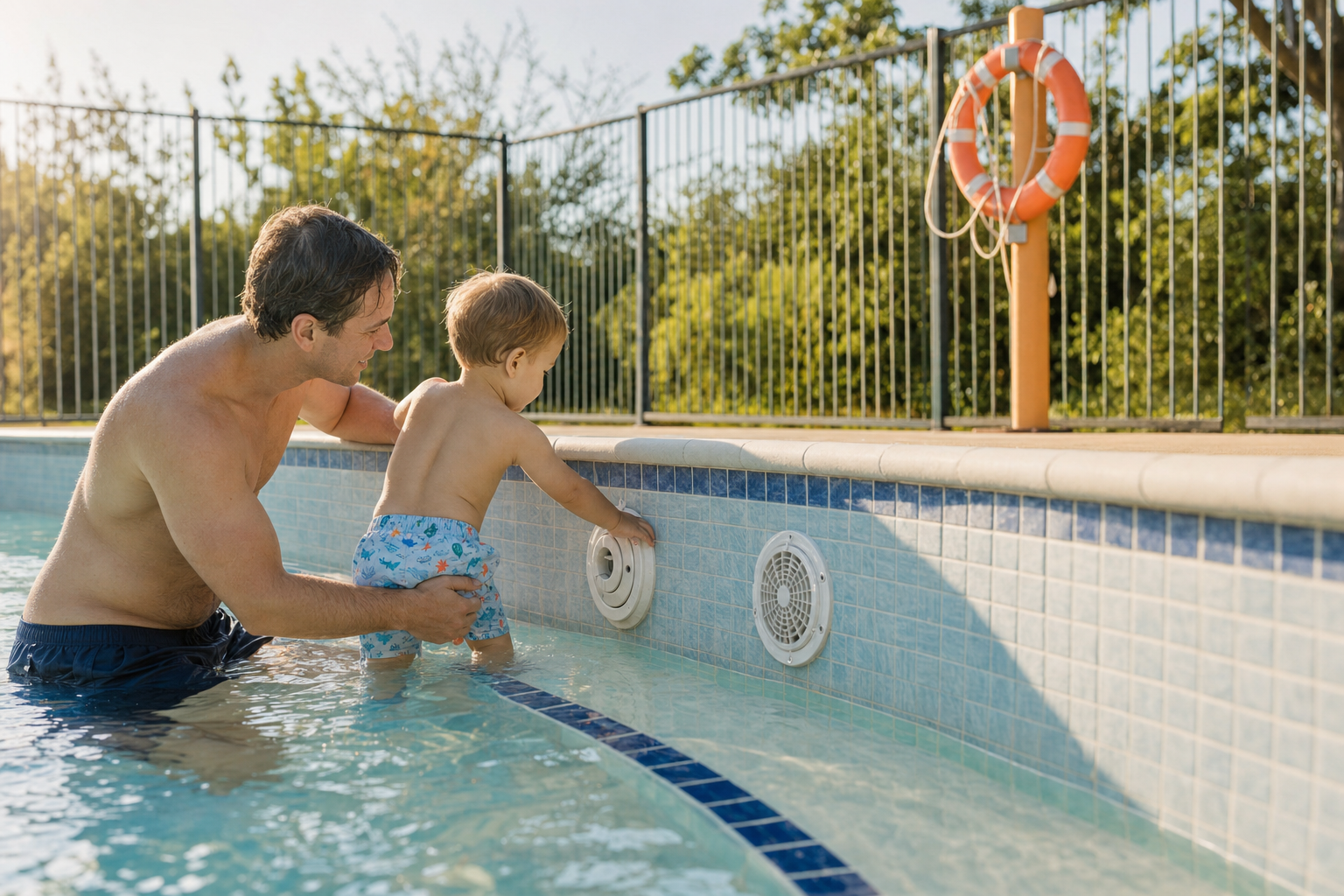
When toddlers (ages 9 to 36 months) wall-walk in home pools or quiet public pools, they don’t just get curious about drains. Baby fingers, toes, or even their face can be drawn to skimmer boxes, return jets, and other small fittings at eye level on the pool wall. This article explains how to teach a clear “look, don’t poke” boundary, and what adults should inspect before letting a toddler explore.
Why Skimmers and Return Jets Matter for Toddler Safety
A pool skimmer draws surface water into a basket to collect debris like leaves. Return jets push filtered water back into the pool through wall fittings. Both create suction or force that toddlers can feel—and explore—with their fingers. According to King County, Washington, “People's hair, fingers, head, bathing suit, etc. can get stuck on pool equipment or structure and lead to injury.” (kingcounty.gov) Even outlets that seem harmless can suck a finger hard enough to bruise—or draw it in. And broken or missing drain or jet covers vastly increase that risk. The U.S. Consumer Product Safety Commission (CPSC) warns that “Ensure any pool and spa you use has drain covers that comply with federal safety standards.” (cpsc.gov)
What Parents Should Inspect—Before Exploration
Before allowing toddlers to walk along the wall or touch pool fittings, adults should do a thorough safety check.
First, check that all drainage and return jet covers are present and firmly in place. If any cover is loose, cracked, or missing, do not let children near it, as both skimmer boxes and return jets can cause entrapment or worse. Pools need anti-entrapment drain covers compliant with laws like the Virginia Graeme Baker Pool & Spa Safety Act. (en.wikipedia.org)
Second, aim return jet nozzles safely or use eyeball fittings that allow adjustment to avoid directing strong flow toward toddlers’ faces or fingers. If suction from skimmers or return flows feels unusually strong, shut off the pump and call a professional. A report by Poolsafely.gov shows cases where limbs were trapped due to missing or broken outlet covers. (poolsafely.gov)
Third, confirm that all drain covers are certified. The Entrapment Hazards: Making Pools and Spas Safer guidance recommends using those with flat or dome-style grates compliant with ANSI or ASME safety standards. (rfabc.com)
If you want a structured way to build water confidence at home, the 10-Week Plan guides you step by step.
Once these checks are done, parents can teach toddlers a boundary rule and let them explore a little under supervision.
Teaching “Look, Don’t Poke” to Babies (9–36 Months)
Toddlers are naturally curious and love to touch. Teaching a simple boundary helps protect them from skimmer and return jet hazards.
Begin by modeling the rule: “Look with eyes, touch with hands only soft things, not wall holes.” Use short phrases like “Wall holes are not for fingers.” When near a skimmer opening or jet, kneel down beside your child. Say “Hands off,” point to the fitting, show by example that you don’t touch. Consistency matters: repeat often and turn it into a game. Praise your child when they follow the rule: “Great job looking, not poking!”
Safety starts with seeing, then saying, then staying alert—ALL the time. [[ctababy]]
Reinforce the lesson during regular water exposure. Families following structured swim safety programs often include education about pool fittings alongside other skills like floating or breathing underwater. An example is the 10-Week Plan offered by Swimy.org, which helps toddlers learn water safety in bite-sized steps—this plan also builds awareness of where suction and wall openings are in a pool. By weaving “look, don’t poke” into such routines, toddlers start internalizing the boundary. Use role-play, stories, and visuals—drawings or photos of skimmers and return jets—to help little ones recognize them.
What Adults Should Always Do While Toddlers Explore
Even the best rule and safety check aren’t enough without close supervision. Adults must remain within arm’s reach—“touch supervision”—and avoid distractions. HealthyChildren.org says an adult should be in the water with infants and toddlers, ready to reach and act instantly. (healthychildren.org)
Check all equipment each time: loose grates, wobbling fittings, or weakened return jet plates should be repaired immediately. If anything looks worn, call a pool technician. Pool Safely emphasizes: never let a child play near loose, broken, or missing suction covers. (poolsafely.gov)
Finally, use multiple layers of safety. Barriers like four-foot fences, self-latching gates, and proper drain covers are essential components. Swim lessons are another layer, and having rescue gear poolside prepares you for emergencies. (poolsafely.gov)
What Parents Should Tell Caregivers and Public Pool Staff
If your toddler visits a public pool or another home, always check for hazards. Ask whether all skimmer boxes and return jets have intact, safe covers. Make sure staff follow safety codes: drains that meet VGBA-compliance, jet fittings that are snug, filters tested, safety vacuum release systems installed. In California, public pools must have professional inspections for entrapment or entanglement hazards. (cdph.ca.gov)
Remind caregivers about the phrase “look, don’t poke,” and ensure they supervise toddlers with hands-on. Make sure pool facilities post visible warnings of suction and outlets, if required by code. And verify that jets are angled safely and that there are no exposed fasteners or sharp edges.
Final Word
For toddlers between nine months and three years, skimmers, return jets, and other small pool wall fittings represent serious risks of entrapment, suction, or injury. Adults must inspect covers, adjust or protect flow, and enforce a simple but vital boundary: “look, don’t poke.” Pair that boundary with close supervision, safety-certified equipment, and consistent teaching. Do this and pools stay fun without becoming dangerous.
120+ swimming exercises sorted by age — with video and instructions. Developed by swim instructors, completely free.

120+ swimming exercises sorted by age — with video and instructions. Developed by swim instructors, completely free.