Safe Family Rules for Hot Springs and Thermal Pools
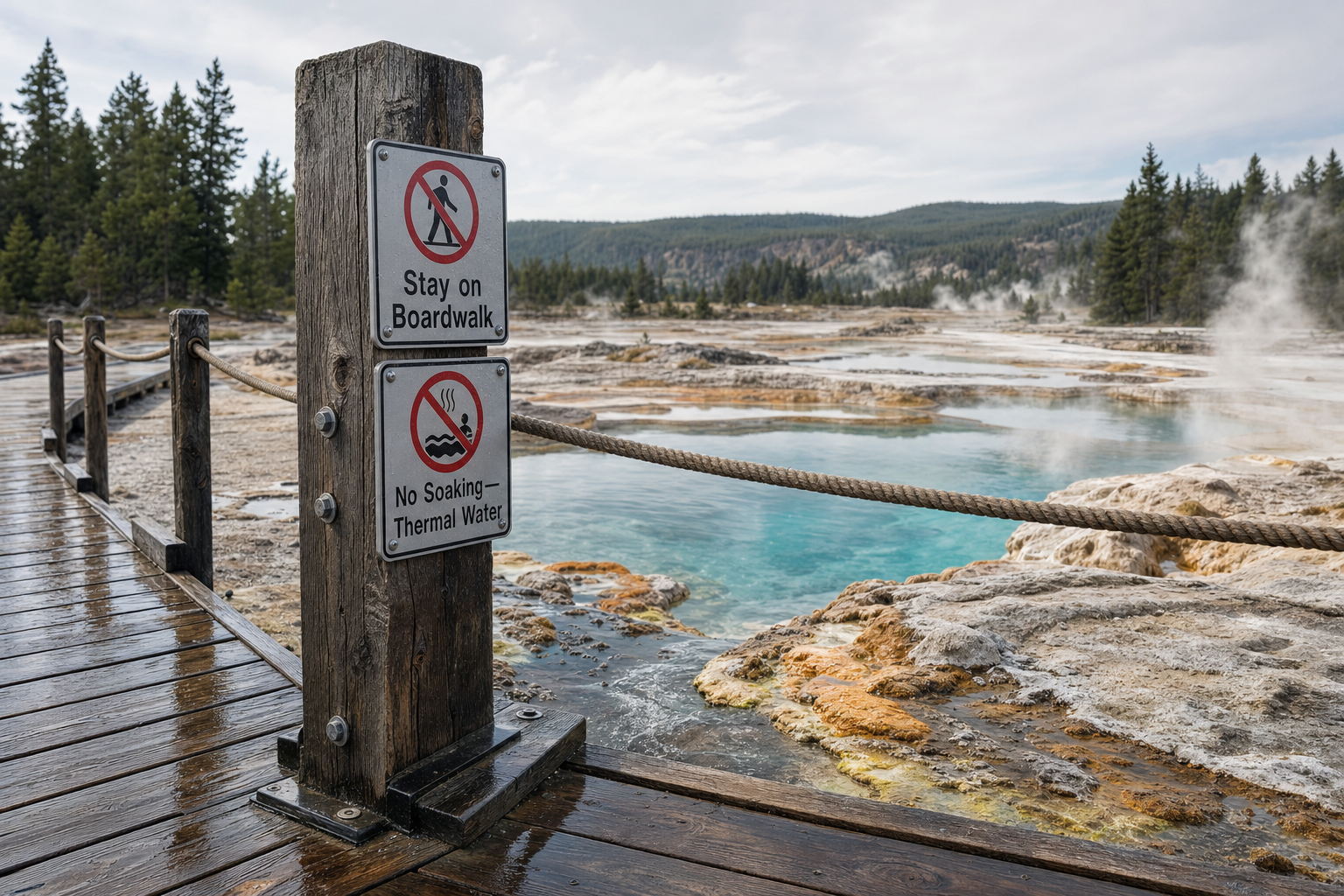
Natural hot springs and thermal pools can feel like magic to kids aged 3–12. Before you plan your next family adventure, though, there are critical safety rules—especially do-not-enter rules—you need to know. With clear signage, knowledge of risks, and respect for legal boundaries, families can explore geothermal wonders safely.
Do-Not-Enter Rules & Why They’re Non-Negotiable
The most urgent rule: never enter any natural hot spring or thermal feature that is entirely of thermal origin. In Yellowstone National Park, swimming or bathing in hot springs whose water comes solely from thermal sources is illegal. This law protects both visitors and fragile ecosystems; ground crusts can be thin and collapse, exposing superheated water capable of severe burns or worse. (nps.gov)
It’s not just Yellowstone. At Hot Springs National Park in the US, federal law (16 USC § 374) bans entering springs for bathing unless using approved bathhouses. Violators face fines and possibly misdemeanor charges. (uscode.house.gov)
These laws are backed by signage along boardwalks and geologic features: “Swimming or soaking in heated springs is prohibited” or “Stay on designated paths.” Kids are naturally curious, and parents should enforce these signs without excuse.
Understanding the Risks: Temperature, Toxins, & Terrain
Water in thermal features sometimes reaches boiling. Even runoff—water flowing away from the source—can stay dangerously hot. Walking or stepping off paths can lead to falls into boiling deposits or loose ground. (home.nps.gov)
Hot spring water can also be very acidic or alkaline, housing microbes, fungi, or bacteria that lead to skin rashes, stomach illness, or more serious infections. Yellowstone warns that thermal waters contain organisms that “may cause illness, including skin rash, gastrointestinal illness … or other infections that can be life-threatening.” (home.nps.gov)
Additionally, gas emissions like hydrogen sulfide can accumulate in geyser basins. If children or adults feel dizzy, nauseated, or ill near thermal areas, the rule is clear: leave immediately. (nps.gov)
Legal & Managed Options: Where You Can Soak or Swim
If you want a structured way to help your child progress at home, the 10-Week Plan guides you step by step.
Not all hot water is off limits. Legal, managed hot springs—often part of a resort or public facility—are safely regulated. These bathhouses or thermal pools provide signage, temperature control, supervision, and filtered water to make it safe for kids.
If you’re visiting Yellowstone and want water time, note that the Firehole Swimming Area is a rare exception where designated swimming is allowed under strict conditions—only in specific places, only when posted open, only in areas that are not purely thermal. (home.nps.gov)
[[ctakid]]
Beyond national parks, look for resorts or establishments with monitored thermal pools that are legally operated. These are the places children can safely use under supervision.
Teaching Children Boundaries Without Killing Curiosity
Kids aged 3-12 learn curiosity with boundaries. It helps to explain what makes thermal features exciting but dangerous. Say things like: “That crust looks solid, but one wrong step and it could break through to superhot water underneath.” Use examples, lean on storytelling from ranger talks or park brochures. Visual cues—signs, ramps, tour guides—help fix the message.
Always point out boardwalks and warning signs. When a sign says “closed” or “stay off,” it must be enforced. Even if paths are crowded or kids are tired, follow rules—children mimic what adults do.
Parents’ Checklist: What to Check Before You Go
First, review the park policy or facility rules. Yellowstone’s Superintendent’s Compendium, updated in September 2026, clearly prohibits leaving trails, touching thermal runoff, and swimming in thermal water. (home.nps.gov)
Check the water temperature if a thermal pool is legally accessible—a resort style pool probably limits temperature to about 100-104°F, but natural thermal water can far exceed that. Set the expectation with kids: if it feels “scalding,” it probably is.
Parents should also use modern tools like the 10-Week Plan from swimy.org to help children learn effective swim skills before risky trips. Integrating swimming lessons gives kids strength and confidence near water. (healthychildren.org)
Bring plenty of water and shade. Sun exposure plus hot water creates dehydration risk, especially in holiday travel when children often over-excite and forget fluids.
During Peak Season & Holidays: Extra Precautions
At busy times, parks tend to be crowded; trails and boardwalks might get slippery. Evaluate whether managing young kids in flood of fellow visitors compromises safety. Early morning or late afternoon visits tend to be calmer and cooler.
Be alert for closures posted due to weather or safety hazards. In spring or early summer, snowmelt can make trails wet, boardwalks icy, or terrain obscure. Always check in with ranger stations ahead of arrival. (nps.gov)
Lastly, avoid rushing. Rest stops, breaks, and checking in with your children often help prevent risky behavior like wandering off the boardwalk to cool off, or stepping too close to a hot feature.
Final Thoughts: How to Make Hot Springs Memorable—not Dangerous
Natural hot springs are unforgettable for families when done safely. The most pressing rules are simple: never enter natural thermal features, stay on boardwalks, wear respect for the laws. Combine that with teaching your kids safe behaviour and knowing safe places to soak or swim. With intention and care, geothermal adventure can be magical—warm, wondrous, and worry-free.
120+ swimming exercises sorted by age — with video and instructions. Developed by swim instructors, completely free.

120+ swimming exercises sorted by age — with video and instructions. Developed by swim instructors, completely free.