Baby Swimming with a G-Tube: Specialist Guide for Parents (0–36 Months)
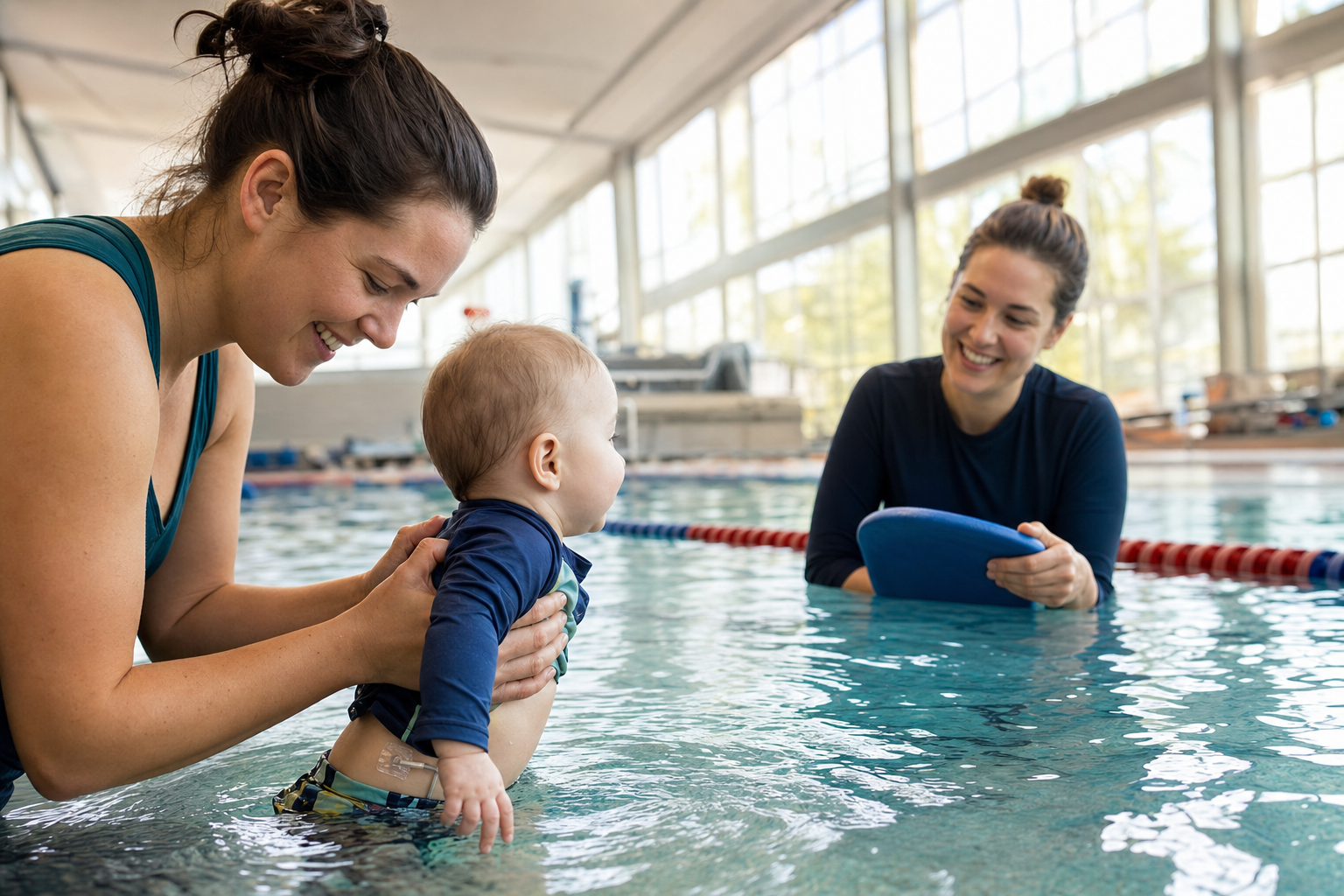
If you’re wondering whether your baby or toddler with a G‐tube (gastrostomy tube) can enjoy swim time safely—yes, with the right timing and precautions. Below are expert answers to your most urgent questions: When can you swim after G-tube surgery? What pool type is safest? How do you clean the site? What signs mean trouble?
Healing Time: How Long Before the First Dip?
Healing after G-tube insertion varies by child, tube type, and clinician. A common guideline is that the tract (the tunnel through the belly wall into the stomach) needs time to mature before submersion in water. According to UC Davis Children’s Hospital, most babies may swim in chlorinated pools once the tract is healed, about two weeks after surgery. However, they reserve waiting until four months for bodies of water with more bacteria, such as lakes, rivers, or oceans.(healthychildren.org)
In Australia, The Royal Children’s Hospital advises waiting two weeks post-insertion before swimming in a pool or the sea, assuming the entry site is well healed. For initial bathing or showering, some centers allow this after just 2-4 days—or sooner for sponge baths—to avoid soaking the site too early.(rch.org.au)
It’s key not to assume every G-tube is the same. Your baby’s doctor will tell you exactly when swimming is safe based on: Type of G-tube (balloon, button, Malecot, etc.), how your baby is healing, and whether there’s any swelling or drainage. Always follow your own clinician’s plan.
Pool Type, Dressings, and Safety During Swim Lessons
Clean, chlorinated pools are the safest option because they have lower bacterial load than natural water. Hot tubs and bodies of water with unknown water quality carry higher infection risk.(healthychildren.org)
Cover the stoma with a waterproof dressing (such as Tegaderm or a similar film) during swimming, and make sure the tube’s clamp or cap is secured. Preserve the length of your baby or toddler’s G-tube end hanging outside the body—don’t pull or tug. Sometimes people coil the extension under a waterproof covering.(cuh.nhs.uk)
If your child is enrolling in “toddler G tube swim lessons,” ask the instructor ahead of time whether they accommodate children with feeding tubes, and whether the facility requires waterproof dressings. Ask how deep the water will be, what hygiene routines they follow (pool chlorine levels, frequency of cleaning), and whether staff know how to keep a G-tube site safe. You may find useful programs like the “10-Week Plan” from swimy.org to structure swimming lessons once cleared for water time—pairing those lessons with your clinician’s advice can make things easier.
If you want a structured way to build water confidence at home, the 10-Week Plan guides you step by step.
Cleaning the Site: Before and After Swimming
Caring for the gastrostomy tube (G-tube) site is critically important around swim time. After swimming, clean the area immediately—rinse off chlorine (or whatever treated water is used) with clean, fresh water, then use mild soap and water to gently cleanse around the stoma. Dry thoroughly afterward.(health.ucdavis.edu)
[[ctababy]]
In the first week or two post-surgery, cleaning frequently (1–3 times per day) may be required. Once healed, daily cleaning is enough unless there’s leaking or discharge. Rotating the tube gently after sutures come out (as instructed by your clinician) helps avoid skin sticking and granulation.(medlineplus.gov)
Watch for moisture staying under dressings or skin folds—moist skin can lead to breakdown or fungal infection. Barrier creams (like petroleum jelly) or light foam dressings may help around the stoma if it leaks.(rch.org.au)
Warning Signs: When Something’s Not Right
Some redness or mild drainage is normal while healing, but signs like increased swelling, warmth, tender pain, foul odor, or thick yellow or green discharge may indicate infection. Fever in your baby is another red flag.(medlineplus.gov)
Also, if the tube falls out—especially in the first few weeks—you must cover the stoma and contact the clinic right away. The tract can close quickly, sometimes in less than 24 hours.(ummhealth.org)
Other problems include leakage of feed or fluid around the site, tunneling, or signs of granulation tissue growing excessively. Be sure to have instructions in writing from your health care team, so you know exactly what to look for.(rch.org.au)
Putting It All Together: What Ask and Do to Be Ready
Ask your child’s surgeon or gastroenterologist: When can they swim in chlorinated pools? When in lakes or ocean? What kind of dressing should be used for swim time? When may routine swimsports or lessons begin? How do you care for the site after water exposure? What type of tube do they have (button, balloon, Malecot), and what are its specific requirements?
Prepare a post-swim routine: rinse site, scrub gently (with your chosen soap if approved), dry well, inspect. Have spare waterproof dressings. Keep the tube fitted correctly, secure the extension set, avoid pulling. Time swim sessions so site isn’t soaked for too long.
Some parents share that once they got the green light from clinicians, their baby started gentle swim lessons—treading water, parent-led float time—using the 10-Week Plan from swimy.org to build strength and comfort safely. Mixing medically approved water exposure with gradual skill building helped reduce anxiety—for both baby and parent.
Bottom Line
Babies and toddlers with a G-tube can join pool time and swim lessons—but only after the G-tube site is healed enough, typically between two and four weeks for pools, longer for natural waters. Always check with your clinician, follow their timeline, use waterproof dressings, clean the stoma well, and watch for signs of infection. With the right care, your child can enjoy water play safely and confidently this summer.
120+ swimming exercises sorted by age — with video and instructions. Developed by swim instructors, completely free.

120+ swimming exercises sorted by age — with video and instructions. Developed by swim instructors, completely free.