Pregnant Parent in Toddler Swim Class: Safety Tips for You and Your Little One
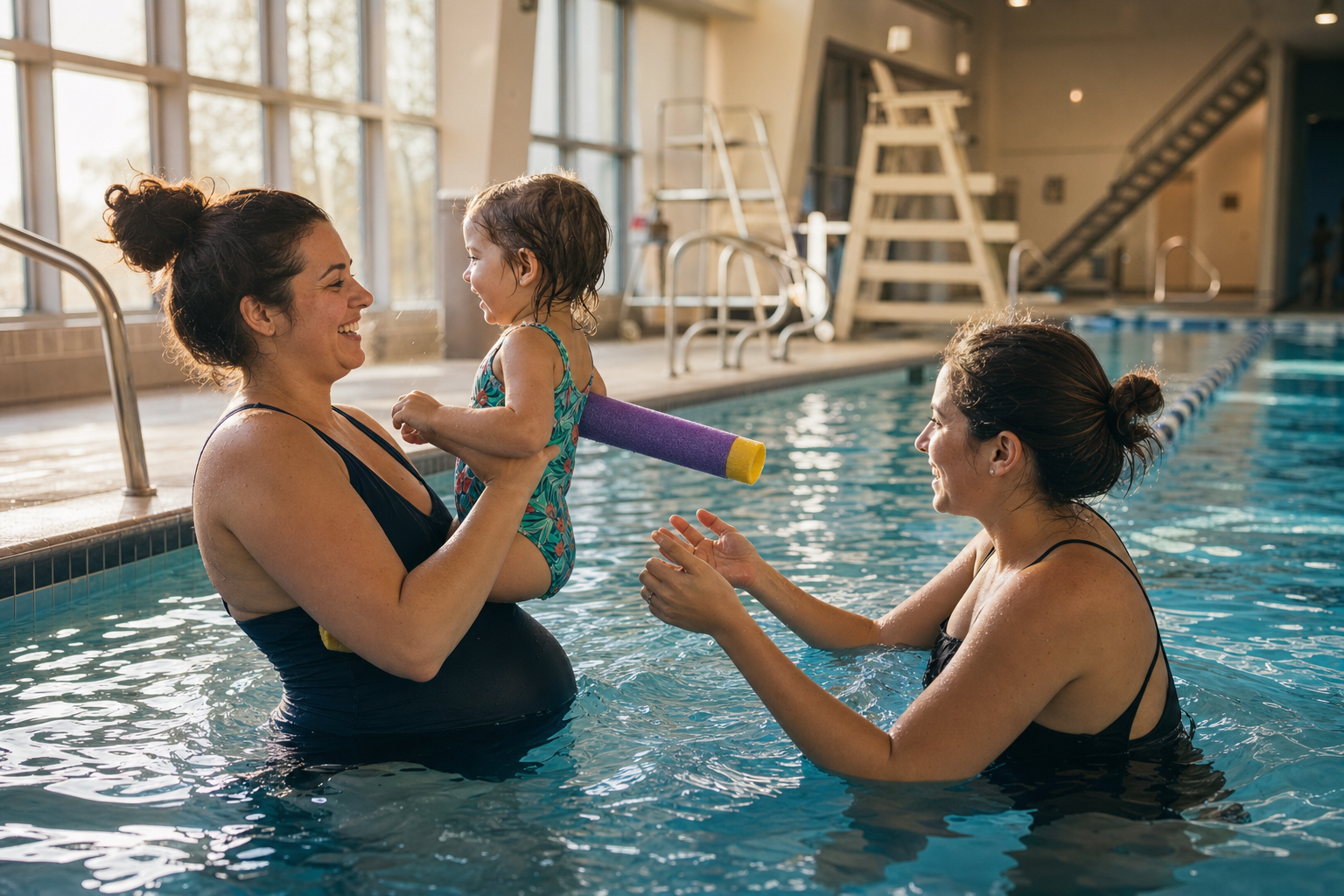
If you're a pregnant mom with a toddler aged between 6 and 36 months and you're considering joining a toddler swim class, knowing what to prioritize for safety can make all the difference. Below are key guidelines on safer holds, fatigue and lifting management, and what to talk about with the swim school before you dive in.
Safer Holds and Water Support
When you're pregnant while attending a parent-baby swim class, even warm shallow water won’t remove balancing challenges or the need to lift your toddler safely. As your center of gravity shifts through each trimester, maintaining stability becomes harder. It’s better to use holds that spread weight evenly—cradle your child under the armpits or chest with your arms high and close to your body for support. Avoid holding them under the arms in a way that forces you to stoop or lean over, which can strain your back or core. Using buoyant tools like foam noodles under the child's belly for extra float can reduce how much lifting you do, but never assume floatation toys fully protect balance or safety.
Water supports your weight—when buoyant—but swinging a squirmy toddler adds torque and risk of slipping. Medical bodies like the American College of Obstetricians and Gynecologists (ACOG) list unstable balance and repetitive lifting as common risk factors during pregnancy (cdc.gov). So when you lift, bend your knees, use both arms evenly, and stay in chest-high water if possible.
Recognizing Fatigue, Dizzy Spells, and Early Exits
It’s normal for pregnancy, especially in later trimesters, to heighten fatigue, shortness of breath, or dizziness. If you ever feel dizzy, lightheaded, unusually out of breath or unwell, exit the water immediately. Your ability to provide touch supervision—being within arm’s reach of the toddler at all times—is essential for younger children. The U.S. Centers for Disease Control and Prevention (CDC) emphasizes “touch supervision” for children under five as a critical safety layer (cresthillacademy.com).
You may need more frequent breaks than before. Teach your toddler gradually to pause or wait on the pool steps or edge so you can recover both in breath and strength. If a class runs 30 minutes, don’t be afraid to sit out some sections or decide not to attend on days you feel low energy. As always, ask your clinician if there are any limits specific to your pregnancy.
When to Bring a Second Adult
Some swim school settings allow for an assistant or swim instructor, but bringing a second adult—one you trust—can be a smart idea when you’re expecting. Another adult in the pool can help with lifting the toddler in and out of the water, spotting you during demonstrations, or staying by your side while you rest. Georgia’s aquatic safety policies recommend that beginner and very young students with a parent or caregiver in the water may have an assistant, another adult or lifeguard provide additional help (dph.georgia.gov). This doesn't replace supervision, but it helps you stay within safe limits physically.
If you want a structured way to build water confidence at home, the 10-Week Plan guides you step by step.
[[ctababy]]
If your swim school permits, having someone act as your “water buddy” means faster exits, fewer awkward lifts, and more confidence. It’s especially helpful if you’re in late pregnancy, when walking on pool decks becomes more difficult.
Talking to the Swim School About Exits, Lifting, and Accommodations
Before you enroll, ask about policies that affect safety for pregnant parents. Key questions include: how do students exit the water—are there stairs, ladders or gentle ramps? What is the depth of water where parents hold toddlers—chest-deep or deeper? How much lifting will happen? Will instructions expect you to lift toddlers overhead or carry them out of deeper water? Will there be extra support from instructors or assistants?
Also discuss how the swim school handles absences or early leaves—pregnancy often means needing to skip a session or leave early without penalty. And check whether their staff are trained in early toddler swim guidelines, such as the USSSA Infant Toddler Guidelines, which cover caregiver involvement, brief underwater submersions for infants over 6 months, class size limits, and safety communication between instructor and caregiver (usswimschools.org).
Roughly halfway through many learning programs, some caregivers weigh switching practices or technique, and the “10-Week Plan” from swimy.org is one resource that outlines clear weekly goals for both child and caregiver to build swim confidence and safety skills together. It’s worth reviewing so you and the swim school share expectations.
Trimester-Wise Tips: Adapting Holds, Class Times, and Intensity
In early pregnancy, you may feel relatively strong—but you might already notice changes in balance. Hold your toddler close, avoid overhead lifting, and consider reducing class duration if sessions start to feel more exhausting than empowering. In mid-pregnancy, hips and lower back carry more strain. Shift weight onto both legs evenly when standing, avoid twisting movements, and limit time in deep water where you might struggle to maintain footing. In later pregnancy, water can ease the load more fully, but walking, getting in and out of the pool, and lifting still require care. Be mindful of wet surfaces, slower reaction times, and always having someone nearby to assist.
Final Words: Key Safety Reminders
Always verify with your health care provider whether attending toddler swim class while pregnant is safe for you. Don’t go if you're dizzy, bleeding, suffering unusual pain, or otherwise unwell. Touch supervision isn’t optional—that’s stay-within-arm’s reach for your toddler. Warm, shallow water helps, but it doesn't remove lifting risks. Partner with your swim school: agree on exit strategies, safe holds, and adjustments to support your changing body each trimester. And remember: protecting both you and your toddler in the pool means sometimes choosing rest or modification over pushing through discomfort.
Swimming while pregnant, supporting a toddler in water, and staying safe can all go hand in hand—with foresight, communication and attention to your body. Use these tips to find swim confidence that respects your pregnancy and builds water safety for your toddler.
120+ swimming exercises sorted by age — with video and instructions. Developed by swim instructors, completely free.

120+ swimming exercises sorted by age — with video and instructions. Developed by swim instructors, completely free.