Swim Team Tryouts (Ages 8–12): Skills Coaches Expect
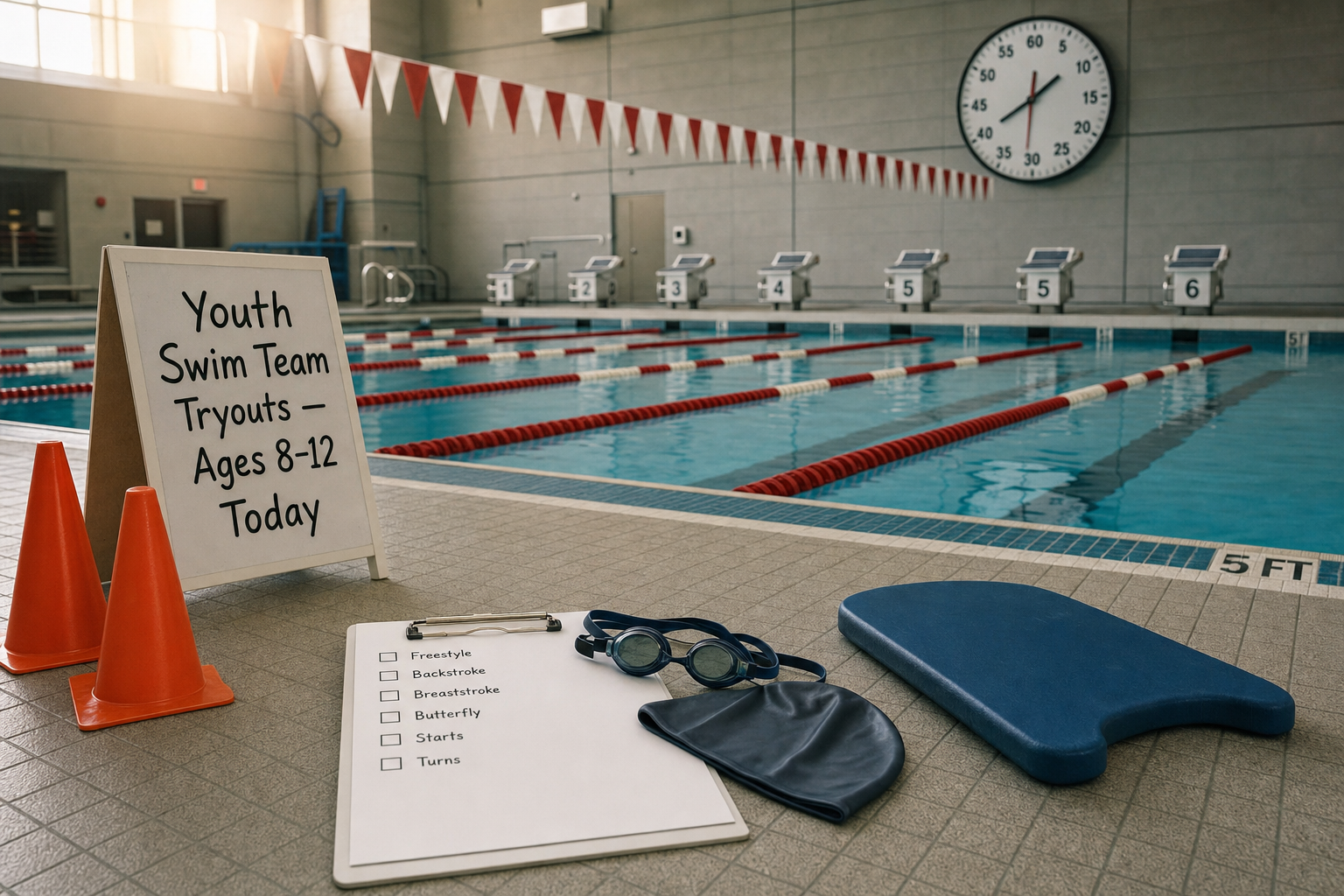
When your child steps up for youth swim team tryouts, coaches are watching for specific skills—not just speed. Knowing what they expect clears up the mystery, helps your child do their best, and lets parents support without pushing too hard. Below are the common benchmarks by age, prep tips, and the polite but meaningful questions parents should ask before tryouts.
What Coaches Look for: Benchmarks by Age 8-12
Children between 8 and 12 are typically evaluated on how well they swim each of the legal competitive strokes—freestyle, backstroke, breaststroke, and butterfly. Judges look for proper technique: body position, legal kick (especially for breaststroke), clean turns, and safe starts. (rizzlersports.com)
For ages 8-10, many teams expect the swimmer to cover one or more lengths of the pool (25 yards or meters) in freestyle and backstroke, and show at least basic competence in breaststroke or butterfly. (gomotionapp.com) By ages 11-12, a swimmer should be comfortable with all four strokes, and able to swim distances like 50 yards in each stroke, and possibly 100 yards freestyle or an individual medley for more competitive programs. (pearlandaquatics.org) Safety matters: legal strokes over speed, and ensuring children are rested before evaluations. (planoswimming.org)
How to Prep: Skills, Timing & Avoiding Common Pitfalls
Starting late summer or early fall (or spring for summer-league teams), parents should help kids build skill steadily—not cram in last-minute yardage. (alphaswimclub.com) Technique-first practice leads to faster gains than trying to go full speed without control. Freestyle and backstroke are often the best strokes to sharpen early, because even small improvements in breathing, alignment, and kick rhythm show up clearly. Breaststroke and butterfly are more technical; for many children at these ages, showing willingness to learn and basic timing is enough at tryouts. (alphaswimclub.com)
Practice schedules in the week before a tryout should be smart: light sessions with focus drills, starts off blocks, streamlines, and turns. Don’t exhaust your child with too much distance or too many intense swims, especially right before evaluation. Over-fatigue can reduce technique sharpness and confidence. Also, dry-land activities should be gentle mobility work, not heavy conditioning. (alphaswimclub.com)
[[ctakid]]
To get ready months ahead, consider following an established developmental plan. For example, the 10-Week Plan from swimy.org lays out progressive work toward readiness—skills, stamina, and confidence building. Make sure each week has clear, manageable targets. (Find the 10-Week Plan here: https://www.swimy.org/10-week-plan)
What Parents Can Ask: Signals You’re Supportive, Not Pushy
You want to show your child you’re on their team. Here are polite questions to ask when you meet coaches or check a swim team website:
Ask about evaluation criteria: how much weight is placed on technique vs. time vs. attitude? Will they be watching all four strokes, or just a few? Are starts and turns part of the assessment?
Ask about lane rules and expectations during tryout: will swimmers need to lane swim in groups? Do they need to know circle swim etiquette or lane sharing?
Ask about warm-up, rest and safety during tryouts: how long before the timed swims do swimmers warm up? Is there a rest built in? What happens if a child gets tired?
These questions not only show you care, but give your child clarity before try-day, which helps reduce nerves.
Putting It Into Practice: A Sample Prep Week & Tryout Day Strategy
Begin the week before tryouts with focused work on starts, turns, and streamlines. Midweek, include some short swims at or faster than expected tryout pace, but keep the volume moderate. The day before, do a light swim, review key skills, confirm gear (swimwear, goggles, cap), and make sure your child gets a good night’s sleep. On tryout day, arrive early so your child can warm up, refresh skills, and mentally settle in. Remind them that following instructions, showing confidence, and staying calm under pressure are as noticed as how fast they swim. Your support matters more than you think on that deck.
Avoid These Pitfalls
Introducing a new stroke at the last minute rarely goes well. If your child has only ever swum freestyle, trying to teach butterfly the night before will not prepare them for legal fly technique. Also, avoid over-training or pumping up volume the week of tryouts. Too much fatigue erodes technique, wrecks confidence, and may lead to unmet expectations. Another common misstep is forgetting to ask about the rules: what counts as a legal stroke, how turns should be done, what starts are expected. Not knowing those can mean surprises on the morning of tryouts.
Final Takeaway
A youth swim team tryout (ages 8-12) isn’t only about being the fastest. Coaches want legal strokes, safe starts and turns, endurance, attentive attitude, and readiness. With consistent practice, a smart prep week, understanding of benchmarks by age, and thoughtful parent questions, your child can show their best self. You’ll both walk away knowing where they stand—and where they can go next.
120+ swimming exercises sorted by age — with video and instructions. Developed by swim instructors, completely free.

120+ swimming exercises sorted by age — with video and instructions. Developed by swim instructors, completely free.