Deep-End Nerves: A 3-Week Plan to Beat Swim Anxiety in 6–10-Year-Olds
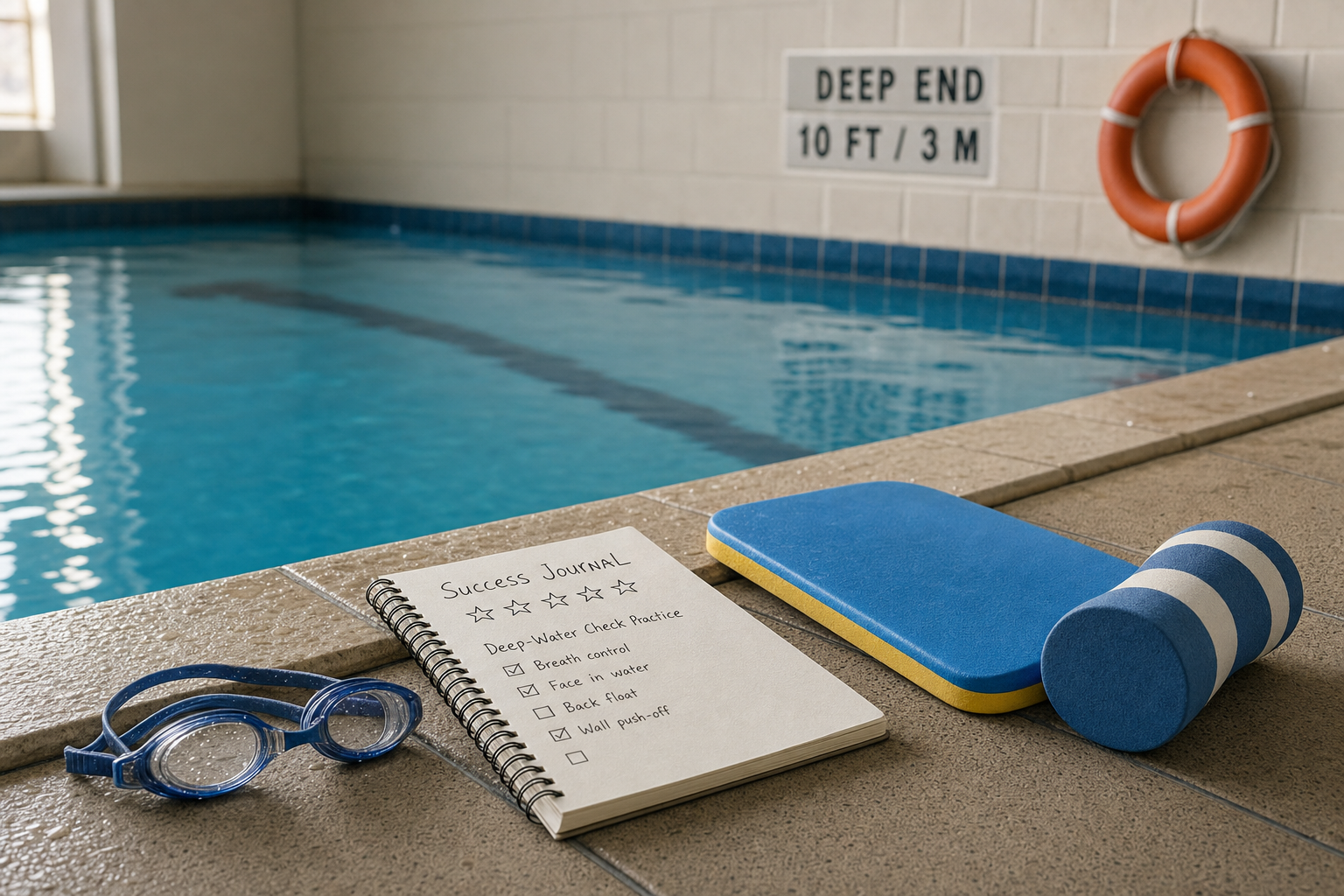
You’re wondering how to help your child who’s afraid of deep water trust their skills and pass deep-water checks—and fast. Here is a strong, evidence-informed 3-week plan built around micro-steps like breath control, graded exposure, and success journaling. Parents will learn what to practice between lessons, how to avoid pitfalls like rushing milestones or bribing dives, and when to seek one-on-one help.
Why Deep-Water Checks Stir Panic
When kids age 6-10 are asked to enter deep water or float, fear responses often kick in—rapid heartbeat, shallow breathing, rigid muscles. Studies show fear of water in children can arise from negative experiences in lessons, family influence, or from observing others showing fear, even if there’s no direct trauma.(mdpi.com) That means your child may believe deep water is dangerous long before they ever try it.
Micro-Steps: The Tools That Build Trust
To help reduce swim anxiety in kids, three strategies have strong support: breath control exercises, graded exposure to water in increasing depth, and success journaling.
Breathing techniques reduce state anxiety in children and teens; controlled inhaling and exhaling helps calm the sympathetic nervous system so panic subsides.(pmc.ncbi.nlm.nih.gov) Graded exposure—slowly introducing deeper water, ideally with peer or family modelling—builds self-efficacy and decreases fear more than lessons alone.(experts.umn.edu) Success journaling (expressive writing about progress, noting what went well) has been shown to reduce anxiety symptoms and increase confidence in school-age children.(jowr.org)
Week-By-Week 3-Week Plan
Here’s what to practice at home between regular swim lessons. Always keep sessions short (10-15 minutes), positive, never force submersion, and praise even small wins.
Week 1: Get Comfortable with Breath + Face
Start in shallow water (waist height). Begin each session with breath control—five deep nose inhales and slow mouth exhales. Then play games where your child splashes water onto their cheeks, drops water over their forehead, opens mouth to blow bubbles. Let them progress only when they feel safe. The goal by end of week 1 is being okay with face immersion for a few seconds while exhaling, without panic.
Week 2: Graded Exposure to Deeper Water
Move gradually into deeper water that reaches chest then neck-deep. Always stay close enough to support them. Practice floating on back first, then push off wall, return to float. Include gentle steps toward passing a “deep-water check” (such as standing, turning, floating, and returning). Use peer models if possible: kids watching other children calmly handling deep water helps reduce fear.(experts.umn.edu) Reward effort with confidence, not treats for dives—avoid bribing. Use “success journals” in evenings: ask child to write or draw three things they did well in water (e.g. “I blew bubbles” or “I floated for five seconds”). This reinforces mastery.
If you want a structured way to help your child progress at home, the 10-Week Plan guides you step by step.
[[ctakid]]
Week 3: Deep-Water Check Readiness & Maintenance
In lesson or family swim, attempt a supervised deep-water check when you observe readiness: relaxed breathing, less clingy behavior, able to float. Keep exposure sessions gentle and supportive. Continue breath control and success journaling. If your child resists, step back to shallow water work until confidence returns. Between lessons, imitate parts of swim classes: face dips, floats, kick drills in calm pool, under strong supervision. If anxiety remains intense or your child avoids participating even after 3 weeks of steady micro-steps, consider seeking one-to-one instruction with a swim coach experienced in anxious learners, or even professional support.
What Parents Should Be Practicing Between Lessons
You have a major role in this journey. Positive support outside lessons matters. Practice the breath exercises, face-in-water games or bubble blowing during bath time or paddling pools. Reinforce the idea that floating is safe and resting is good. Use your own calm example—avoid showing fear near water; children often learn by observing.(pubmed.ncbi.nlm.nih.gov) Also encourage your child to use their success journal: this helps them track growth and see that fear is reducing over time.
Inspired by swim systems like the 10-Week Plan at SwimY.org you will see adults building structured progression—this 3-week version borrows the same gradual exposure and reflection ideas but intensifies focus so your child can pass checks by a camp or term deadline. Hyperlink that model when comparing other programs provides context.(swimtime.org)
Pitfalls to Avoid
Never rush milestones: forcing a dive or submersion before breath and face work are solid often backfires. Don’t bribe for dives–rewards contingent on fear reduction work against intrinsic confidence. Skipping warm-ups or breathing drills before entering deep water increases anxiety and risk. Be sure warm-ups always include breathing, relaxed motions, even just walking in water. And never force submersions or hold a child under; consent and comfort are key.
When to Seek Extra Help
If by end of three weeks your child still shows extreme panic—refuses even shallow water, turns rigid, hyperventilates—or if fear is causing tears, bedwetting, or trauma responses, reach out for one-on-one swim coaches who specialise in deep-water fear, or perhaps child psychologists who work with specific anxiety or phobias. Also, if there’s any memory of near-drowning or water trauma, expert support helps avoid lasting aquaphobia.(mdpi.com)
In Summary
You can help a child overcome fear of water by using three evidence-backed micro-steps: breath control, graded exposure, and success journaling. Over three weeks, with short, fun, child-led practice between lessons, they can reduce anxiety and feel ready for deep-water checks. Stay patient, avoid rushing or bribing, always prioritise warm-ups, breathing, and supportive practice. With time and consistency, swim anxiety in children can be reduced—unlocking confidence, safety and enjoyment in the water.
120+ swimming exercises sorted by age — with video and instructions. Developed by swim instructors, completely free.

120+ swimming exercises sorted by age — with video and instructions. Developed by swim instructors, completely free.