Toy-Powered Swim Games That Teach Real Skills (Ages 3–8)
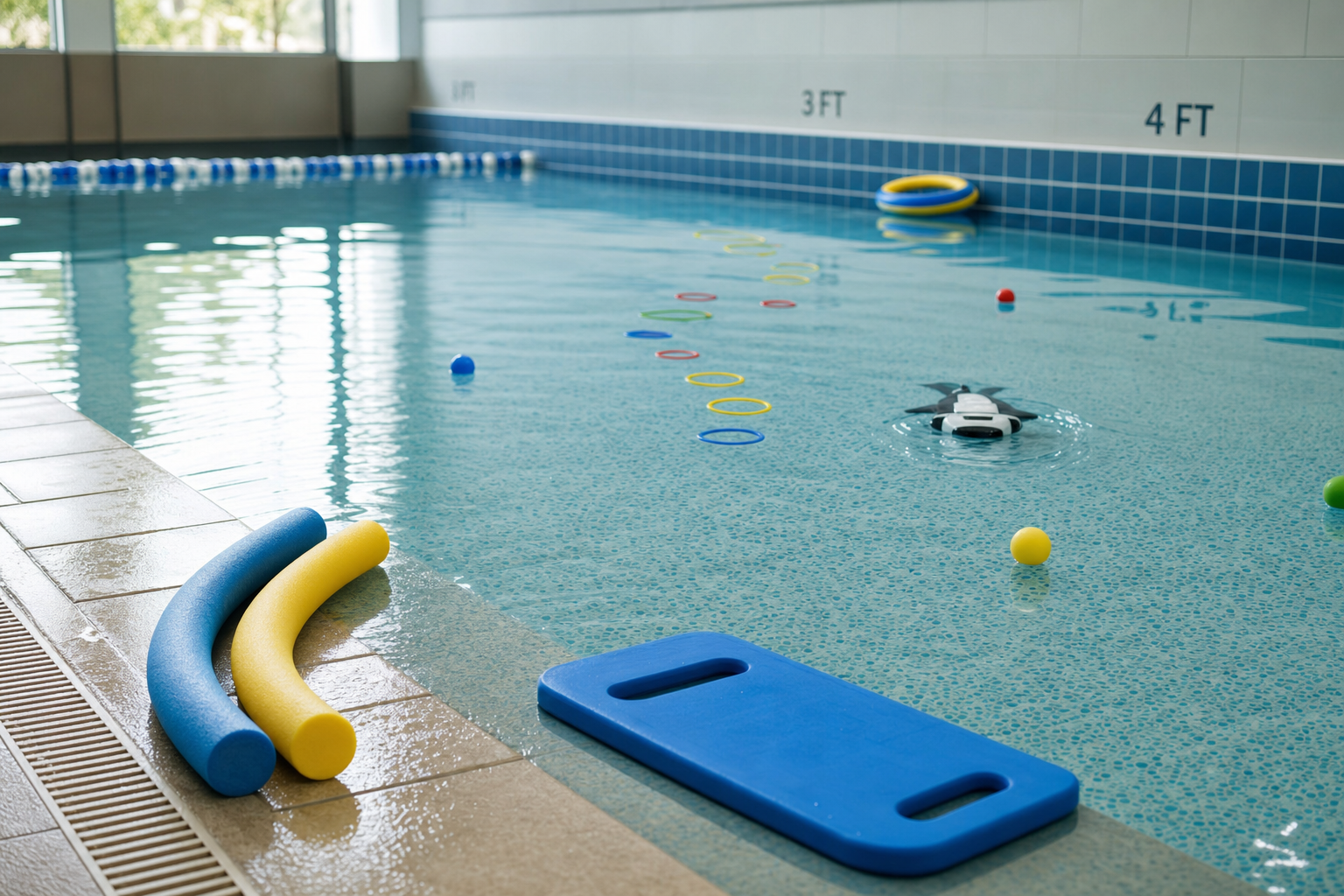
Swimming games for kids can be so much more than just splashing around. With the right toys—rings, balls, noodles—you can teach real swimming skills like exhalation, streamline body position, and balance, all while keeping early learners (ages 3–8) motivated. Let’s dive into what works best, and how parents can run games that feel like play but build skills like lessons.
What Every Parent Wants — Skill Building Without the Drill
The hardest thing is getting balance between fun and focus. Games that teach breathing control, streamline, and body balance do so naturally when toys are used smartly. For example, bubble-blowing rings force kids to exhale underwater before turning for air. Underwater gliders encourage a straight, stretched body position off a push-off (streamline) as kids reach forward, catch the glider, and return. Even tossing soft balls while floating on the back helps children learn body alignment and weight distribution, which improves balance and stability in all strokes.
Best Toy-Based Games and How to Scale Them
These learn to swim games gradually progress in challenge without giving kids the sense they’re being drilled. Start with easy, low-pressure activities, then step up as confidence and ability grow.
Game: Torpedo Glide with Rings or Noodles
Attach a floating ring near the wall. Kids take streamline position (arms overhead, body straight) and push off the wall like a torpedo, gliding toward the ring. At first, hold a noodle under the arms to assist balance. Gradually remove support and encourage adding one dolphin kick or flutter kick as they glide. This teaches streamline and exhalation under water—skills foundational in good swim technique.
Progress once they can glide several body lengths without sinking or bending knees.
Game: Bubble Dive to Treasure
Drop soft rings or dive balls in shallow water. Have kids take turns diving in, blowing bubbles as they go—encouraging continuous exhalation—and retrieving the treasure while keeping a streamline body when swimming. As they improve, toss rings deeper and use weighted rings (safe for their reach). This builds underwater confidence, body alignment, and breath control.
Game: Noodle Balance Walks & Float Rescue
Use pool noodles held under arms or across the back. Begin with noodle support to help maintain a horizontal float. Then challenge them to lift one arm, then one leg, or balance facing heavier splash zones, all while exhaling steadily through their nose or mouth. This helps body awareness and balance. No race against others—just a personal progress game.
If you want a structured way to help your child progress at home, the 10-Week Plan guides you step by step.
Game: Simon Says Swim and Green-Light Starts
“Simon Says keep body straight,” “Simon Says breathe out underwater,” or “Simon Says streamline off the wall.” Then use a “Red Light / Green Light” game format where “Green Light” = swim, “Red Light” = freeze in streamline or float. Great for ages 5-8 once basic movements are known. It builds stroke control, listening, body posture, and prevents rushing breathing or illegitimate head-lift.
[[ctakid]]
How Parents Learn What Each Game Develops & Scaling Tips
Parents should know exactly what skills each game targets and how to scale them so kids progress without feeling drilled.
When using the Torpedo Glide, focus on streamline form off the wall—hands locked, hips, legs, toes extended. Once kids glide well for short distances, increase the distance, then add a kick or arm pull to move into freestyle prep.
In Bubble Dive to Treasure, start shallow and shallow exhalation, then increase depth and time underwater. Keep reinforcing calm exhale before face enters water.
With Noodle Balance, first help for floating, then gradually reduce noodle support, moving toward independent floating with minimal props.
For Simon Says / Red-Light Green-Light, supply short rest intervals and avoid turning everything into a race. If someone is slower, praise control and technique, not speed.
Also, structured plans like the swimy.org 10-Week Plan give parents a roadmap: each week introduces and builds one or two games focused on creating exhalation, streamline, or balance, layering complexity slowly so the child never feels overwhelmed but keeps seeing growth. Use that plan alongside these game ideas to plan regular swim games that teach swimming fundamentals.
Safety Guidelines & Common Pitfalls
Safety is always first: never leave children unattended, ensure no small toy parts around children under 4, always follow pool facility rules. Use goggles where needed so water on the face doesn’t provoke panic.
One common mistake is turning every game into a race too early. When focus shifts to speed, technique such as exhalation, streamline, and balance suffer. Another mistake is too little rest in sessions. Young kids’ attention and motor skills fatigue quickly, so frequent short breaks keep motivation and technique high.
Year-Round Play & Making Skills Stick
These games aren’t just for summer. Even indoor pools and swim classes can include them. Regular, year-round play reinforces motor memory and breath control. As skills improve, occasionally revisit simpler games to refine fundamentals. For example, once a child masters freestyle with breathing every three strokes, revisit the Torpedo Glide to refine streamline.
Parents can also monitor progress by observing changes over time: longer glides without sinking, less panic when face goes underwater, straighter body lines in floats and kicks. Celebrate these milestones.
Swimming games for kids, especially structured ones rooted in toys and imaginative play, deliver more than fun—they build learn to swim skills that last. When carefully scaled and safety-minded, children aged 3-8 grow without feeling like they’re in drills, and parents know exactly where they’re at and what’s next. Keep games fun, targets clear, and the pool becomes the place where real skills are born.
120+ swimming exercises sorted by age — with video and instructions. Developed by swim instructors, completely free.

120+ swimming exercises sorted by age — with video and instructions. Developed by swim instructors, completely free.