Swim Test Ready: The Checklist to Get Your Child Through Beginner Swim Awards
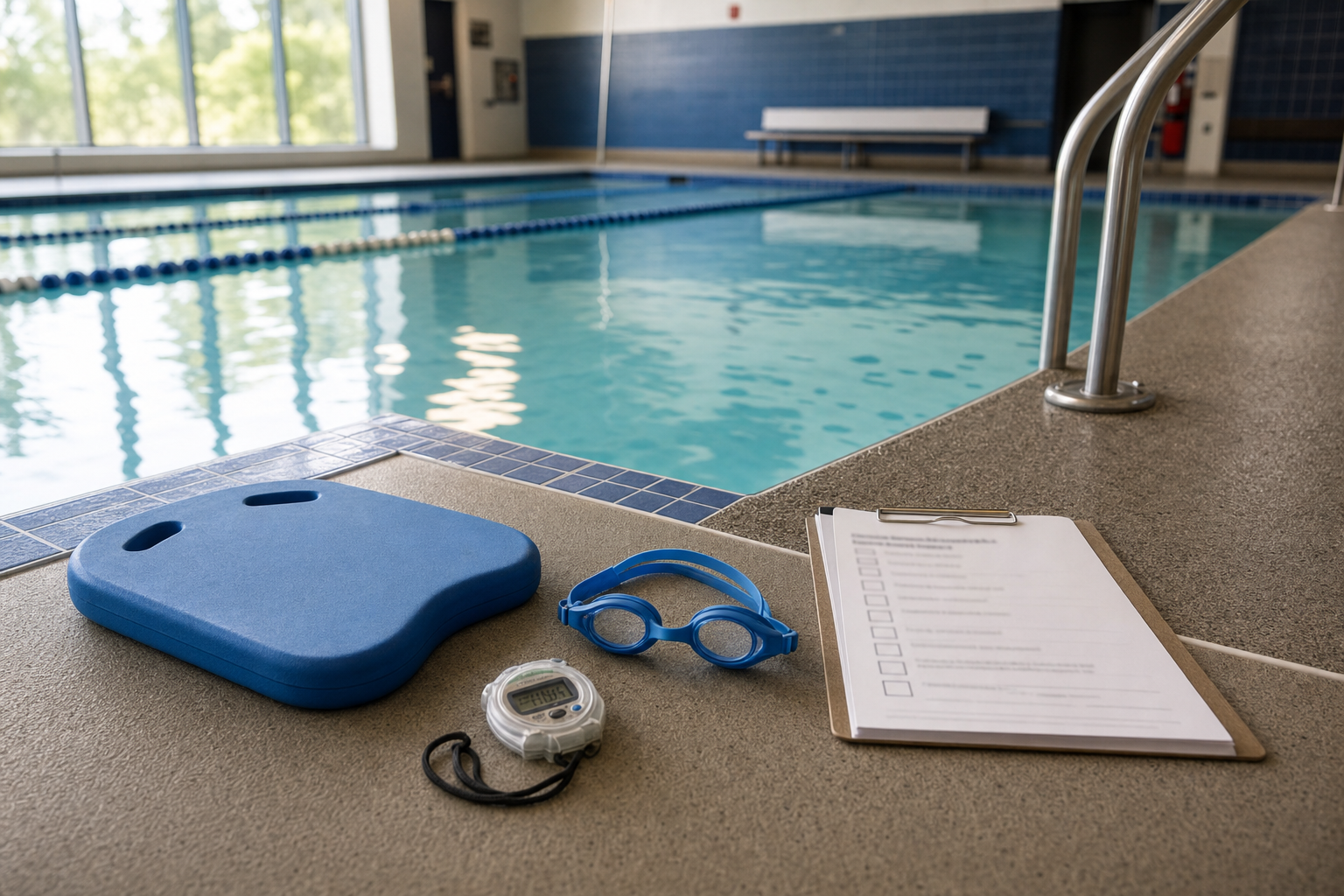
Parents often wonder: What exactly does my child need to do to pass Beginner Swim Awards, like Swim England Learn to Swim Awards or the American Red Cross Learn-to-Swim levels? Here’s a checklist that breaks down what schools expect, how to train, and ways to avoid common fail points.
What Beginner Swim Award Requirements Look Like
In England, the Swim England Learn to Swim Framework is divided into Stages 1-7. Stage 2 is often the first that feels like a real test. This stage requires children to safely enter the water, blow bubbles at least three times with mouth and nose submerged, push off walls and glide, float front and back without support, travel using recognised leg action for five metres (on front and back), perform rotations like log rolls and tucks, then exit the water without help. The full list of outcomes is clear, measurable, and progression-based. (swimfunnortheast.co.uk)
In the US, the American Red Cross Learn to Swim program includes similarly structured levels. In Levels 1 and 2, kids learn water entry, bubble blowing, floating with assistance, submerging, and basic front and back kick. By Level 3, there are swim distances, survival float time, and more autonomous strokes. (indianolaiowa.gov)
These awards test safety first, then basic skills, then independence. In both systems, the tests look for clean, controlled performance rather than speed or distance alone.
The Training Checklist: How to Get Your Child Ready
Make a focused plan covering these areas. Consistency matters.
Start with water confidence: floating, blowing bubbles with mouth and nose submerged, and entering/exiting safely. These tasks build comfort and trust.
Next focus on glides and leg kicks: your child should learn front and back glides off the wall, and 5-metre leg travel without touching the floor. This builds body awareness. Include rotations—tucks or log rolls—to orient front/back. Combine with floating front and back and recovering upright.
As they progress, introduce basic strokes (free, back), and practice distances required. Add in push-off glides, controlled breathing bubbles, and encourages going under without panic. Skills like entering from the poolside, retrieving submerged objects, and using wall support early on help both frames feel achievable.
To guide practice easily at home or in lessons, you might follow the “10-Week Plan” from swimy.org which maps out regular sessions to build skills gradually and avoid burnout. It’s designed to break down the awards criteria week by week so that no outcome comes as a surprise. (Mentioning the 10-Week Plan of swimy.org exactly once here.) (swimy.de)
If you want a structured way to help your child progress at home, the 10-Week Plan guides you step by step.
Finally, simulate test conditions: test as though there’s no float support, do skills in sequence, use jump-ins or entries they haven’t done much, and make sure they can finish with confidence.
Most Common Fail Points – And How to Fix Them
[[ctakid]]
Knowing what typically trips children up helps remove surprises.
A very common issue is breathing and bubble control. Many children hold their breath when submerged or overdo it when surfacing. Coaches warn that holding your breath builds anxiety and disrupts rhythm. (speediswim.org) Fix by practising exhaling underwater: blowing bubbles, submerging face, and breathing out before turning the head. Teach bilateral breathing (every third stroke) gradually. (justswim.com.sg)
Another frequent problem is poor body position: heads too high, hips sinking, legs dragging. This creates drag, makes strokes ineffective, and tires children out. (speediswim.org) To correct, keep eyes looking down (not forward), engage core, and ensure streamlined glides off walls.
Using too much leg kick or wrong kick technique shows up when children try to compensate for weak arm action or fear. Kick should come from the hips, not knees; legs should stay relaxed rather than stiff. A common mistake seen is over-kicking leading to fatigue and sloppy strokes. (speediswim.org)
Lack of confidence in deep water, fear of submerging face, or entering water in unfamiliar ways: these emotional blocks often lead to failure during the test even when physical skills are there. Pairing technical training with confidence building helps. Supportive instructors, swimming with friends, gradually increasing depth, always exiting safely and lifting support slowly builds trust.
How Parents Can Support at Home
You don’t need a pool coach at home. Simple drills help.
Sink bubbles: sink chin first, blow bubbles slowly through nose or mouth. Every session include 5-minute bubble time.
Wall glides: push off wall in the streamline position, glide front and back. Focus on float recovery.
Kick drills: use a kickboard or float to practise front and back kicks, 5-metres without touching.
Turns and log rolls: practice safe rotations from front to back, tucks, safe entries and safe exits.
Make test days low-pressure: run through the full set of test outcomes but praise effort, not perfection. Give feedback gently on skills that didn’t go well, then let them try again later without judgement.
Final Thoughts: Badges Await!
Beginner swim awards are not about perfection. They're about confidence, safety, and progressively mastering key water skills. If your child is regularly practising floating, breathing with bubbles, controlled entry/exit, front and back gliding, leg kicks, basic strokes, and overcoming fear, they will get there.
Watching your child master Stage 2 of Swim England or Level 2/3 of the Red Cross is exciting. With the right training checklist and attention to common fail points, your child’s path to Bronze, Silver, or Gold swim awards (US-UK-AU equivalents) becomes much smoother. Encourage, supervise, and celebrate their progress—don’t wait for perfection to hit the water.
120+ swimming exercises sorted by age — with video and instructions. Developed by swim instructors, completely free.

120+ swimming exercises sorted by age — with video and instructions. Developed by swim instructors, completely free.