Balancing Swim Lessons with Other Sports: A Weekly Plan to Prevent Burnout
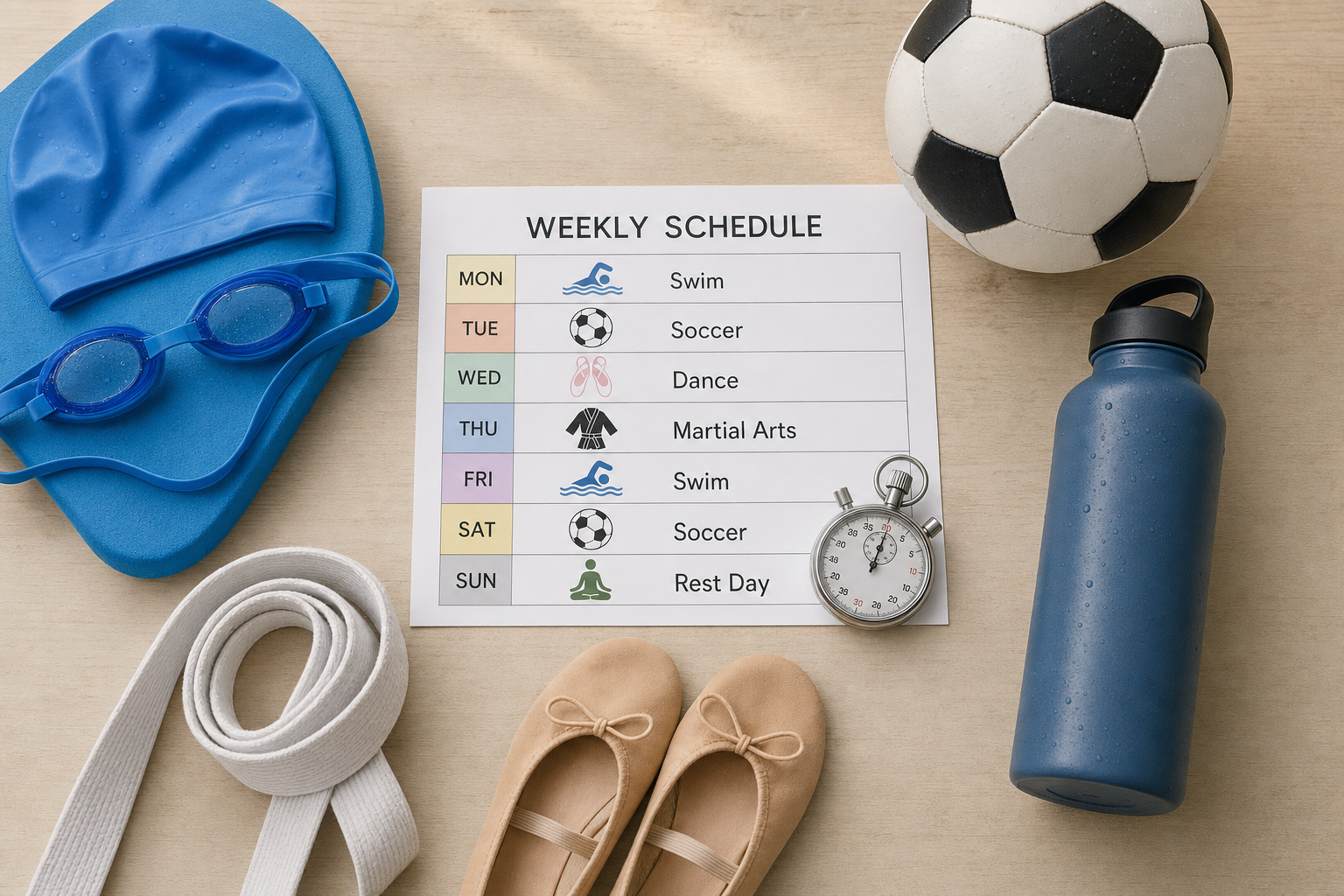
If your child (ages 6–12) is taking swim lessons while also doing soccer, dance, or martial arts, the most urgent question is: how do you give them enough movement—about 60 minutes a day—without overdoing it? The rest of this post walks you through signs of youth overtraining, tips for preserving rest, and a sample weekly schedule that keeps swimming and other sports in balance.
How Much Activity Do Kids Really Need?
The CDC says school-aged kids (6-12 years old) should get 60 minutes or more of moderate-to-vigorous physical activity every day. That includes aerobic work like running or swimming, plus muscle- and bone-strengthening activities at least three days a week.(cdc.gov) Too little movement can slow development; too much without rest can cause injury or burnout.
What Are Youth Overtraining & Overuse Injuries?
The American Academy of Pediatrics (AAP) reports that roughly half of sports-related injuries in children are from overuse—meaning repetitive stress without enough recovery time.(healthychildren.org) Overtraining is when the body doesn’t bounce back, leading to chronic fatigue, decreased performance, mood changes, or even losing interest in the sport.(publications.aap.org)
Signs you might be heading toward overtraining include pain during or after sports that lingers, decreased performance, irritability, disrupted sleep, or reluctance to go to practice for no obvious reason. If you see any of those, it’s time to re-evaluate the schedule.
Building a Weekly Plan that Works
Here’s a framework to help families align swim lessons with other sports, protect rest days, and avoid stacking high-intensity sessions back-to-back.
Start by Capping Total Sessions
Think of activity like stacking blocks. Your child needs movement everywhere, but you don’t want too many high-intensity blocks in a row. Limit organized sports or swim lessons to 4–5 total sessions per week, with at most one high-intensity or competitive session each day.
If you want a structured way to help your child progress at home, the 10-Week Plan guides you step by step.
Weave in Rest Days
Your child needs 1-2 full rest days per week—no structured classes, ideally just light free play. Physically, growing bones and muscles need that downtime. Mentally, rest helps prevent burnout. The AAP recommends at least one day off per week from organized sport, and also seasonal breaks from any single discipline.(publications.aap.org)
[[ctakid]]
Pick Swim Slots That Complement Land Sports
If your child does soccer or dance, their legs and joints are already getting a workout. Swimming has lower impact and works the upper body differently. Use swim lessons to balance out: perhaps after a dance class rather than after intense leg work, or on a rest day from running sports. Keep swim lesson sessions to a moderate duration—30–60 minutes—and avoid doubling up hard land sport + swim back-to-back. If swim is already part of your schedule, check structured swim plans like the 10-Week Plan from swimy.org for guidance on pacing and recovery.(publications.aap.org)
Sample Weekly Schedule for Ages 6–12
Here’s a hypothetical schedule integrating swim lessons with other sports, aiming for around 60 minutes a day, and building in rest properly.
Monday: Swim Lesson (45 min), Light Stretching
Tuesday: Soccer Practice (60 min)
Wednesday: Swim Lesson (45 min) + Martial Arts (45 min) – be careful of double high-intensity here
Thursday: Rest Day – no organized classes
Friday: Dance Class (60 min)
Saturday: Swim Lesson (60 min) OR match/tournament in land sport
Sunday: Active Rest – free play, family bike ride, casual swim
This gives 5 organized sessions, with at least two rest or lighter days. Swim lessons are spread out so they serve as recovery or cross-training from higher-impact sports rather than piling on stress.
Watching for Warning Signals
Be alert for youth overtraining signs. If your child starts complaining about joint pain, fatigue, declining performance, mood changes, sleep issues, or reluctance—not because they’re tired but because they're dreading the next session—it’s a sign you may have gone too far. Pulling back, skipping one session, or changing the order (swim after dance instead of before) can help reset.
Practical Tips for Parents
Choose swim class times that are predictable; know when other sport trainings are high-intensity. If dance and soccer both schedule heavy sessions, pair those with lighter swim days or a rest day after. Also ensure your child eats well, sleeps enough, and gets variety. A child doing only swimming or only land sports misses out on the benefits of cross-training and increases risk of overuse in specific areas. The AAP recommends varying activities and taking breaks from any one sport during the year.(publications.aap.org)
Balancing swim lessons with other sports is absolutely doable. With the right structure—limiting session count, spacing out high-intensity days, preserving rest, choosing complementary swim slots—you protect your child from burnout and overuse. Keep an eye on youth overtraining signs, commit to rest when needed, and foster joy in all their physical activity. That’s the real win.
120+ swimming exercises sorted by age — with video and instructions. Developed by swim instructors, completely free.

120+ swimming exercises sorted by age — with video and instructions. Developed by swim instructors, completely free.