Swimming With a Cast or Splint: A Parent’s Guide for Babies & Toddlers
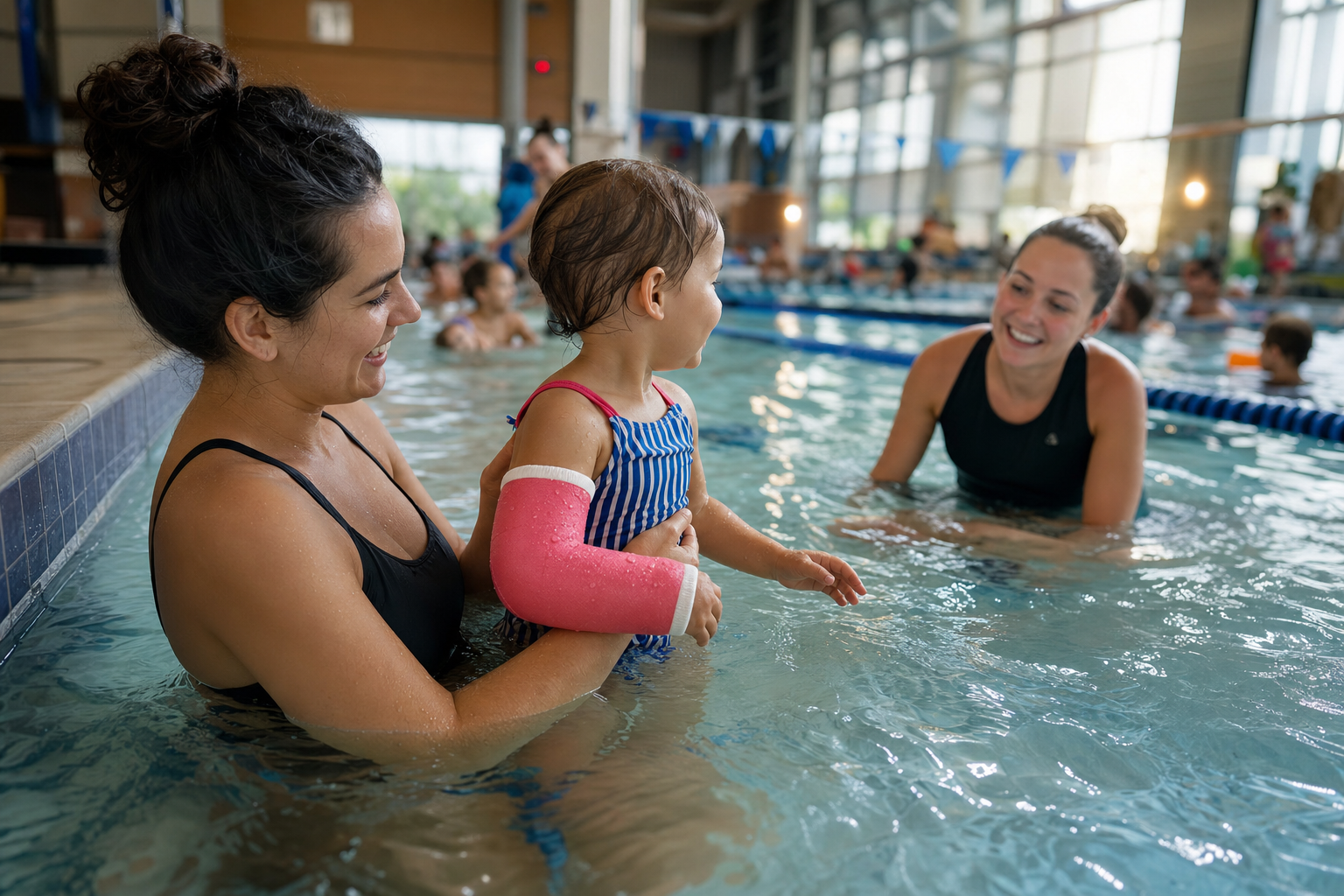
If your baby or toddler has a cast or splint, you’re probably wondering: can toddler swim with a cast? The short answer is only sometimes, and only with doctor approval. It depends on the type of cast, the injury, and whether waterproof materials are involved. Getting it wrong could lead to skin irritation, infection, or slowed healing.
What Kinds of Casts & Liners There Are
Standard Plaster or Fiberglass Casts
Traditional casts use plaster or fiberglass over cotton padding. These are not waterproof. If they get wet, padding traps moisture against the skin and casts can soften or lose shape. Mayo Clinic notes that such casts should stay completely dry during bathing or swimming. (mayoclinic.org)
Waterproof Casts and Liners
Waterproof casts use a fiberglass outer shell paired with a specialized liner (often Gore-Tex or Delta-Dry). These materials let water pass through and drain, reducing discomfort from sweat, rigidity, odor, and skin irritation. (childrens.com) Recent data shows using waterproof casts significantly reduces unplanned cast changes and maintains proper healing compared to standard cotton-lined casts. (sciencedirect.com)
When Pool Time Is OK—and When It Isn’t
With a Standard Cast
If your toddler has a regular plaster or fiberglass cast with a cotton liner, pool swimming is off the table. Even a high-quality waterproof cover or plastic bag doesn’t make it safe. On brief exposure, such covers may work around the house, but not for deep water or high activity. Mayo Clinic advises avoiding swimming altogether with non-waterproof casts. (mayoclinic.org)
With a Waterproof Cast
If your child has a waterproof cast and their clinician gives the green light, pool swimming can be possible—ideally only in clean, chlorinated pools, not in sand, dirt, or natural bodies of water. After each swim, rinse with clean water and dry carefully, especially around edges. (childrens.com)
Why You Should Check with a Clinician Before Resuming Swim Lessons
Each injury is different. Even with a waterproof cast, young bones need to be stable enough to handle movement. Only a qualified orthopedist can assess healing progress safely. Sometimes swimming classes or parent-child baby swim lessons cast challenges are manageable only once swelling, pain, and mobility reach safe levels.
Waterproof casting doesn’t just help with hygiene. In a randomized crossover trial of children with distal radius fractures, those with waterproof casting used during treatment recovered physical function faster—measured by standard Children’s Activity scales—without more complications. (pubmed.ncbi.nlm.nih.gov) The “10-Week Plan” developed by swimy.org includes guidance for returning to swim classes after injury—work with your clinician to adapt lessons for the casted arm or leg so skills aren’t lost. 10-Week Plan
[[ctababy]]
Common Misconceptions & Safety Pitfalls
Many parents try wrapping a cast in a plastic bag so their toddler can splash around. That often fails—bags can leak, tear, or not form a tight seal. Also, “water-resistant” or “waterproof cover” doesn’t mean the cast itself is waterproof. When a child returns to swim lessons cast still on, you’ll also need to consider pain, ability to move, and whether joints are stiff. If the cast is past the elbow—or knee—design, it can trap moisture, and edges may rub sensitive skin. (choa.org)
Best Practices If You Decide Swimming Can Resume
Once you get approval:
- Limit swimming to pools (not ocean, lakes, or rivers) to avoid sand and bacteria getting into the cast. (childrens.com)
- Rinse the cast well after swimming, allow water to drain, and dry the outer shell, possibly using a cool hair dryer. Let moisture exit. (waterwisekids.com)
- Watch for redness, bad smell, or irritation along edges—those are clues something’s trapped or infected.
- Adjust expectations for swim lessons. The casted limb changes balance, movement, swim strokes, even the ability to get out of water safely. Stay close, in shallow water, skip diving or jumps.
When to Pause Lessons Entirely
If your toddler’s cast is standard non-waterproof, if there are stitches or open wounds, or if recovery is still in early phases (pain high, healing unstable), swim class should be paused. Also, once the cast comes off, soft skin and weakness—from disuse—mean you’ll need to ease back into lessons, possibly with a refresher. (waterwisekids.com)
Wrap-up
Swimming with a cast or splint is possible—but only in certain cases. If your toddler has a standard cast, keep it dry and avoid the pool. If there’s a waterproof liner and your doctor says it’s safe, limited pool swimming can be fine with proper care. Always check first, protect the skin, and adapt swim lessons to the injury. Your child’s safety and comfort depend on staying dry, clean, and only putting stress on their body when it can handle it.
120+ swimming exercises sorted by age — with video and instructions. Developed by swim instructors, completely free.

120+ swimming exercises sorted by age — with video and instructions. Developed by swim instructors, completely free.