How to Create a Waterproof Medical Info Card for Your Baby: What to Include and Why It Helps
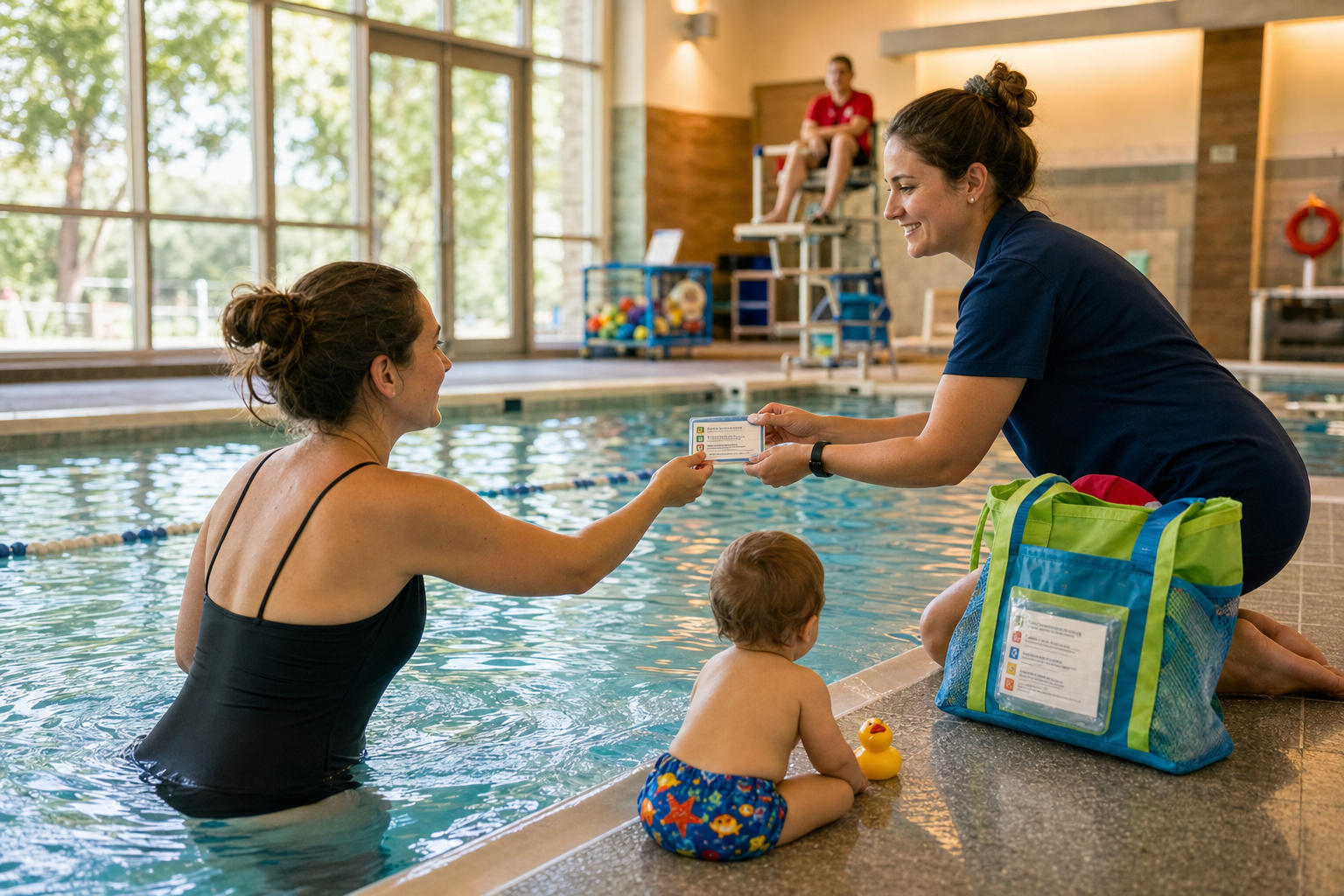
Putting a short, clear medical info card in your baby’s swim bag can make a difference when every second counts. When your child (0–36 months) has allergies, seizures, a heart issue, is premature, or takes regular medication, this card helps swim teachers respond correctly under stress. Use it as a tool to protect and communicate, while remembering it doesn’t replace talking to your pediatrician or telling the swim school ahead of time.
What the Medical Info Card Should Say
To make sure your “baby swim medical information” card is helpful, include only what matters—nothing more. First, write child’s name, age, and weight if they need size-sensitive medication or equipment. Then list all known allergies (food, insect, chemical) and what to do if an allergic reaction begins. If your baby has epilepsy or seizure history, explain what type, how often, and typical warning signs. For babies with heart history, respiratory issues, or born prematurely, note any limits (for example, avoid deep water, cold water exposure, or long recovery times). Include daily medications and dosage (make sure everything is current). Don’t forget emergency contacts: your number first, then someone nearby who can arrive quickly. Finally, list one or two conditions or behaviors the teacher should watch out for, like "blue lips" or "difficulty breathing after cold water". Share which medication you want kept on the pool deck, not locked away or in the car. These are basics, drawn from expert advice like What to Tell a Swim Instructor About Your Child’s Medical Condition from WaterWiseKids, which emphasizes the importance of documenting triggers, early warning signs, and where essential medication is stored. (waterwisekids.com)
How to Make It Waterproof and Easy to Use
You want this info card to travel through swims, hot sun, splashes—and still be clear. Print it in large, bold font on waterproof synthetic material (ask at print shops or buy waterproof paper online). Laminate it or use pouch lamination so it survives wear. Slip it into a clear plastic pocket at the top of the swim bag, not buried deep where people forget it. Always have a backup photo on your phone in case the card gets lost or damaged.
For parents following structured swim programs like the 10-Week Plan from Swimy.org, this card complements enrollment forms and check-ins. It allows swim instructors to treat the teacher edge-of-pool conversations not as emergencies first but as concise, well-prepared hand-offs of critical info. Hyperlinking the term gives you access to full curriculum details to plan ahead. (waterwisekids.com)
If you want a structured way to build water confidence at home, the 10-Week Plan guides you step by step.
Why This Matters for Babies with Health Concerns
Babies with asthma, seizures, or other medical conditions face more risks around water. For example, research confirms that children with seizure disorders have a much higher risk of drowning, especially without someone trained nearby or supervision within arm’s reach. Lay out whether your child is seizure-free (for how long), what medical follow-ups are required after water exposure, and whether open air or indoor pools are better for them. Sources like the American Academy of Pediatrics and HealthyChildren.org stress the extra precautions needed for children with special healthcare needs—including waterproof dressings, life jackets, and avoiding certain water environments. (healthychildren.org)
[[ctababy]]
What to Tell the Swim Instructor vs. What to Leave Out
Teachers only need what helps them respond quickly and correctly. They don’t need detailed diagnostic codes or every past illness. Share severity (mild, moderate, severe), triggers (cold water, chlorine, temperature changes), medication names, where the medication is kept, what early signs look like, and who to call. Leave out medical jargon, full medical history, or unnecessary notes that distract in an emergency. WaterWiseKids underscores that specifying severity and triggers is far more useful than a diagnosis name alone. (waterwisekids.com)
Pitfalls to Avoid
Even the best card fails if it’s not kept alive. Common mistakes include putting the card in the car and forgetting it, using outdated medication names or dosages, assuming the booking-form health section reaches the teacher, or hiding important info under rows of history. Also don’t assume laminated means indestructible—check that ink doesn’t run, that lamination is sealed, and that cards aren’t fading. Always double check with swim facility staff that they’ve seen the card and know where medication is stored. Lastly, always coordinate with your pediatrician to confirm what activities are safe for your baby’s particular condition. HealthyChildren.org reminds parents that swim lessons are one layer of protection and must be adapted for children with health needs. (healthychildren.org)
What Parents Should Do Before the First Lesson and Each Season
Before your baby’s first swim class, show the card to the swim school staff, teacher, and lifeguard. Walk through what to do if something happens so everyone has the same plan. At the start of each new season or when there’s any change in your baby’s health, create a new card or update the existing one. Distribute the updated card to the teacher and ensure it replaces the old one in the swim bag.
Remember, the card supports communication—it does not replace talking directly with your pediatrician or informing the swim school ahead of time that your infant has health issues.
Putting a waterproof medical info card in your baby’s swim bag helps everyone stay calm, prepared, and responsive in the water. It ensures a teacher isn’t guessing, a lifeguard isn’t delayed, and you aren’t worrying alone. With current, clear info always at hand, your little one’s swim class is safer, for everyone.
120+ swimming exercises sorted by age — with video and instructions. Developed by swim instructors, completely free.

120+ swimming exercises sorted by age — with video and instructions. Developed by swim instructors, completely free.