Dyspraxia (DCD) & Swimming: Calm Progress for Ages 6–12
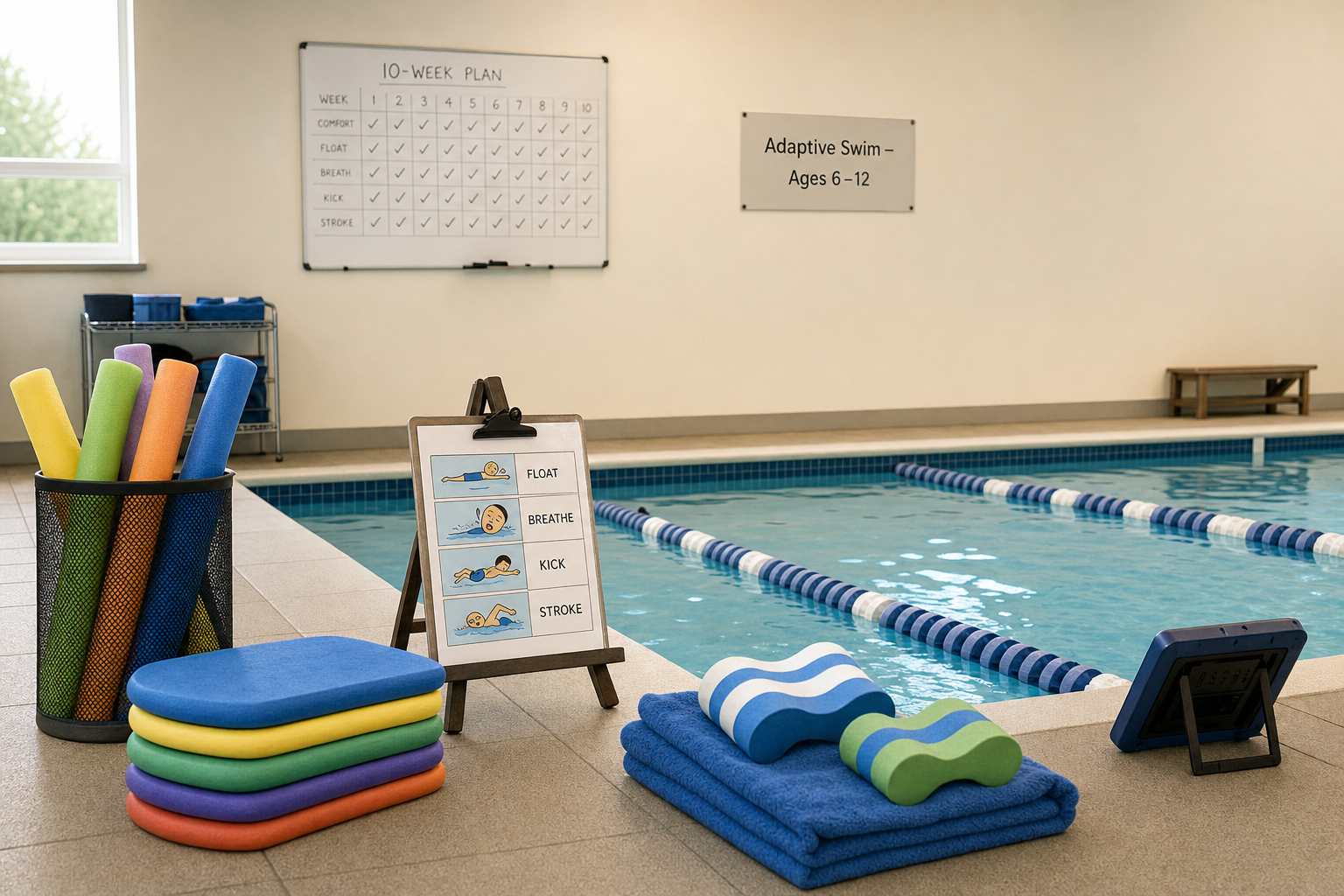
Swimming can feel daunting when your child has dyspraxia (developmental coordination disorder), especially around sinking, breathing, and timing. But steady, thoughtful adaptations can build float confidence, skill, and joy. Here are evidence-based dyspraxia swimming tips and parent-friendly strategies to help ages 6–12 mostly in the US, UK, Australia.
Why Floating, Breathing & Timing Lag Behind Peers
Children with DCD often struggle with planning, coordinating, and executing motor tasks. Motor planning challenges make it hard to float unaided or turn the head for breathing at just the right moment. As research shows, aquatic therapy—because of buoyancy, resistance, and sensory richness—helps improve gross motor skills in kids with DCD. (pmc.ncbi.nlm.nih.gov)
One structured study testing a 10-week breaststroke program found that children at risk for DCD gained in dynamic balance and general motor competence after regular swim sessions with breath control and floating practice. (pmc.ncbi.nlm.nih.gov)
So, your child is not falling behind; they just need repeated exposure in supportive settings that match their pace.
What Helps: Adaptations That Stick
Fewer Cues, Consistent Sequencing
Too many instructions confuse when a child has trouble planning movements. Research comparing “verbal + visual” instruction with “verbal, visual, and tactile” feedback in children with DCD shows that improvements happen over time but not when you're overwhelming them. (scholarworks.bgsu.edu)
Stick to a consistent lesson flow—warm up, float, breathing drills, kicking arm moves, stroke introduction—in the same order each time. Fewer cues each session means the child knows what to expect and can begin to anticipate the next move confidently.
Extra Float & Breath Time
Floating unaided and breathing are among the hardest tasks. The aquatic therapy literature emphasizes phases of float, submersion, and breath control. Floating without support (first on back, then front) promotes trust with the water. (pmc.ncbi.nlm.nih.gov)
You might also build in initial drills outside the water: breathing patterns on land; seeing the water, dipping chin, blowing bubbles. These prep work reinforce what’s happening in the pool.
Small Classes or Intensives
Smaller groups reduce distractions and allow teachers to tailor explanations. An intensive short-term swim course can concentrate practice and show micro-gains fast, which helps build motivation.
Around 30–60 minutes of focused time, repeated weekly over several weeks, worked in studies where children showed measurable gains in balance and coordination. (onlinelibrary.wiley.com)
If you want a structured way to help your child progress at home, the 10-Week Plan guides you step by step.
For example, a 10-week plan of breaststroke plus float work, performed regularly, gave children marked improvements in motor competence. Incorporating something like the “10-Week Plan” from swimy.org can be a solid framework for setting goals and tracking wins.
[[ctakid]]
Calling the Swim Instructor: What Parents Should Request
Your partnership with the instructor makes all the difference. When briefing an instructor, share that your child has DCD and benefits from:
- Slower pace and repetition: allow plenty of trials for floating, breathing, kicking before introducing full stroke sequences.
- Minimal verbal cues at once; focus on one instruction at a time. Use simple language + visual demo.
- Consistent sequencing of skills so nothing surprises: always start with float or breath drills, regardless of the lesson focus.
- Extra float or support time during class: assist gently at first, then remove supports gradually.
Ask whether the instructor has experience with children who take longer to coordinate arms-and-legs moves—or can adjust drills rather than pushing him/her to keep up with peers. Evidence shows children with DCD do not always catch up in freestyle in short interventions, but over time and with focused backstroke and float work, they do improve. (research-repository.uwa.edu.au)
Celebrating Micro-Gains & Avoiding Common Pitfalls
Micro-gains are the real victories: first time floating unaided, first inhale/exhale correctly timed, first time head turns without panic. These capture confidence in ways length or speed don’t.
Pitfalls to avoid include changing drills too fast—rushing through floats or breath drills leads to shaky skills. Overloading with too many cues at once creates confusion. Comparing your child to others intensifies frustration and shame. Instead, focus on your child’s own rate of progress.
Lived Experience: What Other Parents Report
Parents of children with DCD say that seeing even small improvements, like tolerating face-wetting or relaxing into floats, boosts self-esteem. Many began lessons that felt too advanced, then switched to smaller or adaptive classes. One parent described weekly intensives followed by consistent practice at home (floating in shallow water, bilateral kicking) and gradually their child could swim backstroke and freestyle with breathing. These personal stories mirror the research that steady repetition, matched with emotional safety, works. (reddit.com)
Other voices warn that pressure from peers or instructors to master strokes too soon often triggers anxiety or withdrawal. When instructors listen—to what the child feels, fears, or shows progress on—they can help build wins that feel real and lasting. Parents also find that explaining DCD to their child (in simple language) and helping them understand why they might learn differently is powerful.
How to Structure a Swim Program That Builds Confidence
A weekly or bi-weekly schedule is ideal, perhaps two short intensives (e.g. week-long camps) during holidays. Lessons should start with over thirty percent of time devoted to float and breathing in calm water, then move to kicking and arm-coordination separately before putting it all together. Celebrate small steps — mastering a breath, floating 10 seconds, gliding — before pushing to full distance swims.
Make sure you document goals and progress: ask the instructor to keep track of how many floats without support, length of time breathing correctly, distance of kick+arms. Those micro-gains are what fuel momentum.
Swimming is achievable for kids with dyspraxia. With adaptations like fewer cues, consistent drill order, extra float time, and supportive instructors who focus on micro-wins, children aged 6-12 can gain not just skill, but water confidence that lasts. You’ll be surprised how quickly the calm, steady progress adds up.
120+ swimming exercises sorted by age — with video and instructions. Developed by swim instructors, completely free.

120+ swimming exercises sorted by age — with video and instructions. Developed by swim instructors, completely free.