Crowded Beach Day with Kids: A Flag-to-Family Safety Plan
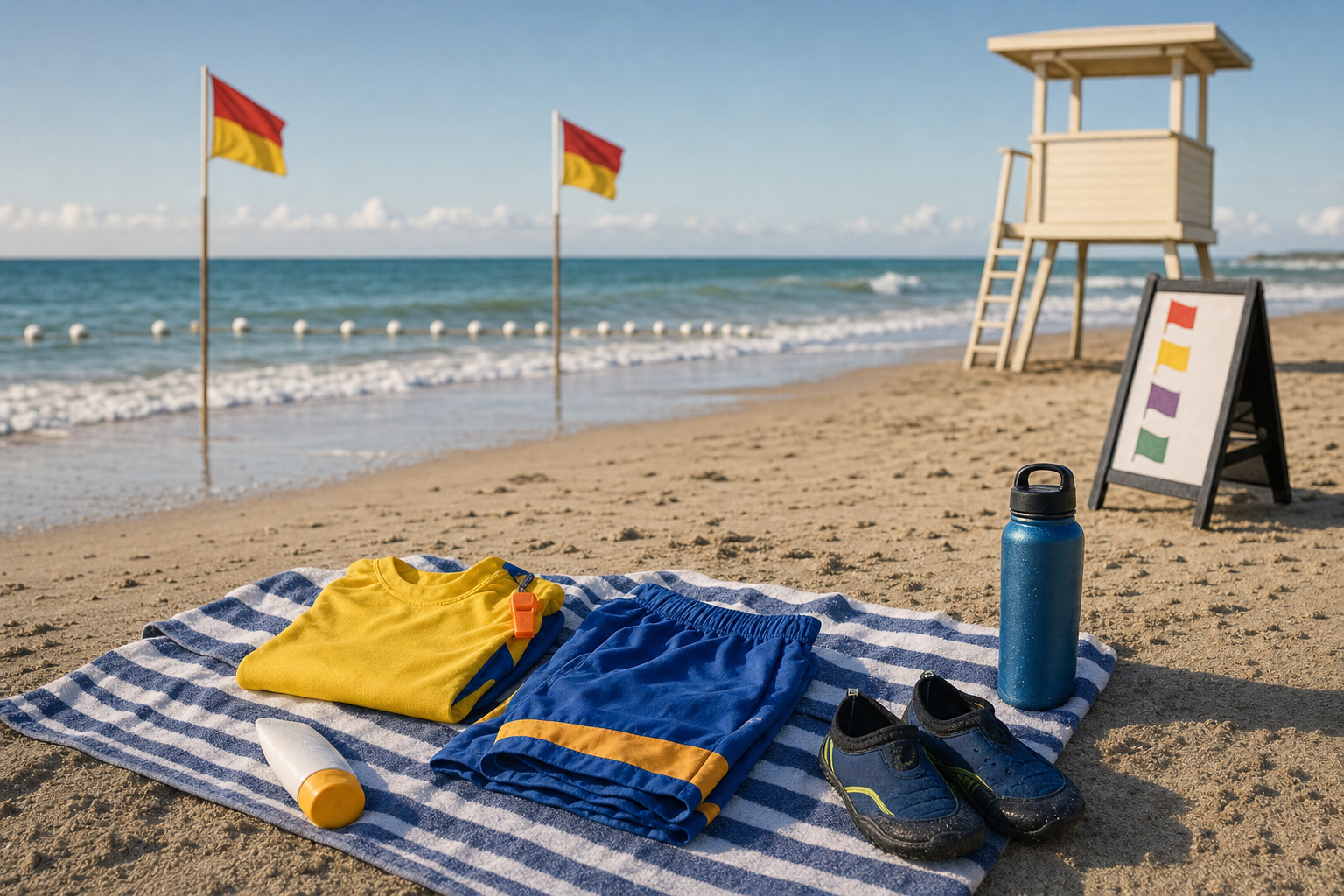
Swimmers ages 3-12 are wide-eyed at busy beaches, but it only takes a second to drift away or misread a warning. When you arrive at a crowded beach, the most crucial step is spotting the red-and-yellow flags—they mark the lifeguarded zone. Children must swim between those flags. A red flag alone means danger; yellow flags call for extra caution. Purple warns of marine pests like jellyfish. Double red means the water is closed entirely. Knowing the beach flags meaning for kids isn’t optional—it’s lifesaving. (usla.org)
Here’s a simple arrival-to-exit routine for parents. It’ll cut down lost child moments and keep swims safer for 3-12-year-olds.
Setting Up a Kid-Friendly Beach Routine
When you find your spot on the sand, before towels even touch down, decide on a meeting point. Choose something obvious—a lifeguard tower, a bright umbrella, a colorful lifeguard stand. Agree with each child that if you lose sight of them, they go straight there. Make it non-negotiable.
Next, ensure each child has a bright swimsuit or rash shirt, something visible even if they’re bobbing among waves. Teach them to use a whistle for recall: one blast to stop, two to return. Small kit tip: tape or sew a whistle to the straps so it doesn’t blow away.
Check where the lifeguards are stationed and locate the red-and-yellow flags. Always make those the boundaries. If the flag configuration changes midday due to weather or tides, move with it. Keep water play in the lifeguarded zone—never beyond.
Make the first swim short. Let young children test the water together, with supervision nearby. That gets everyone comfortable before fatigue sets in.
Understanding Each Flag and What It Means for 3-12s
Red-and-yellow flags mean ‘protected area’: this is the zone lifeguards are watching most closely. Swim inside it for your best safety margin. (usla.org)
A red flag alone signals high hazard like rough surf or dangerous currents—stay out. A double red means the beach is closed; it’s against rules, and in many places law, to enter the water. (usla.org)
A yellow flag means conditions are moderate but risky: waves, currents, or winds are stronger than usual. Weak swimmers, younger kids, and anyone outside arm’s reach should stay in shallow water, and avoid inflatables offshore. (usla.org)
If you want a structured way to help your child progress at home, the 10-Week Plan guides you step by step.
Purple flags warn of marine life hazards. A school of jellyfish or stingrays? Best to stay out or wear full protection. (usla.org)
Green flags (where used) often signify low hazard, calm conditions, or permitted swimming. But green doesn’t mean no risk—it doesn’t replace supervision or staying inside the trusted zone. (getbeachfinder.com)
[[ctakid]]
From Arrival to Exit: The Full Flag-to-Family Swim Plan
You’ve picked a meeting point, you’ve identified flags—now stick to a seamless routine.
Arrival: Check signage and flag boards. Explain the flags to your kids using phrases they understand: “Red means stop,” “Yellow means careful,” “Purple means dangerous critters,” “Red-over-yellow means safe zone.” Let them say it back.
Gear Check: Bright suits, shoes, whistle strapped. Sunscreen early. One parent should be appointed the “water watcher” with eyes on kids in the water. Rotate this role every 15 minutes so no one zones out.
Water Time: Stay between red-and-yellow flags. For ages 3-6, stay where they can touch bottom and still breathe comfortably. Ages 7-12 can go deeper but always within arm’s reach of that water watcher. Avoid inflatables or SUPs offshore—those drift fast. Teach kids to float on their back if they get tired. Use swim lessons outside of busy days; plenty include programs like the 10-Week Plan from swimy.org that build confidence, stamina, and skill gradually.
Breaks & Check-Ins: Every hour or after water play, pull everyone out. Reapply sunscreen, hydrate, review flag status and meeting point. Pick a quiet spot, chat: ask if anyone felt nervous, cold, unsafe.
Closing Out: Half an hour before exit, get everyone out of the water. Put on cover-ups, check for missing items. Head to your meeting point so if someone is searching, you’re not spread out. If a child drifts off, lifeguards often launch searches starting from that fixed meeting point.
Common Pitfalls That Cause Lost Child Moments
Assuming lifeguards see every child is risky. Even in the protected zone, visibility is limited. Aggressive waves, crowds, and splashes all blur what one person can cover. Don’t assume a lifeguarded area = guarantee. Beware when kids drift past flags—they may think the beach is safe everywhere.
Another trap: ignoring changing conditions. A calm morning yellow flag can turn red by afternoon. Always check tag boards when you return from swimming, eating, or any break. Don’t rely on what the flag meant when you arrived.
Letting kids wander without reminder, especially older ones (8-12), leads to separation. A bright suit helps. So does a recall whistle or signal. But mostly, stay close.
By putting a Flag-to-Family Plan in place—know what the flags mean, set a meeting point, use bright gear, designate a watcher, avoid inflatables offshore—you’ll cut stress and keep your school-age swimmers safer. Crowded beaches don’t need to mean lost child moments. They can be days of sun, waves, laughter—and safe swims.
120+ swimming exercises sorted by age — with video and instructions. Developed by swim instructors, completely free.

120+ swimming exercises sorted by age — with video and instructions. Developed by swim instructors, completely free.