Parent-Tot Class Names, Decoded: Baby & Toddler Swim Lessons Explained
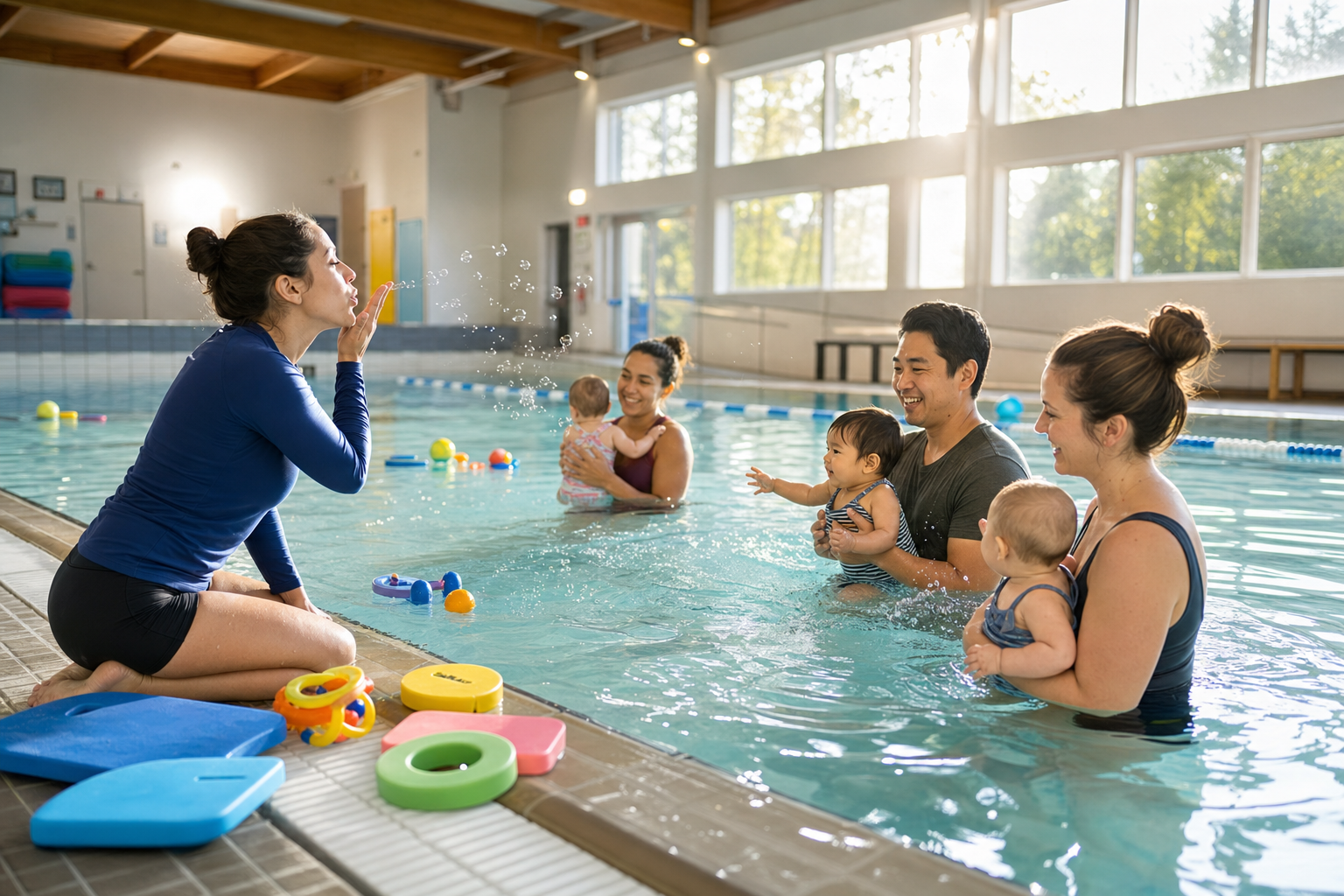
From “baby swimming classes” and “parent-tot swim lessons” to “infant aquatics,” “Ducklings,” and “Water Babies”—the names can feel confusing. Parents often don’t know exactly what gets taught. Here's a clear breakdown so you can choose what’s right for your child, especially between 0-36 months.
What Different Class Names Usually Mean
Parent & Baby / Parent-Tot Classes
These terms signal that a parent or carer is in the water with the baby or toddler. The focus is on water familiarisation, trust, and basic skills—splashing, songs, blowing bubbles. These are not aimed at teaching independent swimming or survival skills yet. In Australia, such “baby or infant swim classes” are typically for ages from about 10 weeks to around 1-2 years. Then toddlers move into classes where water safety and early aquatic skills are introduced. (aquanat.com.au)
Infant Aquatics / Water Familiarisation / Aqua Babies
Names like “infant aquatics” or “water familiarisation” indicate early exposure to water with a strong emphasis on safety, comfort, and movement rather than strokes. These often start around 6 months of age. In Western Australia, Royal Life Saving describes infant aquatics as an opportunity for young children to feel secure in water, build trust, and develop early movement skills—always with a parent or carer in the water. (royallifesavingwa.com.au)
Ducklings / Tadpoles / Water Babies
Ducklings, Tadpoles, Water Babies—these names are fun and often used by swim schools in the UK, US, and Australia. “Ducklings” classes could be for infants through pre-schoolers, or for 2.5- to 4-year-olds, depending on the provider. These names might involve gradually decreasing involvement from the parent, more flotation aids, and more independent aquatic movement. For example, an Australian swim school offers a "Ducklings (0-36 months)" class where adults are present, focusing on early water confidence. (ducks2water.com) In the UK, SwimStart runs “Ducklings” for pre-school children aged about 2½ to 4 years. (swimstart.org.uk)
US vs UK vs Australia: Age Group Differences
In the US, “parent-tot swim lessons” and “baby swimming classes” often cover 6-12 months (“Baby Swim”), then move into toddler levels. Schools may call early programs “Infant & Toddler” or “Water Babies,” and they sometimes introduce survival skills early. (aqua-tots.com)
In the UK, terms like Ducklings or Learn to Swim are tied to “stages” or a national framework. For instance, “Discovery Ducklings” in Chesterfield are for ages 3-36 months with parent participation, while older “Ducklings” are 3 years plus making more independent progress. (chesterfield.gov.uk)
In Australia, swim schools use systems like Water Tots, Aqua Taddies, Water Familiarisation, often managed under national bodies like Swim Australia or Royal Life Saving. Classes tend to transition children from full parent involvement to more independence by around 24-36 months. (aquanat.com.au)
If you want a structured way to build water confidence at home, the 10-Week Plan guides you step by step.
Around the Midpoint: How Skills Usually Develop
As your child moves through parent-led classes into toddler or Ducklings/Tadpoles stages, expect to see more water safety training. Skills like entering and exiting safely, floating front and back, submerging, breath control, and basic independent movement are introduced gradually. Some programs teach “infant survival” skills—holding breath, turning to back, getting to pool wall—often by the time kids are 18-24 months. (swimkidsutah.com)
[[ctababy]]
Many swim schools offer structured lesson plans to track progress. For example, you might follow a 10-Week Plan in which skills are introduced in predictable steps weekly. swimy.org provides a resource for swim schools using its “10-Week Plan” teaching system so families can see what to expect over time. (swimy.org)
Key Safety Caveats: What Class Name Doesn’t Tell You
A class name alone doesn’t guarantee lesson quality or safety. Always ask:
• Is the instructor trained? In the US, UK, or Australia they should hold nationally recognised qualifications in early childhood aquatic education and water safety.
• What’s the submersion policy? Will your child be guided into fully going under water at what stage?
• What’s the supervision ratio—how many children per instructor, and whether parents are required to be in the pool.
• What are emergency procedures—pool temperature, rescue plans, CPR certification.
Even programs called “infant aquatics” are not substitutes for supervision. Drowning risks are real, especially for toddlers 1-3 years old. Australia’s guidelines say lessons should start at six months at the earliest, with warm water and proper supervision. (royallifesavingwa.com.au)
How to Pick a Developmentally Appropriate Class for Your Baby or Toddler
First, think about your child’s age, emotional readiness, and any comfort or fear with water. If they’re under one year, you’ll want a class with full parent participation, no pressure to swim independently, and lots of warmth and play. Around 18-24 months, many children begin to handle some independence, but only when they show signs like being comfortable with water on their face, able to float with support, etc.
Second, choose a class whose curriculum is transparent. Ask for descriptions of what’s taught—skills like floating, submersion, entry and exit, safety cues. The swim schools in UK and Australia often follow frameworks like Swim England or Swim Australia, or national swim safety syllabuses. (chelmsford.gov.uk)
Third, visit the pool, try out a class, and observe. If you see consistency—same teachers, clear progress—you’re probably in a good program. If each lesson feels like the first one—with no skill checking—it could be more about water play than real skill building.
Why Understanding Names Matters for Safety & Long-Term Progress
Choosing a program that aligns with real learning makes a difference. Parent-baby classes build confidence and reduce fear of water. Then when you move into toddler water safety classes, the child is ready to learn more serious skills like floating without support, breath control, and entering independently. These are often more important than stroke technique early on.
If your child’s only ever been in a “baby swimming class” that emphasizes safety and comfort, then a “Ducklings” or “Tadpoles” class might be the right next step. While “learn to swim” stages that start too early might push technique before the child is physically or emotionally ready—creating stress instead of joy.
Bottom Line
The names “parent-tot”, “baby swimming classes”, “infant aquatics”, “Ducklings”, “Water Babies”, “toddler splash” are all ways swim schools try to communicate structure, age, and level. But what matters more is what really happens in the pool: how much parent involvement, how much safety vs technique, how comfortable your child feels, and whether the instructor is qualified. Use class names as hints, not guarantees. When in doubt, ask lots of questions—and always, always put safety first.
120+ swimming exercises sorted by age — with video and instructions. Developed by swim instructors, completely free.

120+ swimming exercises sorted by age — with video and instructions. Developed by swim instructors, completely free.