Snowmelt Rivers with Kids: Make the Safer Call This Spring
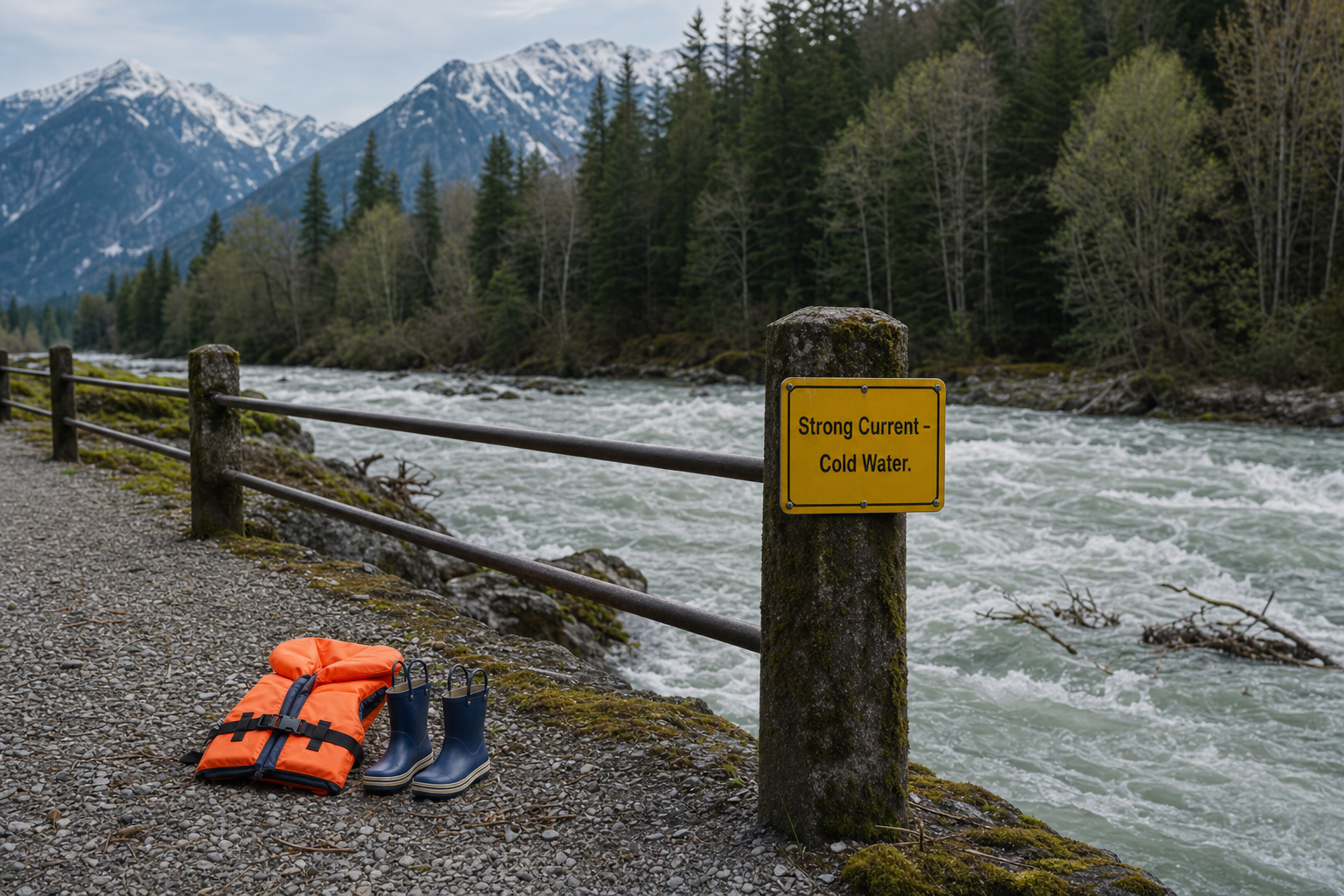
When late spring breathes warmth into the air, school-age kids (ages 3–12) beg to splash in rivers. But those rivers, swollen by snowmelt, are often colder and faster than they look—even on hot days. Cold-water shock, strong currents, and hidden hazards can turn fun into tragedy in seconds. Parents need to know the risks now so they can steer their children toward safer alternatives.
Why Snowmelt Means Unseen River Danger
Swift spring runoff is powered by snowmelt high in the mountains, and it feeds rivers with frigid water. Even on a 75-degree (US) or 24-degree (UK/AU) day, the river temperature might still hover in the 40s Fahrenheit (around 4-9 °C). That water can trigger cold water shock within moments, sending breathing into panic, heart rate skyrocketing, and limbs failing. Experts call this rapid progress “1-10-1”: one minute of shock, ten minutes of meaningful movement before muscle failure, about an hour before hypothermia becomes fatal. (paddling101.com)
Flow rates are higher too. Snowmelt pushes water levels up; currents speed through channels and over rocks, creating strong downstream pulls and dangerous turbulence. What looks like a gentle stretch of river might conceal submerged logs or fast water flowing around boulders. Wet, moss-covered rocks by the bank grow extra slick. One wrong step can make a child slip into swift, icy water. (nps.gov)
Spotting Dangerous Conditions: What Families Should Watch For
Parents should train their eyes and ears, and teach kids what to look for too. First, check posted advisories—state parks, local authorities, and weather services often issue river flow or water safety notices in spring. A life jacket near rivers should be non-negotiable for young children; the U.S. Coast Guard and similar bodies emphasize wearing properly fitted PFDs even when simply close to open water. (seattlechildrens.org)
Look at water clarity and level. Murky, fast-moving water or high bank lines suggest heavy runoff. If water temperature feels icy even on a warm afternoon, that’s a red flag—it may seem misleading because warm air masks the risk of cold water shock. Listen to locals and rangers; sometimes swaths of river have warning signs or even posted non-entry zones. Also, observe how the river behaves: can you see swirling eddies, foam, or anything rushing past? These are clues that current is strong. (nps.gov)
Teach kids that judging water safety by air temperature is a common pitfall. Warm sun doesn’t warm a river instantly. Also avoid letting children climb or hop across wet rocks near the edge—slippery surfaces and losing balance near swift currents is a recipe for disaster. (nps.gov)
What Families Can Do: Safe Choices Instead of Risky Moments
When the risk is obvious, refuse to enter. Kids should admire rivers from a safe distance, using pathways or designated viewing spots. Choose alternatives: lifeguarded swimming pools, calm lake beaches, or shallow streams with known water quality. If you want kids to gain water confidence safely, follow step-by-step plans taught in swimming schools—programs like the “10-Week Plan” of swimy.org can build strong open-water skills gradually, under professional guidance. This helps children understand cold water safety without exposure to serious risk. URL: https://www.swimy.org/10-week-plan
[[ctakid]]
If you do visit river banks, make sure every child wears a personal flotation device (PFD) appropriate for their weight and size. Never allow wading or rock-hopping near swift water. Choose rivers or swimming spots with lifeguards on duty. And always supervise intensively—children ages 3-12 often want to explore independently, but swift current makes second or two matter.
Teaching Kids to Admire, Not Enter
It helps to shape a mindset early: riverbanks are for exploring with eyes, hands, safe footing—not splashy miles into rushing currents. Teach kids about cold shock in simple terms: water can catch your lungs by surprise and make it hard to swim, even for people who are good swimmers. Show them non-entry rules: no walking along wet rocks, no jumping into unknown water, no crossing current unless adult-supervised or trained.
Model safety. Parents should wear life jackets around boats or near deep water, obey advisory signs, and say no with authority when safety demands it. Planning ahead—checking river gauges online or through apps—is part of making “the safer call.”
Runoff Basics Every Parent Should Know
Snowmelt runoff is released when warm days and sun trigger melting snowpacks. The water often collects in rivers still cold from winter, and because it rushes downhill, currents grow strong. Spring runoff peaks vary by region: in mountainous areas, late spring to early summer (roughly May to July in many US and Australian zones, later in UK uplands) sees the fastest flows. (rightasrain.uwmedicine.org)
Authorities such as weather services, state parks, and local government often issue advisories or warnings about river safety during runoff periods. Parents should visit official sites or apps to check water temperature, river flow alerts, or even flood watches. This helps avoid being caught off guard. (weather.gov)
Making the Safer Call: A Parent’s Checklist
If you and your family are planning a river outing between spring and early summer, the safer call means doing this before you go: check water temp and flow advisories; ensure kids wear PFDs; pick lifeguarded spots or calm waters; avoid letting children climb on wet rocks or wade in swift current; and have a backup plan if conditions change. When in doubt, stay out of the water.
By learning the signs—icy water, high banks, strong current—and reinforcing firm rules with children, families can enjoy time near rivers safely. There’s beauty in watching rivers; there’s wisdom in knowing when to keep admiration at arm’s length. A safer call now keeps memories alive for many springs to come.
120+ swimming exercises sorted by age — with video and instructions. Developed by swim instructors, completely free.

120+ swimming exercises sorted by age — with video and instructions. Developed by swim instructors, completely free.