Skip the Fishing Pier: A Safer Swim Choice for Kids
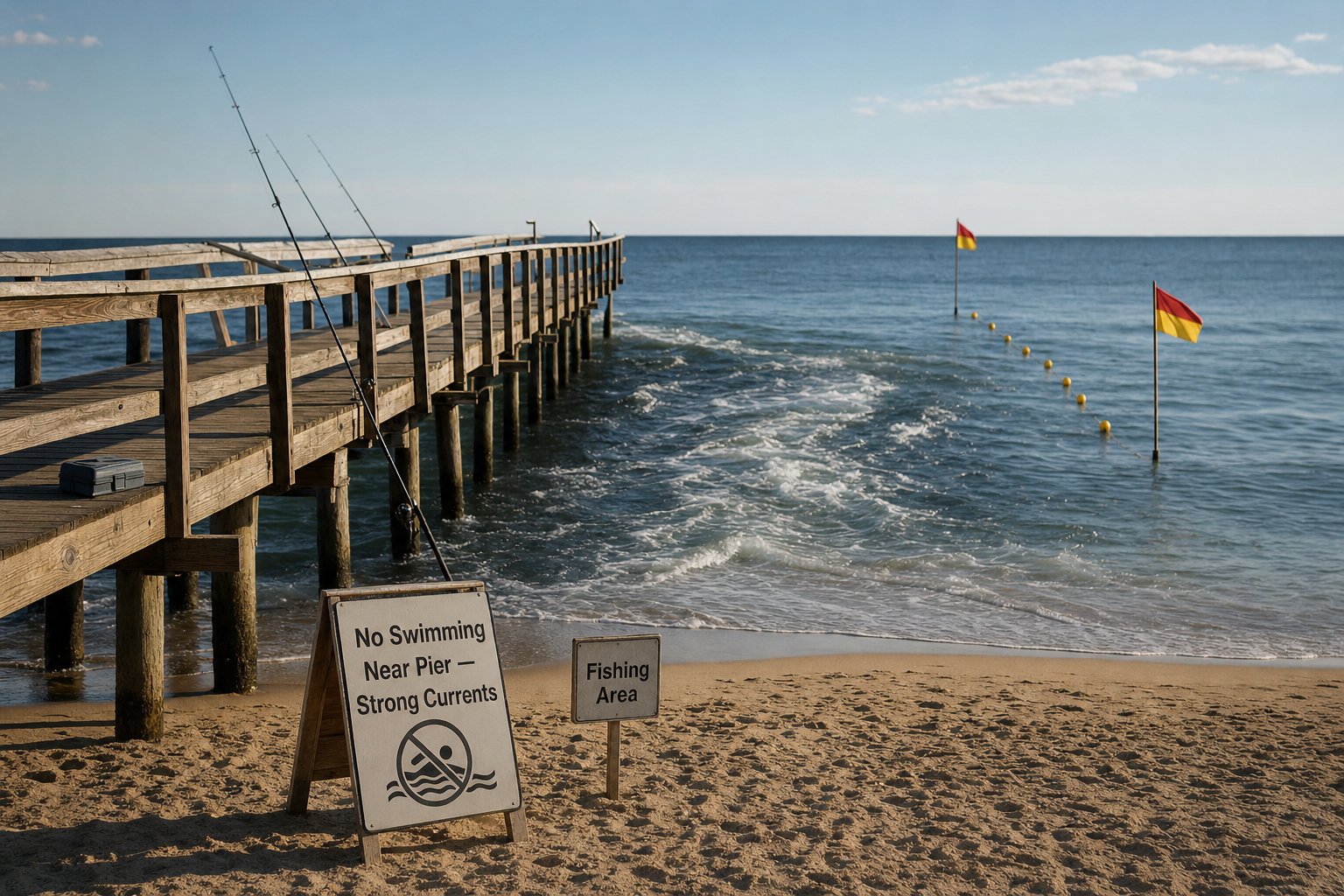
Swimming near a pier might look fun—kids love the shade of pilings and watching anglers lower hooks—but for school-age kids it’s often not safe. Hooks, fishing lines, pilings, slippery surfaces, and powerful currents can turn pier zones into hazards. If you’re wondering is it safe to swim near a pier, here’s what every parent should know to keep ages 3-12 safe in the surf.
Why Piers, Jetties & Groynes Are Dangerous
Piers, jetties and groynes aren’t just structures—they change water flow in ways many don’t notice. Powerful rip currents often form where water gets trapped behind a pier or forced through gaps in groynes. These currents can pull swimmers away from shore so fast, even strong swimmers can struggle. Weather agencies say rip currents are “very common near structures such as jetties, piers or breakwaters” and that these areas require extra caution.(nhc.noaa.gov)
Pilings—the vertical supports of piers—are often surrounded by turbulent water, swirling beneath and between boards. Rocks underfoot around jetties are slick and injury-prone. Then there are fishing hooks and lines: kids exploring pier shadows may trip on hidden tackle or get accidentally hooked by carelessly cast lines. City pier rules often forbid anglers to cast adjacent to swim zones or allow hooks to dangle over rails because of the risks.(imperialbeachca.gov)
Spotting Dangerous Zones & Flag Signals
You’re wondering jetty currents kids—yes, those are real. Longshore currents (running parallel to beach) and structural currents (pushed by the pier’s edge) can slam into groynes and piers with surprising speed. The National Weather Service warns that even calm seas may have hazardous currents near these structures, especially during low or changing tides.(weather.gov)
Lifeguard flag systems are your best guide. In many US lifeguarded beaches, red flags signal high hazard—swimming is discouraged or prohibited. Yellow flags mean moderate risks, especially for weaker swimmers. The RNLI in the UK uses red and yellow flags to mark safe zones patrolled by lifeguards, where you should always swim between the red-and-yellow flags.(usla.org)
Red-yellow flags are different from red flags. Red-yellow means “this is the place lifeguards want swimmers to use,” often set well away from piers or drop-offs. A solid red means danger: stay out of the water. Black and white flags often designate zones for surfboards or craft, not swimmers.(getbeachfinder.com)
If you want a structured way to help your child progress at home, the 10-Week Plan guides you step by step.
What Parents Can Do: Stay Safe & Enjoy the Beach
Teaching kids about water safety starts with choosing a better spot. Always look for beaches with lifeguards on duty. Swim within the red-and-yellow-flagged zone, clearly marked and supervised. Before your family enters the water, talk to the lifeguard: ask about currents, hazards like rocks or hooks, and where to swim safely.(redcross.org)
[[ctakid]]
Be particularly wary of shade underneath a pier. Kids often think it’s cool and calm there, but that shade hides sharp pilings, fishing hooks, algae making things slippery, and often where the currents converge. Encourage children to keep distance from piers and avoid swimming directly underneath. Zones near piers or jetties are frequently excluded from flag-safe areas.(home.nps.gov)
Teach children what to do if caught in a current: don’t panic, don’t swim directly back toward shore against the current. Instead, swim parallel to shore until you can angle back in. Wave for help. Always supervise closely—ages 3-12 can get in trouble quickly, even if they’re strong swimmers.(weather.gov)
Also, consider swim training that goes beyond pool skills. Schools of water safety often recommend programs for children to improve confidence in open water. For example, the 10-Week Plan from swimy.org teaches children basic swim safety and helps them recognise hazards before they even enter the water, complementing supervision and flag awareness.---
Lifeguards, Hooks & Signs: Keeping Everyone Safe
Many beaches enforce rules about fishing close to swim zones. At Pier sites, signs posted warn anglers not to cast near swimmers, not to clean fish where people walk or swim, and to manage bait buckets. These rules reduce chances of accidents.(imperialbeachca.gov)
Lifeguards patrol daily with specific duties: setting flags, adjusting swim zones, watching for debris, sensing shifts in current, and alerting public. When the conditions change—storm, surf, tide—these flags might shift position. What was safe at high tide may be dangerous at low. Swim zones marked by red-and-yellow flags are set to avoid piers, jetties, or rip channels. If those flags move, move with them.(weather.gov)
Quick Rules for Parents to Remember
The safest choices for kids ages 3-12 include: swim only in lifeguarded areas; stay between red-and-yellow flags; avoid swimming near piers, jetties, groynes; look out for fishing hooks, wet pilings, bait buckets; ask the lifeguard about water conditions; teach children how to spot currents and what to do in one. Cold, wet, or calm-looking waters may hide dangers beneath. Your role is not just watching—but educating, guiding, and choosing safer zones.
Skipping the pier isn’t about limiting fun. It’s about choosing a swim spot where hooks, lines, pilings, and currents are less likely to pose risks. When parents teach kids to swim near a lifeguard, between red-and-yellow flags, and away from structures, families get the freedom to splash, play, and explore—with a lot more peace of mind.
120+ swimming exercises sorted by age — with video and instructions. Developed by swim instructors, completely free.

120+ swimming exercises sorted by age — with video and instructions. Developed by swim instructors, completely free.