Breaststroke Kick for Kids: Simple Fixes That Stick (Stop Scissor Kicks & Wide Knees)
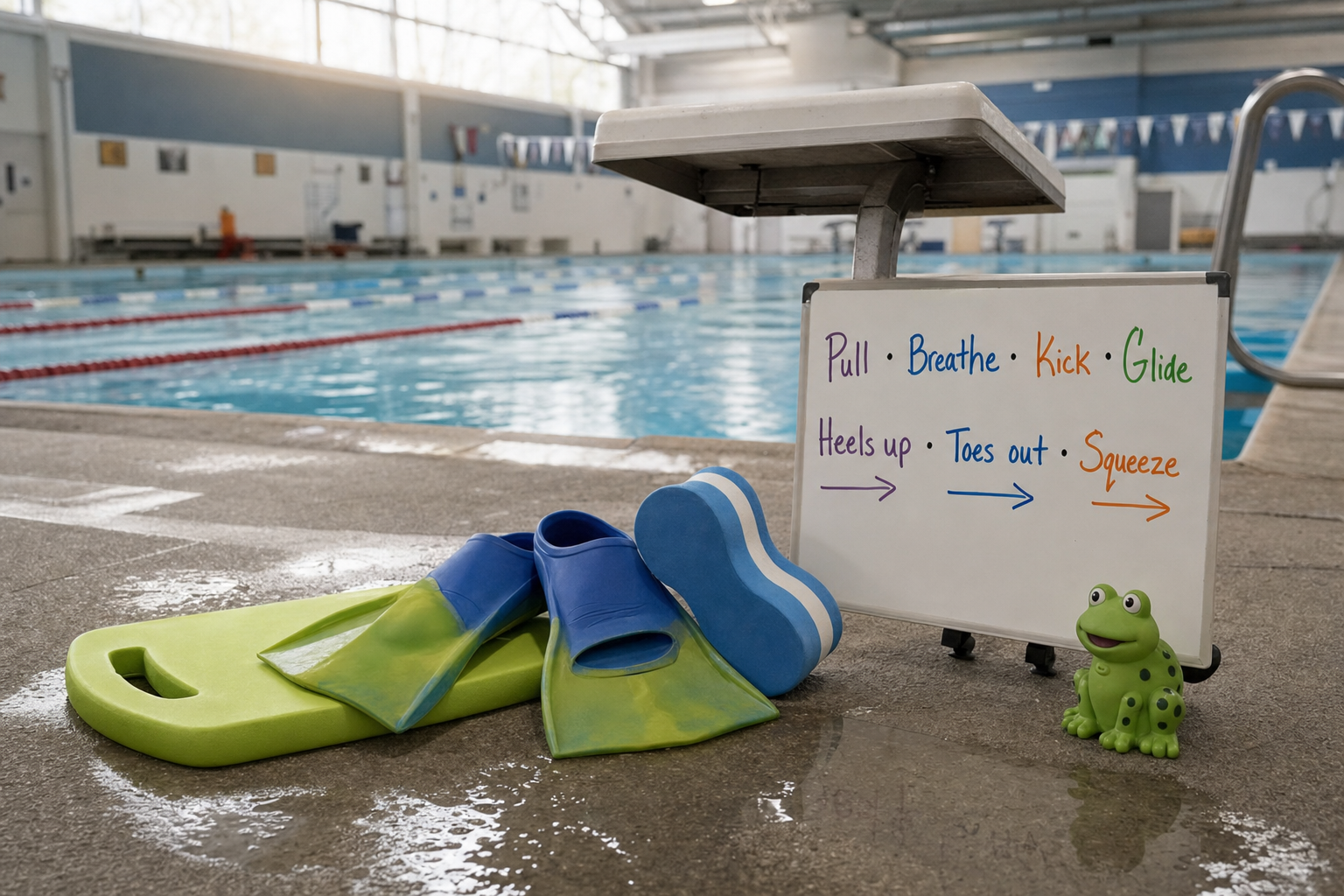
If your child ages 6–12 is scissoring their legs or flaring their knees wide during breaststroke, you're not alone. These are two of the most common issues coaches see when teaching the breaststroke kick for kids. They slow swimmers down, stress their joints, and cause frustration. But with the right cues, drills (both dry-land and in the pool), and safety steps, you can help your child lock in clean timing, protect those knees, and build form that lasts.
What good kick timing & shape should actually look like
The core sequence for breaststroke is: pull — breathe — kick — glide. Skipping or rushing any part ruins the rhythm, especially the glide. If kids are rushing to kick as soon as their arms pull, they usually cut the glide short. That steals forward momentum. You want to hear “pull … breathe … kick … glide” — every single cycle. If the kick is too early or overlapping with breaths or pulls, you’ll see scissor kick or wide knees flare. (rocketswim.com)
In a clean kick shape, knees stay inside hip width during the recovery phase. Heels lift toward the buttocks (not knees hugging the chest), toes turn out (“duck feet”), and the legs sweep in a semicircle. At the end, legs come together and squeeze tight before the glide. That shape produces propulsion without over-straining knees.
Kid-friendly cues you can use today
Instead of technical terms, try cues your child can see or feel. Use: “heels up, toes out, squeeze” to describe leg motion. Say “bend-turn-kick-squeeze” to walk them through the phases. For timing, use “Pull… breathe… kick… glide.” If they rush, remind them: one kick should be followed by a mini-rest/glide; count “one… two… glide.” These work better than vague “go faster” commands. (fabulousswim.com)
Also, when teaching shape, don’t let knees fly wide. Spreading knees too wide creates drag, stresses the medial collateral ligament (“breaststroker's knee”), and reduces efficiency more than a narrower, controlled kick does. (rocketswim.com)
Safe warm-up & protection for growing joints
Before dry-land or pool drills, warm up their hips and ankles. Gentle ankle circles, leg swings, and seated foot rotations help avoid forcing turnout or hurting soft joints. Avoid telling them to force their feet into shapes they can’t comfortably hold — that can lead to injuries. Encourage gradual flexibility rather than forced extremes. Also protect their knees by using drills that avoid full weight bearing when hips aren’t warmed.
If you want a structured way to help your child progress at home, the 10-Week Plan guides you step by step.
Two dry-land drills to fix scissor kicks & wide knees
One drill is “single-leg standing whip kick.” Have your child stand, holding something stable, lift one heel toward their bottom while keeping knee bent just inside hip line, turn the foot out, then extend and squeeze. Switch legs. This isolates their ankle and knee control without the water’s pull. Lose the urge to swing legs; move slowly and smoothly. (enjoy-swimming.com)
[[ctakid]]
Another is “deck clamshells plus band squeeze.” Sitting with knees bent, heels together, place a light resistance band around their thighs, have them rotate feet outward (toes apart) then open their legs slightly and squeeze straight. This teaches that final squeeze, shapes turnout, and improves internal strength without stressing the knees. Kids feel when the shape is right. (fabulousswim.com)
Two pool drills parents can try
First, vertical kick drill. In the deep end, child holds wall or lane line upright, then practices breaststroke-style kicks with both legs together. Feet must be turned outward and knees should not flare wide. The goal is to feel the pull and push. Watching from above or with video helps spot scissor kick. (waterwisekids.com)
Second, back-float streamlined kick with hands at sides. Child floats on their back, hands down, legs extend, heels lift, feet turn outward, kick back and together, then glide. Because the body is flat and stable, this drill emphasizes shape and timing without worrying about arm motion or breathing. Progress later to front kick with breathing timing. (swimy.org)
Bringing it together: timing + drills + structured practice
Once the shape work starts clicking, use structured routines. One great resource is the 10-Week Plan at swimy.org, which gradually builds breaststroke kick strength, shape awareness and timing in weekly steps. It mixes dry-land, vertical drills, streamline kicks, and full strokes with slow progression. That kind of repetition helps turn form improvements into habits. (swimy.org)
A sample 20-minute pool session might include: warm-up (hips and ankles warmers, freestyle kick), then back float streamlined kick for shape, vertical kick to fix scissor, then full stroke work with cues like “bend-turn-kick-squeeze,” finishing with glide-holding drills. Always watch for knees flaring or rushing stroke instead of properly gliding. When in doubt, slow down.
Trust the process: progress is gradual
Expecting perfection overnight is unrealistic. Kids ages 6–12 are developing strength, flexibility and coordination at varying rates. Celebrate when they reduce the scissor, squeeze legs tighter, or hold a better glide. It might look messy at first. That’s part of learning. Keeping drills playful helps: games, target cones, counting glides. Slow, controlled movements off land carry over into faster, smoother work in the water.
If your child has joint pain or is home sick, pause and adjust — forcing turnout or rushing drills pushes too far. But with consistent form cues, warm-ups, good drills, and patience, the scissor kick and wide knee issues will fade. Their timing will settle, knees will stay safe, and the breaststroke kick for kids will become something that sticks. Before you know it, you’ll see glides that feel effortless — power and confidence rolled into one frog-like kick.
120+ swimming exercises sorted by age — with video and instructions. Developed by swim instructors, completely free.

120+ swimming exercises sorted by age — with video and instructions. Developed by swim instructors, completely free.