Is My Preemie Ready for Swim Lessons? What Parents Need to Know First
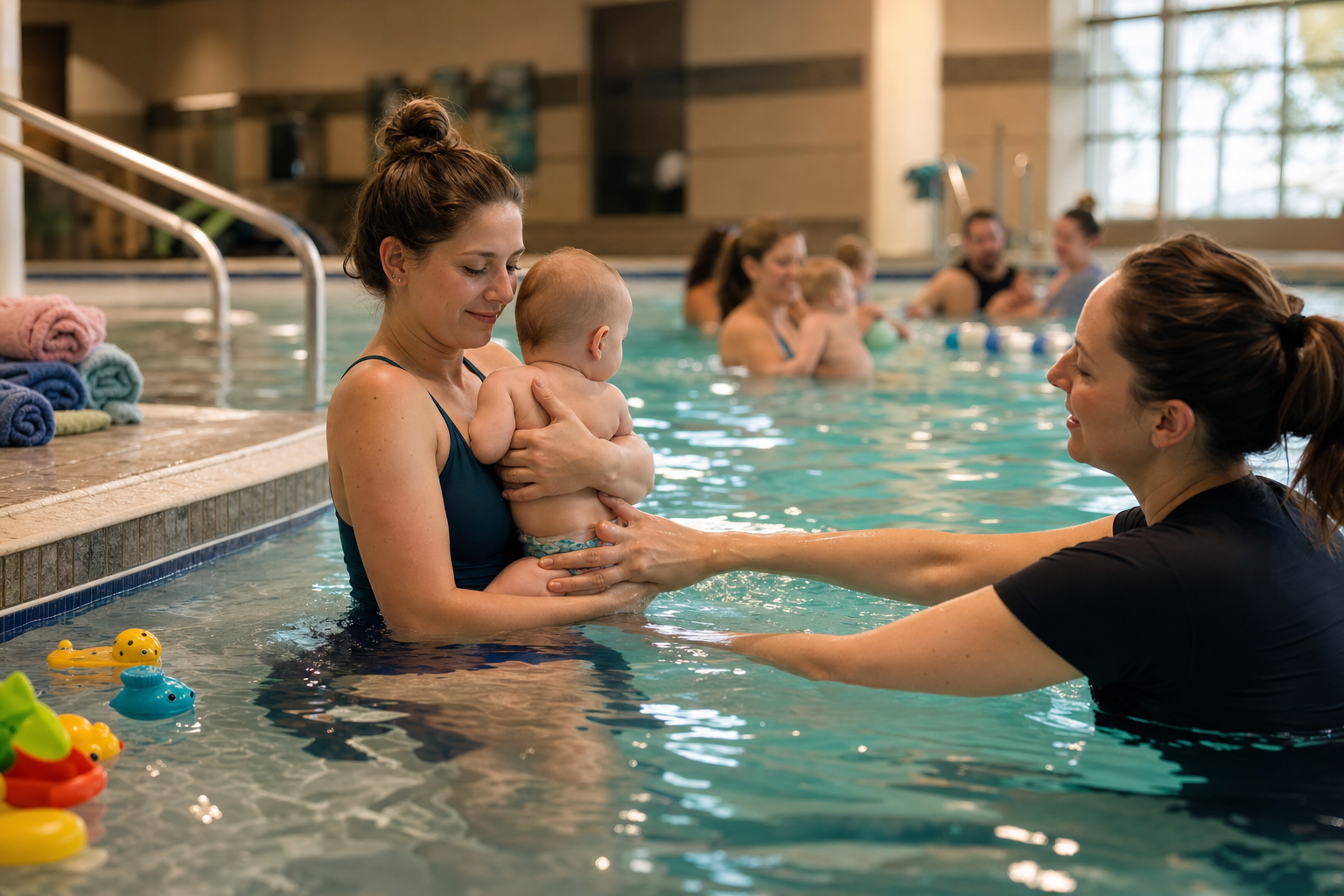
If your baby was born prematurely, you might feel unsure about when “everyone else is doing swim lessons” becomes the right time for your little one. It’s not just about age—it’s about corrected age, head control, temperature tolerance, medical history, and how well they manage stimulation. Read on to feel confident knowing how to talk with your pediatrician and swim school before enrolling in preemie swim lessons.
Understanding Corrected Age and Its Role in Swim Readiness
Your baby’s corrected age (also called adjusted age) takes prematurity into account by counting from their due date instead of their birth date. If your preemie was born 8 weeks early and is now 6 months old chronologically, their corrected age is 4 months. Many experts use corrected age until about 24 months when checking motor milestones. (healthychildren.org)
When considering “premature baby swimming” or “preemie swim lessons,” use your baby’s corrected age to assess readiness. For example, head control and body strength linked to swim safety are better judged by corrected age so you aren’t pressured by what full-term babies are doing. (scienceinsights.org)
Key Signals: Head Control, Temperature Tolerance, and Medical Clearance
Head Control
One of the most important indicators is whether your baby can hold their head steady without support, especially when sitting or being held upright. Most full-term babies achieve this control around 4 months corrected age—preemies often need extra weeks or months. (scienceinsights.org) When head control isn’t solid, water exposure risks are much higher, since a baby can’t protect their airway or keep water away from nose and mouth.
Temperature Sensitivity
Young infants, especially preemies, struggle to regulate their body temperature. Chilly water or air can cause shivering, fussiness, or even hypothermia. Learn what water temperature the swim school uses (ideally 87–94°F for children under 3, according to the AAP-style guidelines) and whether pool rooms are kept warm. (healthychildren.org) Warm water helps prevent stress on premature babies who may have low body fat or underdeveloped thermoregulation. (boystownpediatrics.org)
Medical History & Clearance
Preemies often have extra medical considerations. If your baby spent time in the NICU; needed breathing support; has feeding tubes; has heart issues; or struggles to maintain temperature, check with your pediatrician before starting any swim program. Ask if your baby is medically stable, cleared for water exposure, and able to handle the added demands of a swim lesson. Without this clearance, what might seem like “just water play” could be risky.
If you’re interested in structured guidance, the 10-Week Plan program from swimy.org offers a step-by-step layout of parent-child water familiarization, fun safety skills, and gradual progression. It’s designed for children as young as 3 months old. (swimy.org) Using something like this alongside formal lessons can help you feel more in control of the pace and timing.
[[ctababy]]
Overstimulation in Water: What to Watch For
Pools are noisy, bright, slippery, and full of new sensations. Preemies often fatigue more quickly, and overstimulation can lead to disinterest, distress, or even breathing changes. Watch for signs like averting gaze, tense muscles, irregular breathing, or sudden fussiness. Swim sessions should start short—five minutes or less—and build gradually as your baby tolerates. Always stay close and responsive. Touch supervision (keeping an adult within arm’s reach) is non-negotiable. (healthychildren.org)
How to Evaluate a Swim School or Lessons for Premature Babies
Before enrolling in any preemie swim lessons, parents should ask clear, specific questions:
- “Do you ever work with preterm infants or infants with special medical needs?”
- “What is the water temperature, and can it be warmed for babies under 6 months or with low body fat?”
- “How long are your sessions for infants, and how are breaks handled?”
- “What is the instructor-to-child ratio, and is there a caregiver in the water?”
- “Is medical clearance required for babies who had NICU stays or respiratory support?”
- “How do you manage overstimulation in class?”
Also ask your pediatrician: “Do you consider my baby medically ready for swim lessons?” If they say “yes,” block out a short initial trial. If they recommend waiting, that’s ok.
My Experience with Early Water Days
A few parents I’ve supported told me their preemie, born at 32 weeks, started parent-child water play around 3 months corrected age. At first, she could only tolerate 2–3 minutes, needed to be wrapped in a warm towel immediately afterward, and looked alarmed by echoes in the pool. But by 6 months corrected, with strong head control and stable breathing, she was enjoying full 20-minute sessions. Progress was slow, but steady—and always under guidance. Every milestone felt like gold.
Putting It All Together: A Practical Readiness Checklist
Your baby may be ready for formal swim lessons when:
- Their corrected age is around 4–6 months, or when your pediatrician confirms readiness.
- They can hold their head steadily without support.
- Their medical history is stable (no recent respiratory distress, feeding tubes, etc.).
- They tolerate warmth well and have no issues with temperature regulation.
- They respond well to sensory environments, without signs of distress when exposed to new sounds, lights, and water.
If any of those are still iffy, parent-child water play, warm baths, and supervised splash time at home help build the strength and trust toward doing formal lessons later.
Final Takeaway
Thinking through “premature baby swimming” readiness is about more than marking an age—it’s about watching corrected age, head and body control, medical stability, and your baby’s comfort. Talk openly with your pediatrician, ask your swim school specific questions, and choose lessons that move slowly at a pace suited to your preemie’s development. With support and care, swim lessons can be safe, joyful, and a milestone your preemie can reach on their own terms.
120+ swimming exercises sorted by age — with video and instructions. Developed by swim instructors, completely free.

120+ swimming exercises sorted by age — with video and instructions. Developed by swim instructors, completely free.