Opposite-Sex Locker Rooms: Age Cutoffs and Family Changing Room Options
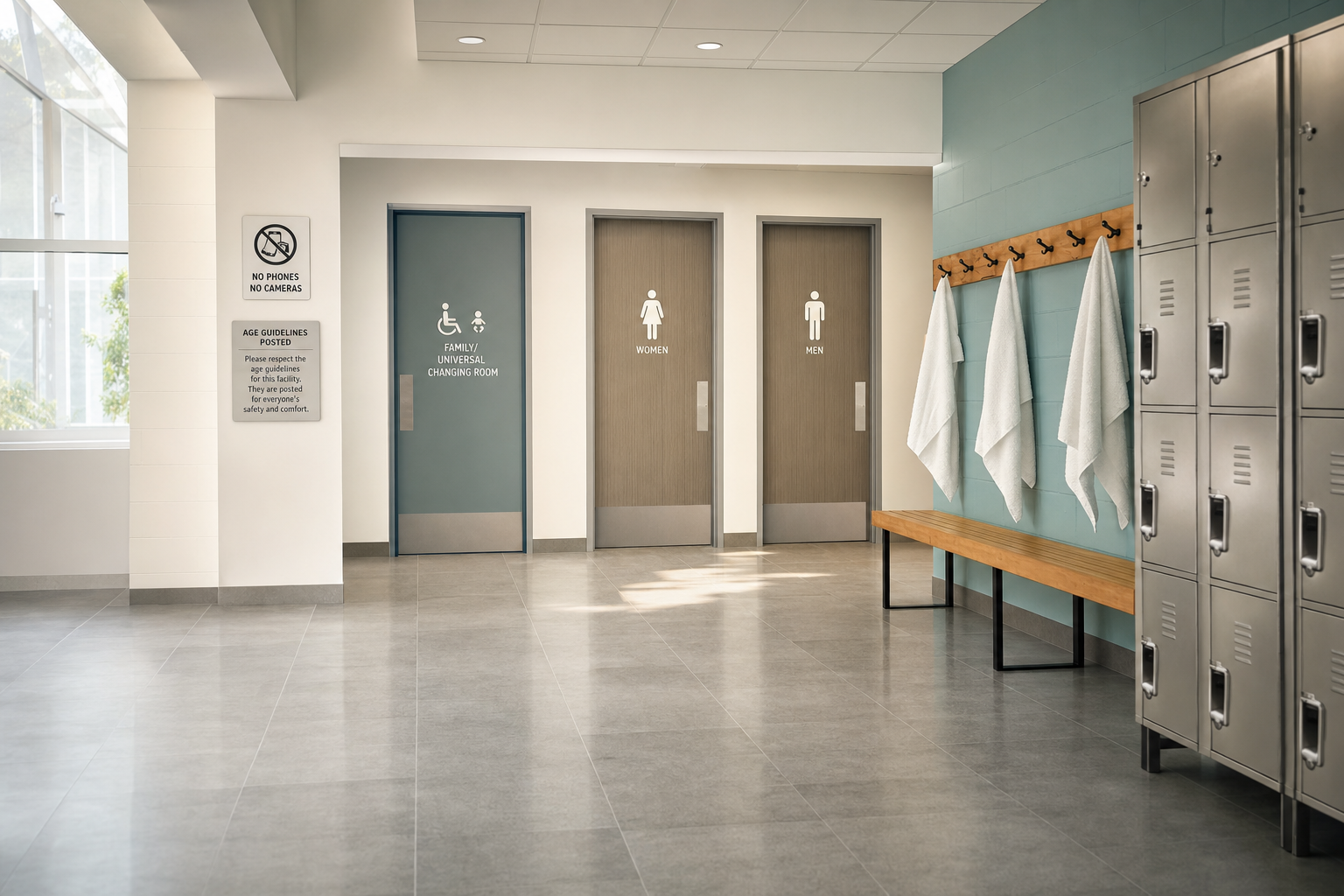
If you’re a parent of a school-age child (about 3-12), figuring out when your child can use gendered locker rooms at the pool or YMCA is probably one of your top concerns. Here are the most important guidelines up front, so you know what to expect and how to prepare.
Typical Age Cutoffs and What You’ll Find in YMCA Policies
Many YMCAs in the US set the cutoff around 4 to 6 years old for when children can join parents of the opposite sex in adult locker rooms. For instance, Cadillac Area YMCA only allows children four and under to be in an opposite-sex locker room, beyond which a family or all-gender changing room must be used. Phone use and cameras are banned in that area. (cadillacareaymca.org) The Door County YMCA also asks families with children ages three and older of the opposite sex to use the Universal locker room. (doorcountyymca.org)
Other Ys set cutoffs a bit higher but with supervision required. At Superior Douglas County Family YMCA, all children five and older must use gender-specific or all-inclusive locker rooms. (superiorymca.org) YMCA of South Hampton Roads similarly states ages 4-9 need adult supervision if they go into same or opposite gender locker rooms; many comments reveal cutoffs at age 6. (ymcashr.org) In Greenwich YMCA, children under 8 may access the adult gendered locker rooms only during certain times and always with a parent or caregiver. (greenwichymca.org)
So while there is no universal age, you’ll often find policies that:
- allow opposite-sex children only until about age 4-6,
- require adult supervision for children aged up to 9-12,
- provide universal or family changing rooms for added privacy.
Why “Family” or “Universal” Changing Rooms Exist
Family or universal changing rooms give everyone—kids and parents—the option to change in privacy. They’re single-occupancy or private-stall spaces, often co-ed, ideal when a parent needs to help an opposite-sex child or when the child just isn’t ready for gendered rooms. YMCA branches often build or designate these rooms to avoid discomfort or confusion. For example, YMCA of Southeastern North Carolina says its branches all have universal locker rooms or private changing spaces available. (ymcasenc.org)
Also, family rooms help enforce rules like modesty and no phone use more cleanly since there’s fewer people in the shared common area, fewer chances for misunderstandings, and clearer lines of sight for adults. They support both children to feel safe and parents to feel comfortable.
If you want a structured way to help your child progress at home, the 10-Week Plan guides you step by step.
What You Can Do: Checklist Before You Go
To help your child to feel safer and more independent, follow these tips:
Ask ahead about the site-specific YMCA locker room policy age cutoff. Every branch can vary. Find out when children can no longer accompany opposite-sex parents and whether family changing rooms are available. Many Ys post this online or in their membership handbooks.
Teach your child privacy rules: using a towel, not wandering into others’ stalls, using private changing stalls as needed. Make sure they know appropriate coverage, modest behavior, and respect for others in locker rooms.
[[ctakid]]
Follow the pool phone policy strictly. Most YMCAs ban phone cameras, videos, or calls in any locker room to protect everyone’s privacy. YMCA of Greenville, for instance, says parents with opposite-sex children should use universal rooms and reminds that cell phone cameras are strictly prohibited in locker rooms. (ymcagreenville.org)
Bring swimwear that’s easy to change in and a towel—these help your child feel more confident. Practice beforehand if needed.
Why These Rules Matter Mid-Year-Round
These policies apply year-round. Even in swim season, lessons, open swim, competitions—all Ys maintain privacy, modesty, and age guidance to ensure safety for all. For programs like the 10-Week Plan swim lesson schedule that many families follow, knowing when your child can use the gendered locker room matters for consistent attendance and comfort. Parents participating in the 10-Week Plan often plan swims twice a week for 10 weeks; it helps to settle logistical worries like changing rooms ahead of time so kids and parents aren’t scrambling each week.
Using family or universal changing rooms when available means your child never has to feel unsafe or unsure in locker rooms. It avoids awkward walk-throughs or exposure to nudity they’re not ready for. It also respects other facility users’ comfort.
Common Pitfalls to Avoid
Don’t assume “every YMCA” has the same rules. Age cutoffs vary by location, sometimes by state or city, and often by building. For example, East Valley YMCA allows ages 5 and under to be supervised in opposite-sex locker rooms, while others hold that privilege only to ages up to 3 or 4. (ymcanorth.org)
Be careful with phones. Using phones, especially cameras or video, in locker rooms breaks policy almost everywhere. YMCA codes, like the Greater Morristown YMCA, ban use of recording devices or cell phones in any locker room, changing area, or bathroom. (greatermorristownymca.org)
Also, don’t force children who are older than your local cutoff into gendered locker rooms before they’re ready. This can harm their confidence and their comfort in water. Use the family room if your child isn't confident yet.
Sample Policies By State and Country
In the US, YMCA’s in Washington State (Whatcom YMCA) allow children aged 6 and under to use opposite-sex locker rooms with a parent or guardian, but for older children (7+), they must use same gender locker rooms or family rooms. (whatcomymca.org) In Michigan, the Grand Traverse Bay YMCA expects youth 12 and under to use universal lockers, children 6-9 to be accompanied by a 16-year-old adult, and those 10-14 to move toward gendered locker rooms. (gtbayymca.org) The UK and Australia may mirror these norms though policies will vary; bigger city pools often follow similar age-cutoffs and insist on family changing rooms.
Final Thoughts
For parents, knowing your local YMCA locker room policy age cutoff, using family or universal changing rooms when available, following pool phone policy, and teaching kids modesty are key to smooth swim days. Every YMCA branch has its own rules and signage, so call or check their website before your first swim lesson or open swim of the season. Your child’s feeling of safety and independence depends on getting this right.
120+ swimming exercises sorted by age — with video and instructions. Developed by swim instructors, completely free.

120+ swimming exercises sorted by age — with video and instructions. Developed by swim instructors, completely free.