The Buddy System That Actually Works for Tweens (8–12): Swim Rules, Check-Ins, and Water Watcher Tips
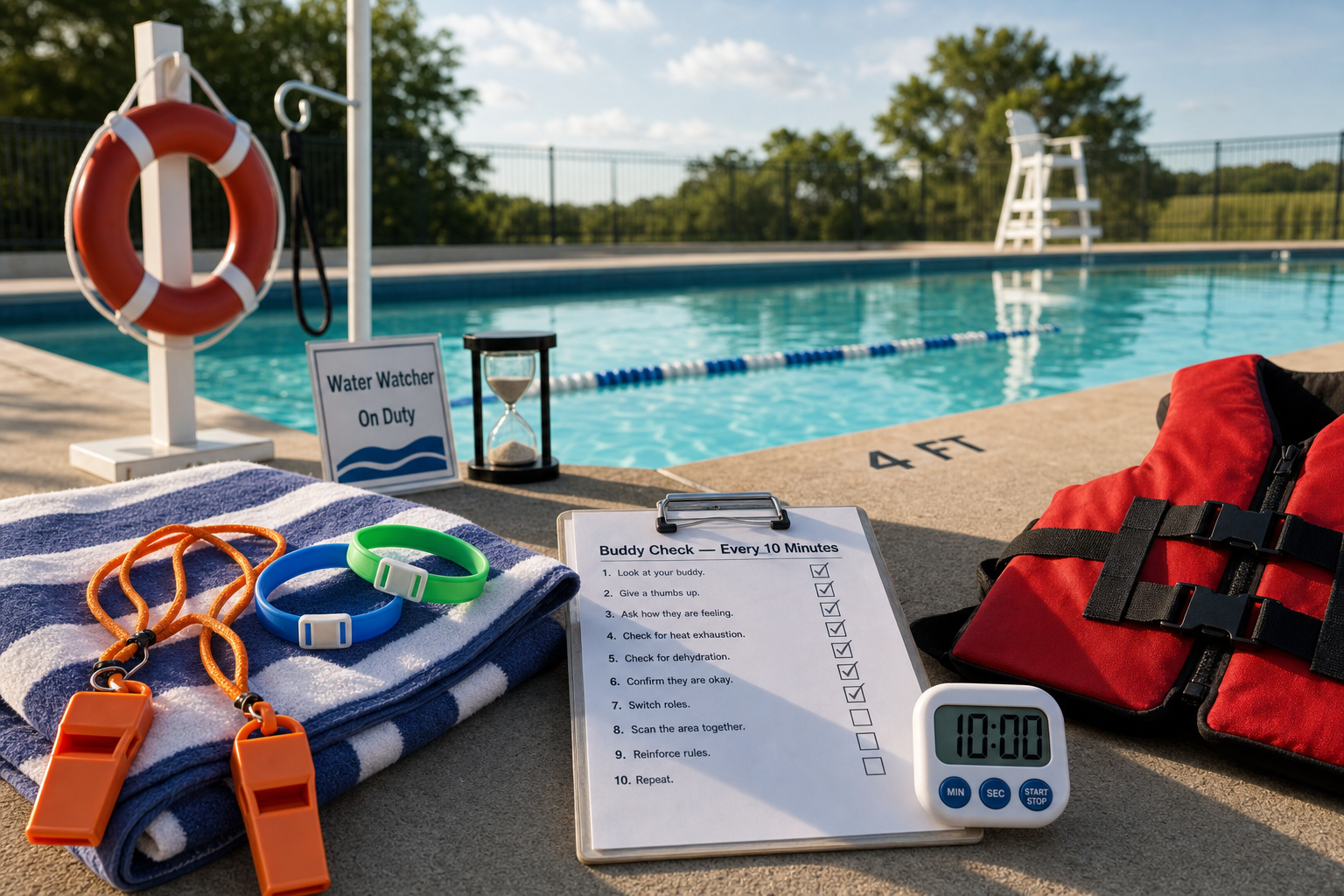
When your 8- to 12-year-old drifts from sight, swims off alone, or ventures into deep water with a weaker friend, the buddy system might offer your your strongest line of defense. But turning “swim with a buddy” into a real, functional plan takes structure, rules, and regular checks. Here’s how to make swim buddy rules, water safety checklist for kids, and a clear parent water watcher vs buddy approach that actually work—and help build a stronger safety culture at pools, lakes, and beaches. Remember: a buddy system adds a layer of safety. It never replaces adult supervision or lifeguards.
What Makes Swim Buddy Rules Strong (Not Just Token)
Begin by setting pairing rules that matter. Buddies should be close in age, swim-ability, and temperament. Pairing two weak swimmers together, for example, simply doubles the risk. If one buddy is weaker, both must stay in areas safe for the less able. According to Scouting America’s Safe Swim Defense guidelines, buddies are required to swim in the area assigned to the buddy with the lesser ability if they don’t match in skill level.(scouting.org)
Define explicit swim buddy rules: always enter the water together, check in together, and commit to staying within eyesight. When buddy pairs are matched, both kids should clearly know when to stick together and when to report to an adult if separated. Use signals—a whistle, hand-raising, or calling “Buddies!”—at regular intervals (e.g., every 10 minutes) to keep the system alive. These kinds of buddy checks are part of formal guidelines in many camps and Scouting programs.(michigan.gov)
Parent Water Watcher vs Buddy: Roles That Add Layers of Safety
As essential as buddies are, they provide peer support—not supervision. The role of parent water watcher remains critical. A water watcher is an adult who gives undivided attention, avoids distractions like phones or books, and is physically as close as needed to intervene quickly when required. The American Red Cross emphasizes designating a “water watcher… avoid distractions including cell phones,” always.(redcross.org)
Under this system, the buddy is responsible for staying close, helping the buddy pair stay together, and knowing what to do if they become separated. The parent water watcher handles the overall risk: ensuring all buddies are in sight, checking areas where kids swim, and stepping in immediately if something seems off.
Water Safety Checklist for Kids: What to Teach and Enforce
Use the following checklist to prepare your tween and group for safer swimming whatever the season.
Teach kids these points: swim only in designated areas, swim sober (no distractions or risky behaviour), wear Coast Guard-approved life jackets when needed, avoid diving into unknown depth, and understand open water risks like currents, waves, and sudden drop-offs. These are all part of being “water competent,” as the Red Cross defines it.(redcross.org)
Around 30-60% into these safety habits, you might integrate structured swim programming that reinforces all these skills. For example, the 10-Week Plan found at swimy.org/10-week-plan offers sequences of lessons that build confidence, size up swim ability, and reinforce safe swim buddy behaviour over time.
Set rules like: stay in view of your buddy at all times; never leave a buddy behind or sneak away; follow adult or lifeguard instructions; agree where the boundary is (say, the dock, rope line, or visible landmark); use life jackets if required; signal (whistle or flag) if unable to keep up or if separated.
[[ctakid]]
Make sure adults have a checklist too: Are buddies assigned? Are swim areas clearly marked and safe? Is the water watcher present and focused? Are rescue aids nearby (life rings, reach poles)? Is everyone wearing safety gear, where needed? Are weak swimmers or children wearing life jackets correctly? Is phone available for emergencies? Teach kids the 5 survival skills: plunge in, float or tread water, turn over, swim a distance, and exit safely. Red Cross’s Learn-to-Swim programs stress these skills.(redcross.org)
Building a Real Plan: Pairing, Check-Ins, What to Do If a Buddy Disappears
Here’s how to put it all into practice.
First, pair thoughtfully. When you arrive at the pool, lake or beach, assign buddies based on skill and personality. Two children who swim at very different levels should stay within the boundaries of the weaker swimmer. Test swim skills in advance if available.
Next, establish regular check-ins. Every 5-10 minutes, call for “buddy check” (a whistle or signal works well). Buddies must respond by locating each other and raising hands or verbally verifying. In Scouting and other organized outings this check often happens every 10 minutes.(michigan.gov)
Finally, plan what happens if a buddy pair gets separated or one feels unsafe. Rule could be: stop, stay where you are, and call for the water watcher or lifeguard. Teach kids to know where the adult is, carry a whistle, and never try to rescue someone beyond their ability – always get help. Make sure everyone knows the emergency contact plan for that location.
Pitfalls to Avoid: What Parents Should Watch Out For
Let’s talk about what can go wrong, even with rules in place.
Never pair two weak swimmers. That gives no backup. Always ensure at least one of the pair has sufficient swim ability and confidence. If both are weak, they require rescue and supervision, not just peer support.
Don’t let buddies wander out of view. It’s tempting for pairs to drift off toward deeper zones or hide behind structures, boats, or inflatables. Clear boundaries must be enforced by both kids and supervising adults.
Don’t assume that once a child passes a swim test or learns to tread water, supervision can drop. Lifeguards and adult watchers are still essential. The buddy system provides added protection but does not replace supervision. Red Cross water safety resources explicitly warn that “always swim with a buddy; do not allow anyone to swim alone,” but even then, close and constant attention remains a required layer.(redcross.org)
Making It Year-Round and Summer-Focused
While summer pools, beaches and lakes make buddy systems highly visible, the rules still apply year-round. Indoor pools, community centres, splash-pads, family vacations—all need the same water safety checklist. Practice swim buddy rules during swim lessons, family swim times, and organised classes. Use winter swim programs or local pools to refresh skills and habits learned in summer.
In summary, when you build buddy system rules with thought, teach the water safety checklist for kids, clarify parent water watcher vs buddy roles, distinguish strong pairings, enforce buddy checks, and plan what to do if someone is lost—you create more than a rule. You build a culture of safety that sticks with kids and adults alike.
120+ swimming exercises sorted by age — with video and instructions. Developed by swim instructors, completely free.

120+ swimming exercises sorted by age — with video and instructions. Developed by swim instructors, completely free.