Swim Lessons When Your Baby Has Separation Anxiety
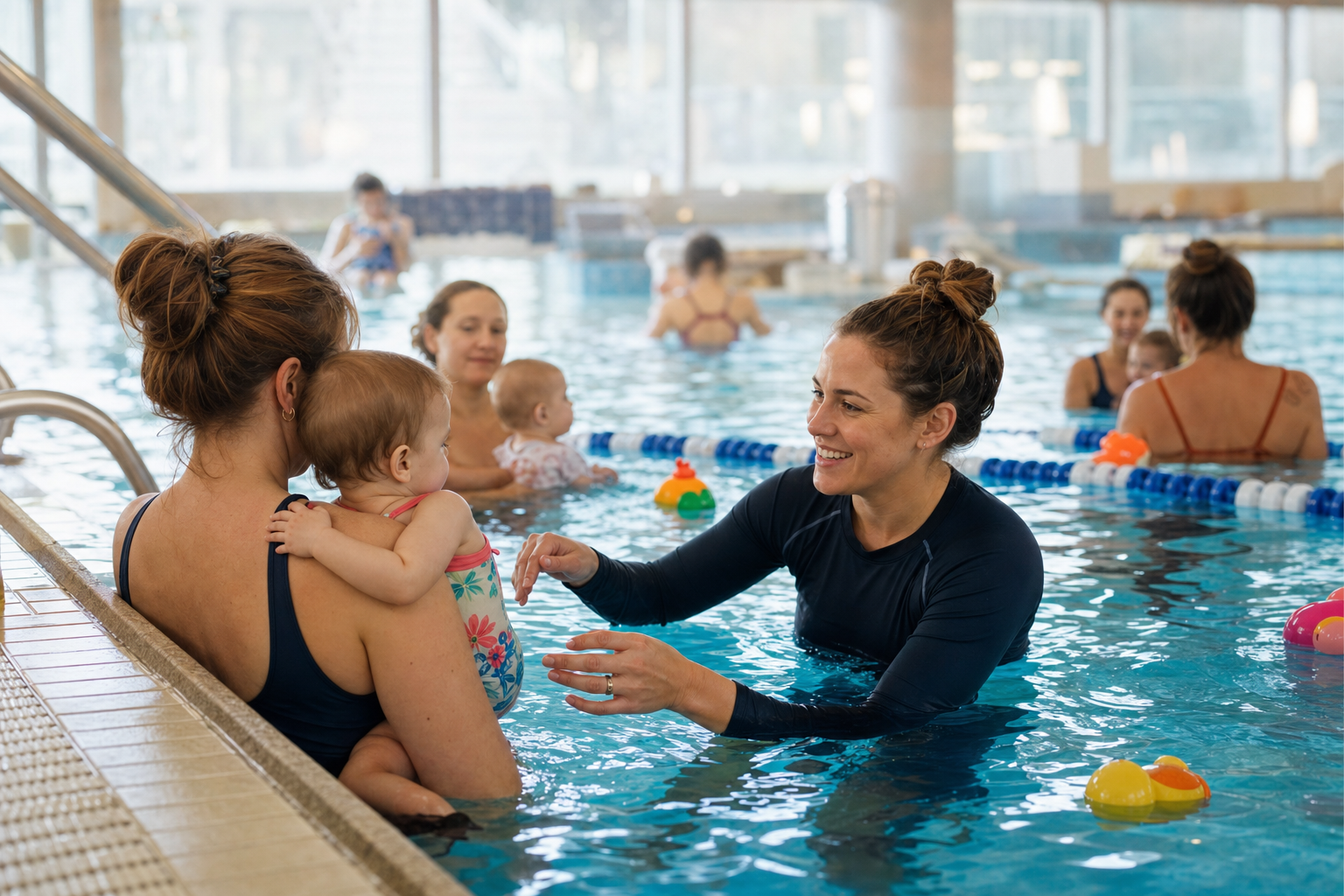
Separation anxiety during swim lessons can feel heartbreaking. Maybe your 10-month-old refuses to leave your hand, or your toddler trembles through songs and group games. Before you consider quitting or changing teachers, there are practical, evidence-based ways to help your child adjust, feel safe, and actually enjoy their classes. Here's what you need to know about baby separation anxiety swim lessons, how to respond when your toddler cries at swim class, and ways to keep moving forward without pushing too fast or quitting too soon.
Why Separation Anxiety Shows Up in Baby Swim Classes
Babies between 8 and 24 months are forming strong emotional attachments. They’re learning that even if you're out of sight, you're still there—but those early steps into independence are scary. In a swim class, separation anxiety may emerge because the environment is unfamiliar: new people, splashes, echoes, a teacher holding them in ways they don’t yet control. These can stress out a baby, particularly when routines are unpredictable or transitions happen too fast. Experts emphasize that crying is a normal communication of fear or uncertainty—not a failure or sign you're doing something wrong. (swimcarolinas.org)
What Parents and Teachers Can Do Immediately
When your baby cries at swim class, some instantaneous choices can make a big difference. A calm voice, slow transitions, predictable holds—these work wonders. Let the instructor introduce activities gradually: maybe at first your baby sits on the pool deck with you, then moves to touching the water, then to being in it with support. Avoid pushing them under or forcing them away from you when they’re in distress.(njswim.com) During lessons, you might offer a familiar song, a favorite towel, or your gaze from just beyond reach so your toddler knows you’re there but isn’t in the middle of the class.(sunsationalswimschool.com)
Realistic Expectations Across 8–24 Months
Every child moves at a different pace. For some, separation anxiety will fade by lesson two or three; for others, it might spike around 12 to 18 months. What’s essential are realistic expectations. Celebrate small victories: staying calm while you leave, blowing bubbles, observing classmates, even just dipping toes in. Progress in swim lessons isn’t just about skill—it’s about comfort, pacing, and emotional safety.(safesplash.com) Programs like the 10-Week Plan from swimy.org can help parents build water confidence at home step by step, reinforcing what happens in class. Make sure class formats match where your child’s at—parent-and-child lessons are very different from classes where caregivers stay out of sight.(healthychildren.org)
If you want a structured way to build water confidence at home, the 10-Week Plan guides you step by step.
Safe Classroom Strategies: Predictability, Holds, Transitions
Class structure matters more than many parents expect. A routine that begins with a familiar greeting song, gentle warm-up, then a known activity helps reduce anxiety. Teachers trained to use “safe holds” (hands rather than under the arms, letting children feel supported without force) help babies stay secure when separation happens. New skills like floating or letting go should be introduced slowly, with caregiver involvement until confidence builds.(d1dhn91mufybwl.cloudfront.net) Transitions—getting out of the car, changing clothes, entering the water—are common triggers. Give time in those moments, using comforting rituals (like putting on swim hats together or walking to the pool edge while singing) so the child knows what’s coming next.(sunsationalswimschool.com)
[[ctababy]]
When to Seek Alternatives or Adjust
Sometimes crying continues week after week or the child remains highly distressed for the entire class—that’s a sign to adjust. Private lessons allow more one-on-one time and let the pace match exactly what your toddler needs.(lowcountryswimschool.com) Maybe the class time is wrong; maybe your child is tired, hungry, or simply not ready for a parent-free class. Talk it through with instructors. They may offer classes where parents stay in the pool. Changing teachers or formats can cause a “wobble,” but it’s often the move that brings forward progress.(bestswimschools.org)
Keeping It Safe: Distress vs. Danger
Distress is uncomfortable but expected; danger is always avoided. If a baby is in distress, reduce the challenge—not force them underwater or separate when they are terrified. Safety always comes first. During class, the instructor or caregiver should be close enough to rescue or calm immediately (touch supervision is essential). You’re looking for signs that your baby is starting to tolerate small challenges: maybe they tolerate being held by the teacher, or they let go of your hand for a moment, or sing along. These are all progress, even if tears appear before and after.(healthychildren.org)
Staying Engaged Without Giving Up
It’s tempting to pull out when things are hard, but quitting too soon often prolongs anxiety rather than easing it. Stick with consistent attendance. If a lesson goes badly, the next one might be better—kids remember routines and become comforted by them. Focus on what they can do, not on everything that's still scary. Validate their emotions (“I know it was scary today”) while still holding space for them to try something new. Over time, positive expectations and repeated gentle exposures build trust.(sunsationalswimschool.com)
Separation anxiety in swim lessons is a normal phase that many children pass through. If you use predictable holds, slow transitions, adjust expectations, and get support from instructors, your baby’s swim class experience can grow from tears to joy. Just remember: each small step counts, and you’re helping build both safety and confidence—never failure.
120+ swimming exercises sorted by age — with video and instructions. Developed by swim instructors, completely free.

120+ swimming exercises sorted by age — with video and instructions. Developed by swim instructors, completely free.