Moisturizer Timing After Baby Swim: A Simple Step-by-Step Guide
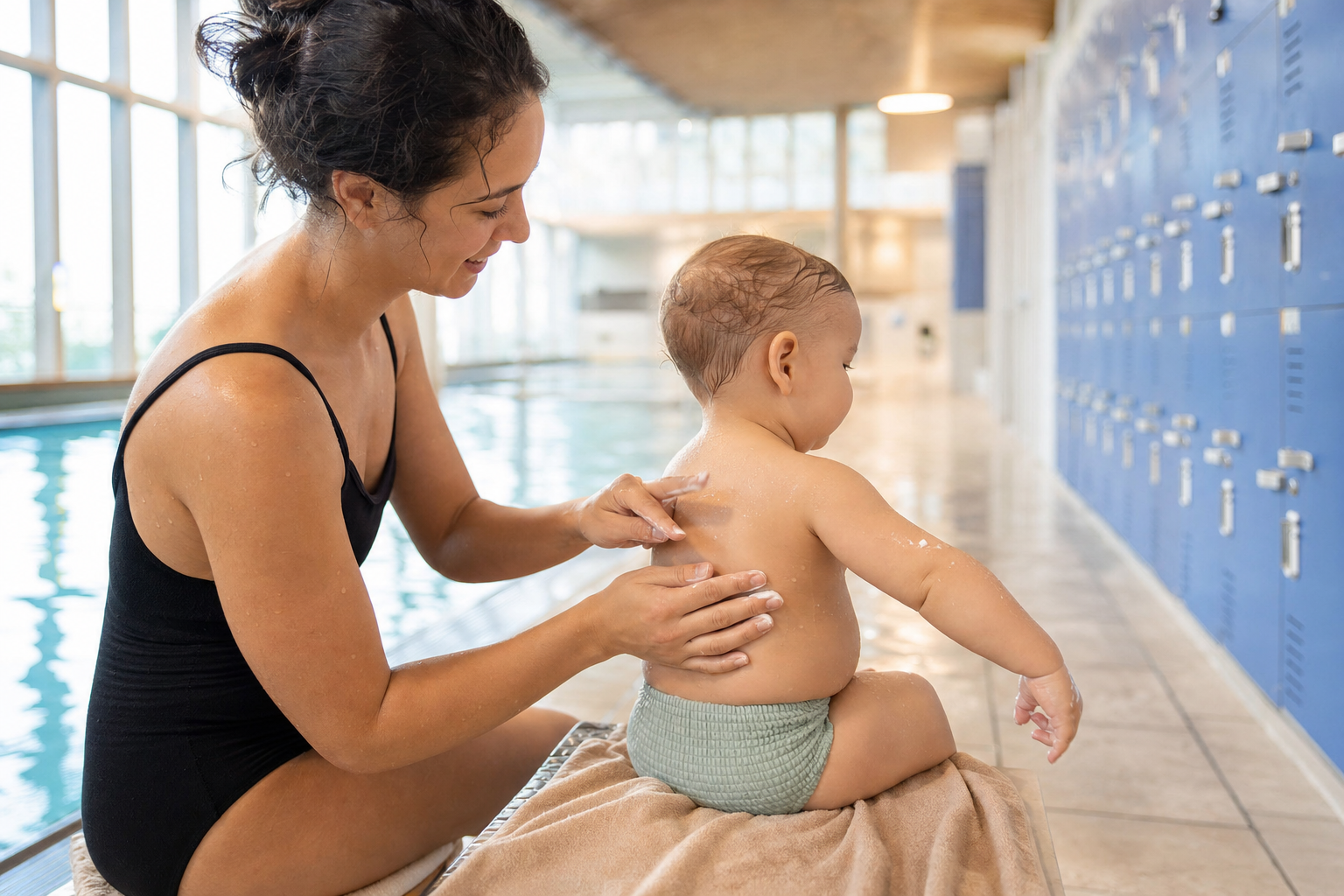
Chlorinated pools are great for play and water skills—but for babies, especially those aged 0–36 months with dry or sensitive skin, chlorine can quickly lead to tightness, irritation, or even rashes. The best way to protect your little one’s skin is to follow this order of operations every swim: rinse, dry folds, moisturize, dress warmly, then monitor. Below, you’ll find exactly when to moisturize after baby swim, how to care for their skin, and when to call in medical support.
Why Order Matters: From Chlorine Exposure to Skin Relief
Chlorine kills germs, but it also strips away natural oils from baby skin. Experts say swimming in a chlorinated pool can dry the skin significantly, potentially causing irritant contact dermatitis or triggering eczema flare-ups. (newsroom.clevelandclinic.org)
After a swim, you want to remove chlorine fast to prevent ongoing irritation. Then, by moisturizing before the skin completely dries out, you trap any remaining moisture and rebuild the skin’s barrier. The American Academy of Dermatology recommends rinsing immediately after swimming, patting skin dry while leaving it a bit damp, and applying a fragrance-free moisturizer (ideally within three minutes). (aad.org)
The Step-By-Step Routine: Rinse, Dry, Moisturize, Dress, Monitor
Step 1: Rinse Immediately
Once you leave the pool, rinse baby with lukewarm water. Use a gentle, fragrance-free cleanser if needed. Warm (never hot) water helps remove chlorine without irritating their skin. Communities like UCLA Health recommend this approach to reduce salt or chemical build-up on sensitive skin. (uclahealth.org)
Step 2: Dry Folds Gently
Use a soft towel to gently pat your baby dry—not rub. Pay attention to folds like underarms, behind knees, neck creases and groin. Leaving moisture in these areas allows for better moisturization, but rubbing can lead to irritation or even small tears.
Step 3: Moisturize While Damp
Within three minutes of drying off, apply a rich, fragrance-free cream or ointment all over while the skin is still slightly damp. This traps in moisture and seals in hydration. Mayo Clinic states that doing this right after a bath—or in this case after swimming—is essential for babies, and implies a similar timeline. (mayoclinic.org)
If you want a structured way to build water confidence at home, the 10-Week Plan guides you step by step.
Sometimes, parents wonder about applying moisturizer before swimming to protect skin. Brands like Baby Dove advise lightly moisturizing before and always moisturizing after swimming to buffer the skin against chlorine damage. (dove.com)
At this point, you might also come across ideas like the 10-Week Plan, a structured swimming schedule designed to help babies build confidence in water. Incorporating consistent moisturizing before and after swims during such a plan helps reduce dryness and improve skin resilience.
[[ctababy]]
Step 4: Dress Warmly
Even if you swim indoors, babies lose heat fast once wet. Dress them in soft, breathable cotton layers, maybe with a warm hat if needed. Avoid synthetic fabrics that trap moisture against already sensitive skin.
Step 5: Monitor Skin Over Time
After swimming days especially in winter, check baby’s skin over the next several hours. If it looks just dry or slightly pink, your routine care is likely enough. If you see raw patches, oozing, crusts, or signs of severe eczema, seek medical advice. Cleveland Clinic notes that severe flare-ups or broken skin should be evaluated by a professional. (aad.org)
Adjusting for Seasons & Skin Sensitivity
Winter air tends to be drier, both outdoors and indoors with heaters. When the season changes, scale up moisturizing frequency. Dry skin after swimming becomes more likely if pool water is cold, chlorine levels are high, or your baby swims often.
For babies with eczema or sensitive skin, use ointments or thick creams with ceramides; avoid lotions with fragrances or alcohols. Keep swim sessions short when skin is already inflamed—the usual advice is 15-30 minutes. (puddleducks.com)
When Routine Isn’t Enough
Don’t rely on moisturizer to make an unsafe pool safe. If the pool has irritating levels of chlorine or feels harsh to touch and smell, consider switching pools. Also, skip swimming if baby has broken skin, infected rash, or during severe eczema flare-ups. These require medical guidance. Cleveland Clinic and the American Academy of Dermatology both warn that you should avoid swimming in these cases. (aad.org)
Summary: What Parents Should Remember
Follow this simple order after any swim: first rinse off chlorine, dry folds—while leaving skin slightly damp—then moisturize generously. Dress baby in comfy, warm clothes, and keep a close eye on the skin in the following hours. For babies with dry or sensitive skin, this routine significantly reduces dryness, rubbing, itch, and potential scratching. And knowing the difference between routine dryness and a rash needing medical advice gives you confidence.
Your baby will enjoy swim time more when their skin is protected—and you’ll spend less time worrying and more time cheering those splashes.
120+ swimming exercises sorted by age — with video and instructions. Developed by swim instructors, completely free.

120+ swimming exercises sorted by age — with video and instructions. Developed by swim instructors, completely free.