Heel Pain at the Pool? Sever’s-Safe Swim Tweaks
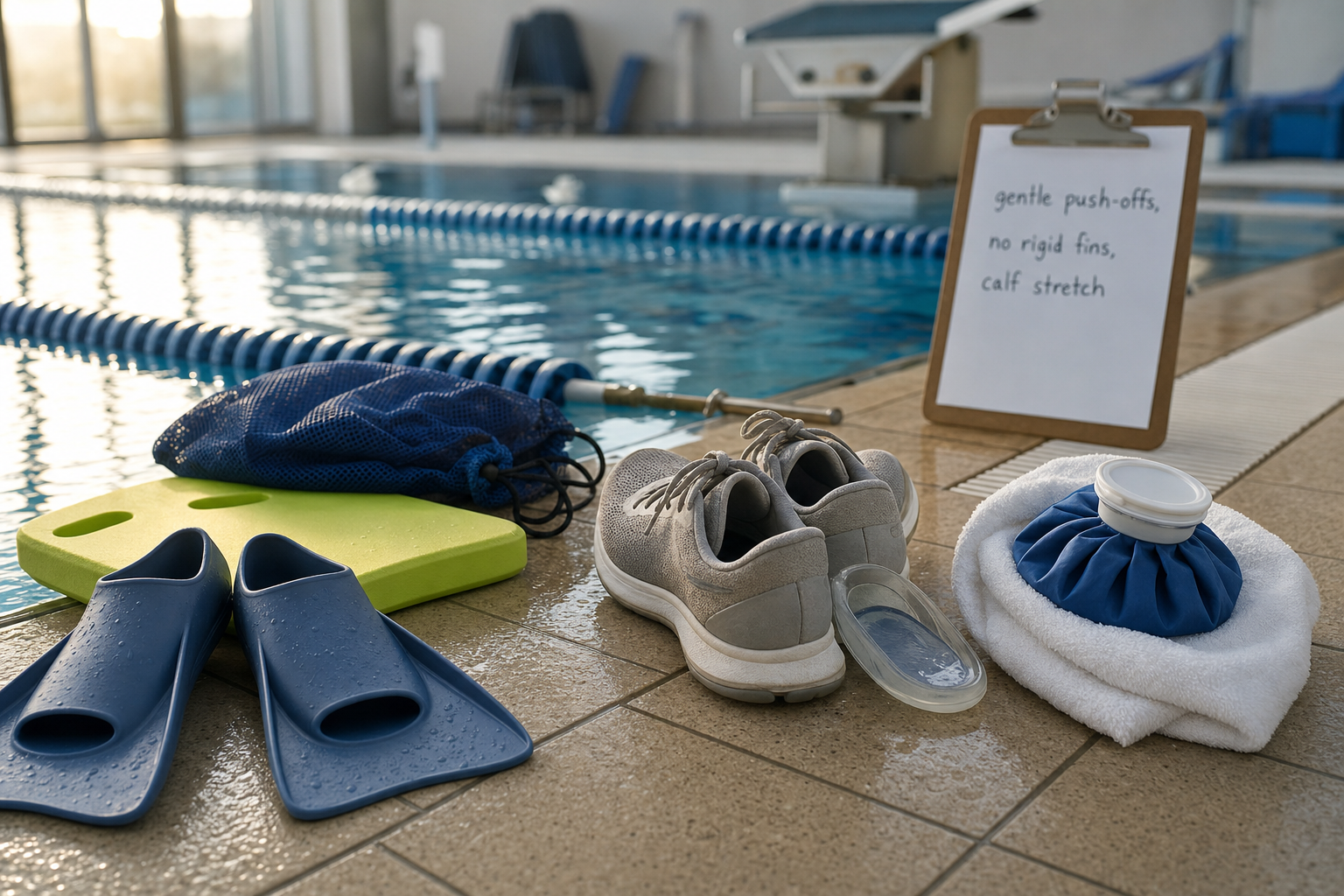
If your child (aged 8-12) is dealing with Sever’s disease (calcaneal apophysitis) but still wants to swim, here’s how to keep them in the water safely — with kinder sets, smarter cues, and guarded expectations. Use these tips so they keep enjoying swim practice without flare-ups.
What is Sever’s Disease and Why Swimming Helps
Sever’s disease is inflammation of the growth plate at the back of the heel. It often hits kids during growth-spurt months (spring through fall), especially if they run, jump or wear stiff cleats. Pain worsens with walking on tiptoes or pushing off hard surfaces. In many cases, low-impact sports like swimming or cycling are better tolerated, allowing the child to stay active while the heel calms down.(cuh.nhs.uk)
Swimming doesn’t stress the heel bone in the same way jumping or sprinting does. The buoyancy reduces weight-bearing, so there’s less pressure on the apophysis. But some swim actions still matter — it’s not a free pass. Powering off the wall, using fins that make the feet rigid, or suddenly sprinting sets can trigger spikes in pain. Knowing what to adjust is key.
Severs-Safe Swim Tweaks to Keep Pain Down
Here’s what you can do in the pool to protect your child’s heel, while still working on stroke and stamina.
Modify Sets and Starting Technique
Shift from explosive turns and wall push-offs to gentler transitions. Avoid kicking off the wall with full force: instead, walk off the walls or push lightly. Let rest intervals be longer after turns, and choose drills that rely less on pushing and more on glide or body rotation. Skip or reduce sets that involve sprint starts or diving if they hurt.
Use smaller or no fins if necessary. Fins with rigid blades or very high pitch can lock the ankle, increasing tension through the Achilles tendon to the heel. Soft fins or no fins are safer when the heel is sore. Always check if the swimmer limps after a set or complains of sharp pain during kicking — those are red flags to ease back or rest.
Sweeten every session with cue-led calf stretches in warm-up and recovery. Simple wall calf stretch (both bent and straight knee versions) held for 30 seconds each, multiple times a day, can reduce tightness. These stretches ease tension on the heel and are often recommended in medical guidelines.(cuh.nhs.uk)
If you want a structured way to help your child progress at home, the 10-Week Plan guides you step by step.
Do not push through limping or pain spikes. If your child limps during swimming, or heel pain spikes above a tolerable level (say, pain scale over 4 out of 10) during or after practice, stop immediately and consult a clinician.
[[ctakid]]
Phasing Back to Full Effort
Once the flare has settled — heel pain minimal at rest and during walking — gradually reintroduce harder swim sets. Begin with gentle work: easy paddles, non-kick drills, no wall kick, low resistance. Then slowly phase in turns, harder kicks, and ultimately starts. Use a plan to guide that process: for example, a structured swim plan like the 10-Week Plan by swimy.org helps manage loads, increasing intensity and volume safely.
Throughout return, continue calf stretching daily, ice after practice if needed, and always monitor pain and signs like limp or hesitancy. If symptoms return, dial back again.
When Rest & Clinician Care Are Needed
Even with careful modifications, some times demand rest or medical advice. Key warning signs include limping during swimming, pain at rest (or during very light activity), swelling or redness around heel, pain lasting more than a few weeks despite activity changes. Also if heel pain wakes your child at night or prevents walking comfortably, see a pediatric orthopedist or sports medicine specialist.(chop.edu)
A clinician can examine heel tenderness, assess flexibility, check for other causes (fracture, bone cyst, etc.), and design individualized care including if immobilization or support devices like heel cups are needed.(chop.edu)
What Parents Should Know and Do
You are the coach of their recovery. Advocate for kinder swim practice, talk openly with swim coaches about tweaks: less kicking off walls, fewer fins, lighter sets. Ask for extra warm-ups and recovery time. Support stretching routines at home, use cushioned shoes on land. Help your child recognise body signals: pain spikes, limping, soreness that persists into morning are not “just part of the sport.”
Sever’s disease usually resolves when growth plates mature (often by age 12-14), but until then your child can stay active and even enjoy swimming without long-term damage, provided changes are made early.(cuh.nhs.uk)
Key Takeaways
Swim with Sever’s disease? Yes — with care. Limit powerful push-offs, avoid stiff fins, lean into stretching, listen to your child. If limping, resting or pain spikes, pause and get guidance from a clinician. With gentle modifications and patience, most kids aged 8-12 can ride out growth spurts with relief — and swim well again soon.
120+ swimming exercises sorted by age — with video and instructions. Developed by swim instructors, completely free.

120+ swimming exercises sorted by age — with video and instructions. Developed by swim instructors, completely free.