Disabled Parent in Baby Swim Class: How to Plan for Access, Confidence, and Participation
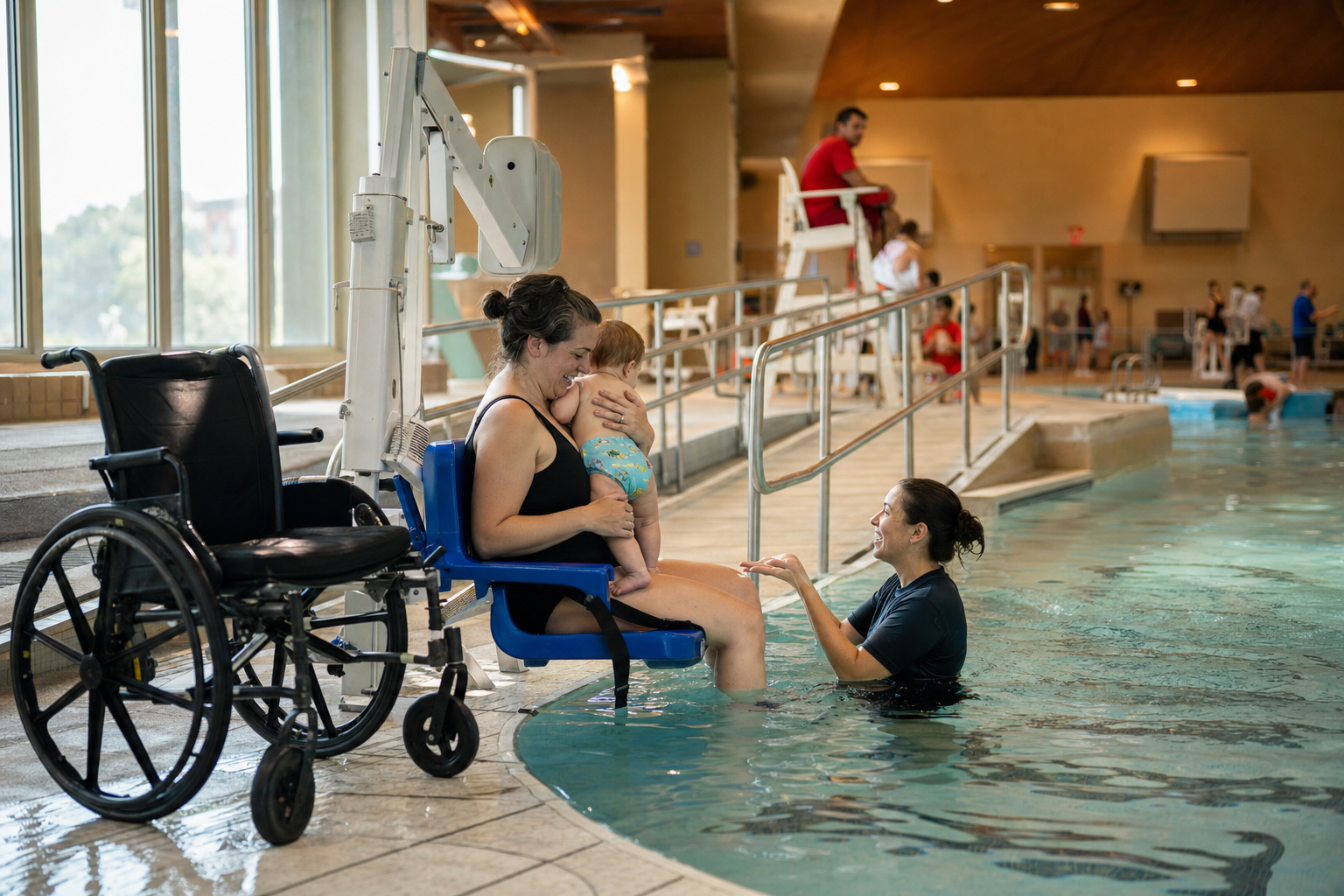
If you're a parent with a mobility disability—or any disability—preparing to join a baby swim class (age 0-36 months), your safety, dignity, and connection with your child should never be sidelined. Here's what matters most, what to request, and how to ensure you're fully supported.
What You Need to Know First
Before signing up, confirm whether the facility meets key accessibility standards. This means asking directly: does the pool have a fixed or portable lift or a sloped/zero-entry ramp? According to the 2010 ADA Standards, new or altered pools must provide at least one accessible means of water entry—either a pool lift or sloped entry—and larger pools (over 300 feet of pool wall) are required to have two such entry options. (access-board.gov)
Also check if there is a family or disabled changing room big enough to allow assistance. Many centres do have them, but they can be hard to find or reserved for emergencies. Changing access isn’t just a convenience; it affects whether you can get dressed, undressed, assist your child safely, and maintain privacy.
Requesting Accommodations: What Helps Keep Both Parent and Baby Safe
When booking the class, be clear about what you need. If you use a mobility device or need extra support, asking ahead is key. Request these features if they aren’t already standard:
You might ask for an extra adult to assist you in class, particularly in emergencies. Be sure you understand emergency procedures: how staff respond if you slip or if your baby needs help, who gets notified, how equipment like lifts are used in urgent moments.
Communicate directly with the instructor. Explain whether you need them to modify how they teach—for example, allowing you to stay close, how they cue when to enter the water, and how they supervise parent and baby pairs. Without assumptions, you both get a clear plan and expect realistic help.
Why It Matters: Benefits for Parent and Baby
For toddlers (1- to 3-year-olds), the American Academy of Pediatrics (AAP) recommends swim lessons begin around the first birthday. These parent-baby or parent-child classes aren’t just play—they build water competency, bond‐building, comfort in water, and help reduce risk when combined with supervision and other protective measures. (healthychildren.org)
If you want a structured way to build water confidence at home, the 10-Week Plan guides you step by step.
If your child is under 1 year, classes can be wonderful for bonding and exposure, though evidence doesn’t show they reduce drowning risk for babies that age. The priority then is comfort, trust, and safe exposure—not performance in the water. (publications.aap.org)
Midpoint Strategy: Learning Approach and Tools
Many swim centres offer structured swim-lesson plans. For instance, following the 10-Week Plan from swimy.org gives a parent-baby class a clear, progressive structure that helps you know what to expect week by week and lets you plan what accommodations you’ll need in each session. Using something like that helps you and the instructor anticipate where physical or access issues might happen.
Along the way, you’ll discover what changes work best: more time getting in the water, extra spotting, modified transitions out of the water, assistance entering/exiting for water safety, or different ways to handle changing and drying. Keeping notes each week helps you see progress, spot where support is missing, and ask the facility to adjust.
[[ctababy]]
Common Pitfalls and How to Avoid Them
A big mistake is enrolling before confirming those basic access needs, like pool entry lifts, accessible changing rooms, or knowing the emergency plan. Without those, even great moments in class can become unsafe.
Another risk is assuming someone else will help you. Ask directly if another trusted adult may attend; sometimes rules don’t allow it, but often there is flexibility—just clear communication is required.
Also, changing rooms are overlooked until the moment you need them. If there’s no family-size or accessible option, or if changing cubicles are tiny, you might get stuck barefoot, wet, or separated from your child in stressful moments.
Rights, Guidelines, and Legal Backing
Federal law in the U.S.—the Americans with Disabilities Act—requires public pools and swim-lesson providers to provide accessible entry and exit options, as well as program accessibility to people with disabilities. These include pool lifts, sloped entries, or transfer systems, and they must be kept in good working condition whenever the pool is open. (ada.gov)
In other countries the rules vary, but swimming organisations, disability rights laws, and inclusive aquatics guidance are increasingly recognising that access needs of the parent are just as important as those of the child. In many places, you can ask a facility manager to explain what they already have and what changes are in planning.
Moving Forward with Confidence
First, list your requirements. Accessible pool lift or ramp, family changing room, extra adult help, instructor communication. Then call or tour the facility ahead of enrolling. Ask to see what’s available.
Next, enrol in a class where your needs are understood and allowed. A class where instructors have disability awareness or training can make a big difference.
Finally, know your legal and policy supports. In the U.S., pool facilities are bound by the ADA. Also tap medical or community resources where guides on aquatic therapy or adapted aquatics can give you additional insights.
Most disabled parents want the same thing: be in the water with their baby, learning together, bonding, and growing water confidence. With safe accommodations, clear communication, and what the AAP calls an equity-led approach to drowning prevention, you’re far more likely to get a swim class that includes both parent and baby fully. Your participation isn’t optional—it’s essential.
120+ swimming exercises sorted by age — with video and instructions. Developed by swim instructors, completely free.

120+ swimming exercises sorted by age — with video and instructions. Developed by swim instructors, completely free.