Learn Together: Parent + Child Swim Plans (Ages 6–9)
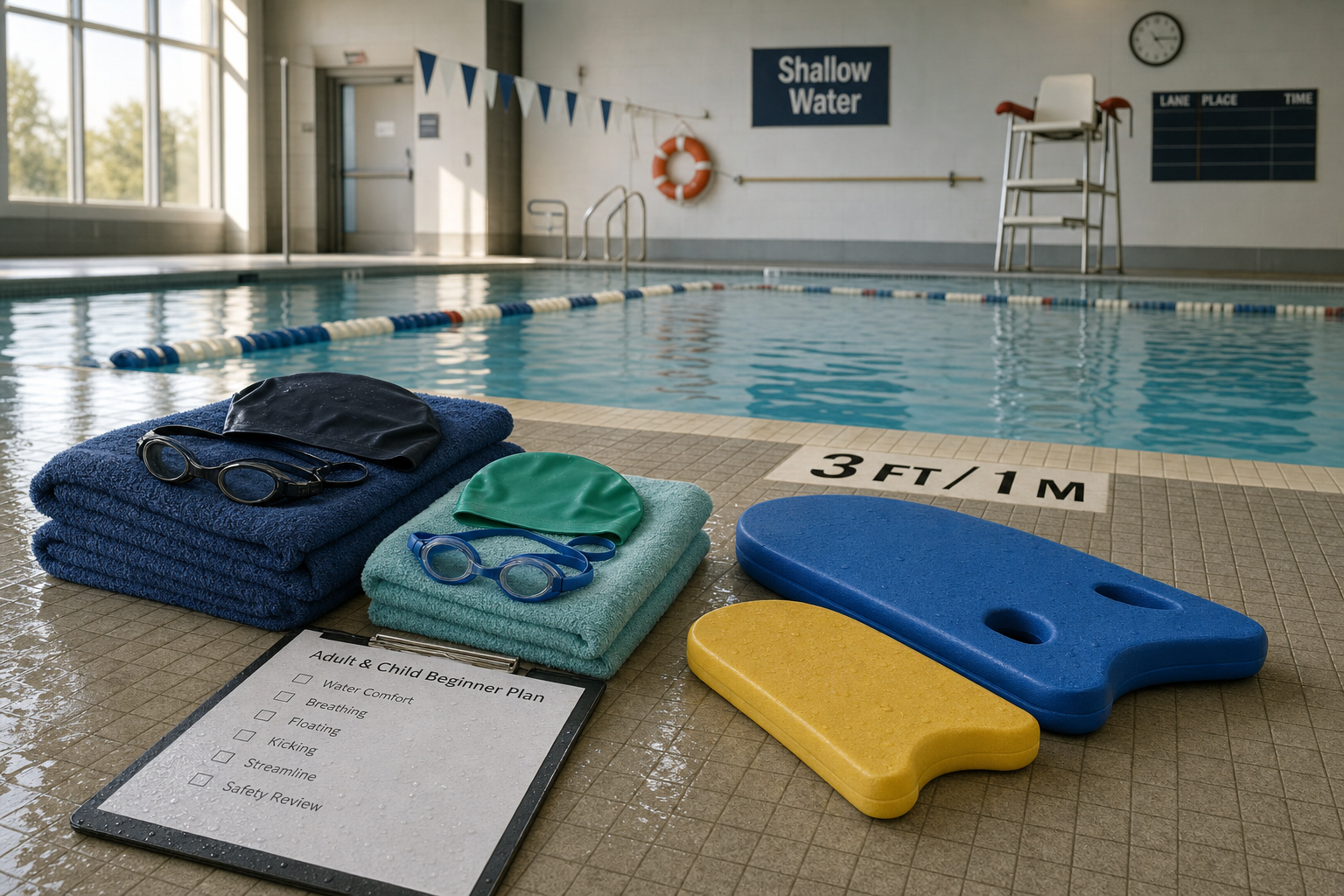
Jump right in: parents who can’t swim—and don’t worry—can still learn alongside their child. Doing so brings real benefits: modeling behavior, adding low-pressure practice time, and gaining confidence in and around water. Let’s explore practical strategies like paired enrollments, staggered classes, and shared micro-practice, so both you and your child can learn safely, supportively, and joyfully.
Why Learning Together Matters Now
Children aged 6–9 are in a stage where they can absorb skills fast. Having a parent learning too gives them a model to follow, increases practice opportunities, and builds trust. According to the American Academy of Pediatrics, formal swimming lessons at this age teach life-saving skills such as floating, treading water, and safely returning to a wall—all of which reduce drowning risk. What parents do during practice matters just as much as what children do. For example, fun family swim times reinforce what children learn and improve comfort in the water.(health.harvard.edu)
Parents who can't swim benefit greatly by accompanying children to lessons or signing up for adult-lesson options. Adult swim lessons help you learn safe roles (like spotting, rescuing), progression milestones (such as mastering strokes), and how to be supportive without turning into a coach from the deck. The key is letting certified instructors guide the journey while you reinforce skills with positivity. The Watch, Don’t Coach principle especially helps avoid confusion.(swimy.org)
Paired Enrollments, Staggered Classes, Adult Lesson Options
If you’ve never swum before, start by looking for adult lesson options near you—search phrases like “adult swim lessons near me parent” or “learn to swim with my child” will uncover local pools, community centers, or swim schools offering beginner classes. Signing up together is incredibly effective: you’ll progress in sync, support each other, and share milestones.
Staggered classes are another helpful setup. Your child might join a group lesson while you take beginner adult lessons. Then, both of you share family swim or practice time so they get more time in the water and you build your skills. Some programs offer “swaps”—you supervise while your child practices, then your child practices while you take your lesson—rotating roles so both are learning and staying safe.
Adult lesson options vary from private sessions to small groups. Find instructors who understand your non-swimmer background. Ask about water watcher swaps or touch supervision so you feel supported while staying safe. Locations with lifeguards, gradual depth pools, and programs that emphasize safety as much as technique are best choices.(swimy.org)
Shared Micro-Practice: Building Confidence Without Pressure
Between formal lessons, little moments matter. Shared micro-practice—10- to 15-minute sessions focused on just one skill—works wonders. You might practice floating, breath control, or kicking with kickboards. These short, frequent practices help you model good posture, calm breathing, or steady kicks. Avoid turning each session into performance. The idea isn’t speed or perfection—it’s comfort and confidence.
If you want a structured way to help your child progress at home, the 10-Week Plan guides you step by step.
Use family swim time as practice. Let your child lead some drills they did that week, then you try them too. You’ll both learn progressions: what skill comes next for them—and what you need to build confidence in supporting them. Stay positive. Celebrate effort rather than results. Harvard Health reminds parents they don’t need to be experts, but they should aim to understand basic skills as their child progresses.(health.harvard.edu)
[[ctakid]]
At this stage it’s helpful to follow a clear plan so you both know the milestones. Swimy.org’s 10-Week Plan gives school-age children structured swim education. It gradually builds water skills so pool time becomes safer and more fun for parent and child alike.(swimy.org)
Safety & Supervision: Water-Watcher Swaps, Venue Choice, Pitfalls to Avoid
Safety should never be taken lightly. If you can’t swim, you must compensate by being extra vigilant. Always choose lifeguarded pools with gradual entry and consistent rules. Practice “water watcher” swaps: when multiple adults are around, rotate who watches and stays within arm’s reach of the child. Distraction kills safety—phones, books, or chatting should be paused when supervising near water.(swimy.org)
Pitfalls abound. One big risk is turning practice into pressure. If every session feels like a test, children may dread water or freeze instead of progressing. Keep tone calm. Emphasize play, exposure, success in small steps. Another mistake is when both parent and child are freely in the water without adequate supervision. If the parent is non-swimmer or weak, being in water together can increase risk rather than reduce it. Always have zones or shallow areas where non-swimmers feel safe.(swimy.org)
New-Year & Pre-Summer Timing: Best Moments to Begin
January and late spring are ideal windows to start parent-child swim plans. A new year mindset helps follow through; kids are often setting goals and eager to learn. Pre-summer, there’s more pool time and motivation to be ready for vacations or beach visits. Start adult and child classes early enough—say 8 to 10 weeks before your first big swim day—so there’s time to build basic skills.
Use these times to evaluate your local adult lesson options and enroll early—many community pools fill up. Also use the off-peak season in indoor pools to practice micro-skills without pressure of crowds. During summer, maintain what you’ve learned with low-key family swims. Reinforcement then keeps skills alive.(waterwisekids.com)
Putting It All Together: What Your Plan Might Look Like
Picture this: It’s February. You and your 8-year-old enroll in separate swim classes—child in school-age lesson, you in beginner adult class. Twice a week, take 30-minute sessions. On weekends, have a 15-minute shared micro-practice—float, breath, kick. Around month five (May), start attending family swim each Sunday. Rotate who is the primary water watcher each week so both get rest and focus. You gradually model key skills without coaching from the deck; instead, you listen to your child’s instructors and echo those points.
Approach the summer with confidence: your child swims better, you stay safer, both enjoy the water without fear. Practice stays joyful instead of pressured. Supervision remains consistent—even with lifeguards or when multiple children are in the pool. All of you make progress together.
Swimming with your child ages 6-9 is one of the most memorable ways to build trust, competence, and fun. You’re not just helping them—you’re growing yourself. With paired enrollments, shared micro-practice, good supervision, clear safety zones, and the right timing, you can “learn to swim with my child” in the safest, most supportive way. When looking up classes, try keywords like “adult swim lessons near me parent” and “family swim practice.” And always put relationship and progress above perfection. That way summer arrives not with fear, but with confidence ready to make waves.
120+ swimming exercises sorted by age — with video and instructions. Developed by swim instructors, completely free.

120+ swimming exercises sorted by age — with video and instructions. Developed by swim instructors, completely free.