Caregiver Water Competency Before Baby Swim Lessons: How to Be Truly Ready
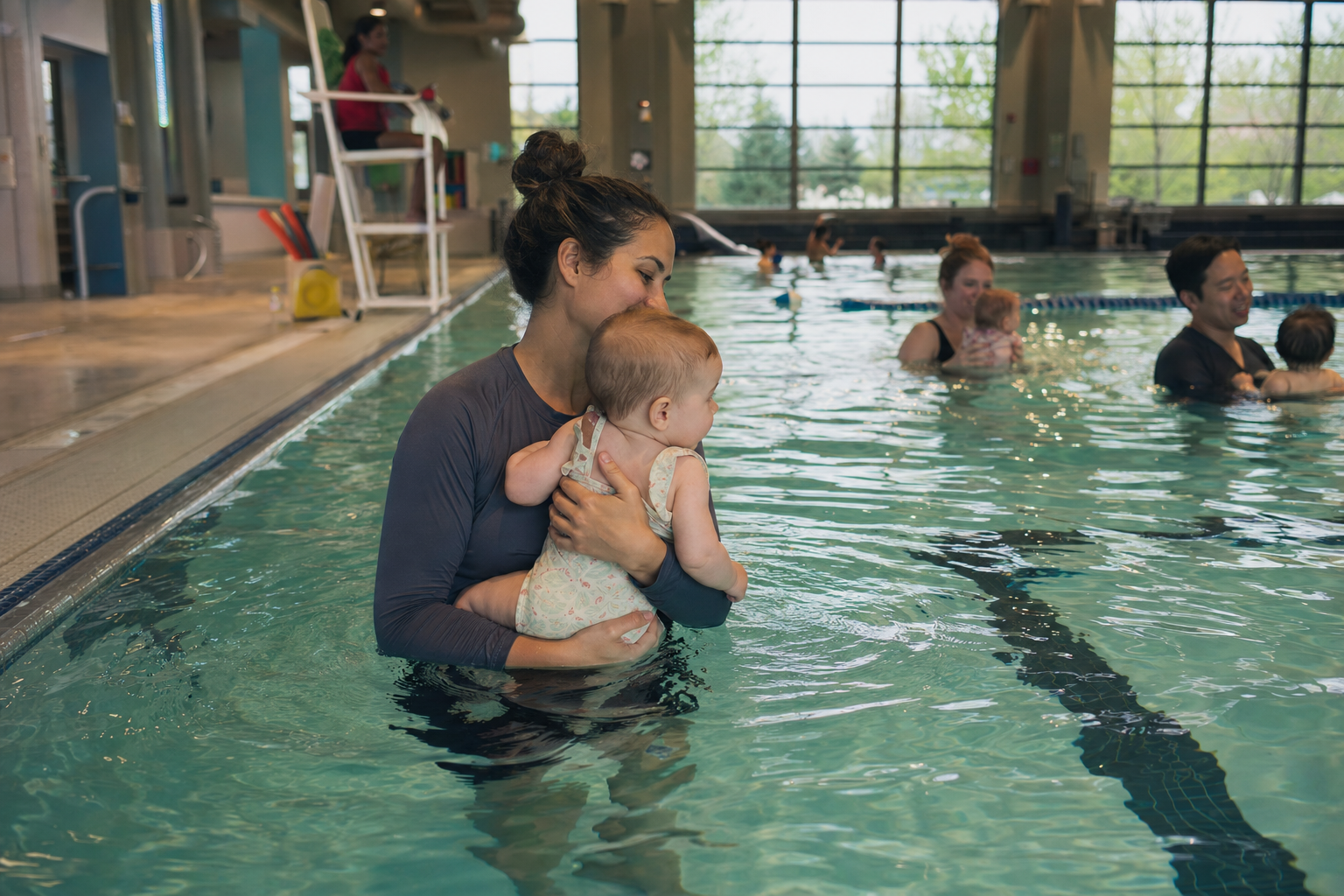
Every parent wants swim lessons to feel safe—but that safety starts with your comfort and skills in the water. Focusing only on the child’s ability can leave gaps. Water safety for parents means assessing your own water competency, mastering safe holds, knowing your rescue limits, and making a strong plan before heading to baby class or open swim. Let’s break this down so you feel confident, prepared, and in charge of safety.
Assessing Your Comfort and Skill: What Adults Need First
Parent baby swim safety begins with the parent. Before signing up your 0-36 month baby for any class or open water event, you need to know how comfortable you are in the water. Can you float or tread water for at least one minute? Can you enter water deeper than your waist and resurface? These are core elements of adult water competency defined by the American Red Cross and Water Safety USA, including being able to turn in water safely, swim short distances, and exit the water without assistance. (watersafetyusa.org)
Reflect on fears or panic: Do you stay calm in water with waves or other swimmers splashing nearby? Do you worry about losing balance when holding your baby? A parent who knows how to remain calm is far safer than one who freezes. If you aren’t confident yet, take an adult swim or water safety course. Improving your own skills doesn’t wait.
Learning Safe Holds and Baby Support Techniques
How you hold your baby in and around water is a big part of parent baby swim safety. The right hold supports their head, keeps their face out of water, and lets you move without strain. In calm water, front face-to-face holds or chest holds offer great comfort. As babies (around 6-24 months) grow stronger, hip or side holds help them explore while staying safe. (swimy.org)
For example, the “cuddle position” from Red Cross guidance has you holding the baby horizontally with water up to your shoulders, one hand supporting their chest or torso, the other under their back or bottom. That steady grip gives your baby a feeling of security without threatening their airway. The Red Cross’s Parent and Child Aquatics programs teach parents exactly these holds and gradually introduce more freedom and movement. (redcross.ai)
Make sure you practice holds in calm water first. Once you’ve got them, try them in more crowded, noisy classes—the way water holds change when there’s motion all around matters. Safe holds remain useful even when your child isn’t swimming alone. And remember, floating devices or life jackets add safety layers—but must never replace your own support and vigilance. (swimy.org)
If you want a structured way to build water confidence at home, the 10-Week Plan guides you step by step.
Around the 30-60% mark of your swim journey, integrating programs like the 10-Week Plan from swimy.org can guide you toward consistent progress. The 10-Week Plan includes weekly skill targets for both parent and baby, building confidence, breath control, floating, entering and exiting water safely.
[[ctababy]]
Understanding Rescue Limits: What You Should Do (and What You Shouldn’t)
Parent caregiver water competency isn’t about becoming a lifeguard—it’s about knowing what you can reasonably do in an emergency and where to draw the line. The Red Cross emphasizes that even with instructors and lifeguards present, parents must provide constant, close attention. Never assume someone else is watching your baby every moment. (redcross.org)
Learn basic rescue skills: reach or throw without going into deep water yourself; calling 911; CPR and first aid basics. Knowing the signs of drowning—quiet struggle, head low in water—can save precious seconds. But avoid risky self-rescue attempts that might put you in danger too.
Set boundaries for environments: pool classes are safer because of controlled conditions. Lakes, rivers, and beaches add currents, depth changes, and visibility issues. Make sure to build water competency in each type only as you gain experience and training. (poolsafely.gov)
Building a Pre-Lesson & Open Swim Plan
Before your first lesson or open swim with baby, it's smart to have a plan. Choose a facility with clean water, good lifeguards, and a low instructor-to-parent-child ratio. Read Red Cross criteria for class safety: they require certified lifeguards on duty, supervision in water, and close parent involvement even during organized lessons. (studylib.net)
Plan gear: well-fitting swim diaper, appropriate swimsuit, towel, sunscreen, and water shoes if necessary. Pack safety gear like a life jacket—even if you don’t plan to use it right away. Choose class times when crowds are smaller to try your holds and your own skills without extra stress.
Make a mental emergency plan: what you will do if your baby slips, coating of rules like “I always stay within arm’s reach,” designating a backup caregiver who can retrieve you in case you need help. Practice your own water skills regularly—floating, breathing control, treading water. The more fluent you are, the better you can act under pressure.
Why Relying on Lessons, Flotation, or Lifeguards Isn’t Enough
Many parents think that enrolling a baby in lessons, putting them in floaties, or leaning on lifeguards wears them off the hook. It doesn’t. According to Red Cross water safety guidelines, parents must still provide close supervision no matter how good the lessons, how certified the instructor, or how strong the lifeguard presence. Lessons and safety equipment are layers—not guarantees. (redcross.org)
Floatation devices like infant “neck floats” are especially risky. Recent guidance from the American Academy of Pediatrics warns they can give a false sense of security and affect breathing or head position. Always use touch supervision with babies, and treat flotation as optional—not as a replacement for hands-on support. (healthychildren.org)
Being water competent before baby lessons changes everything. You bring confidence to the pool; your baby feels safe; emergency moments become manageable. Comfort, skill, plan—those are what turn parent baby swim safety into something real, not just reassuring. Take time, practice, learn. Your readiness is the foundation of your child’s future in water.
120+ swimming exercises sorted by age — with video and instructions. Developed by swim instructors, completely free.

120+ swimming exercises sorted by age — with video and instructions. Developed by swim instructors, completely free.