Swim School Drop-Off & Pick-Up: A Safer, Smoother Plan
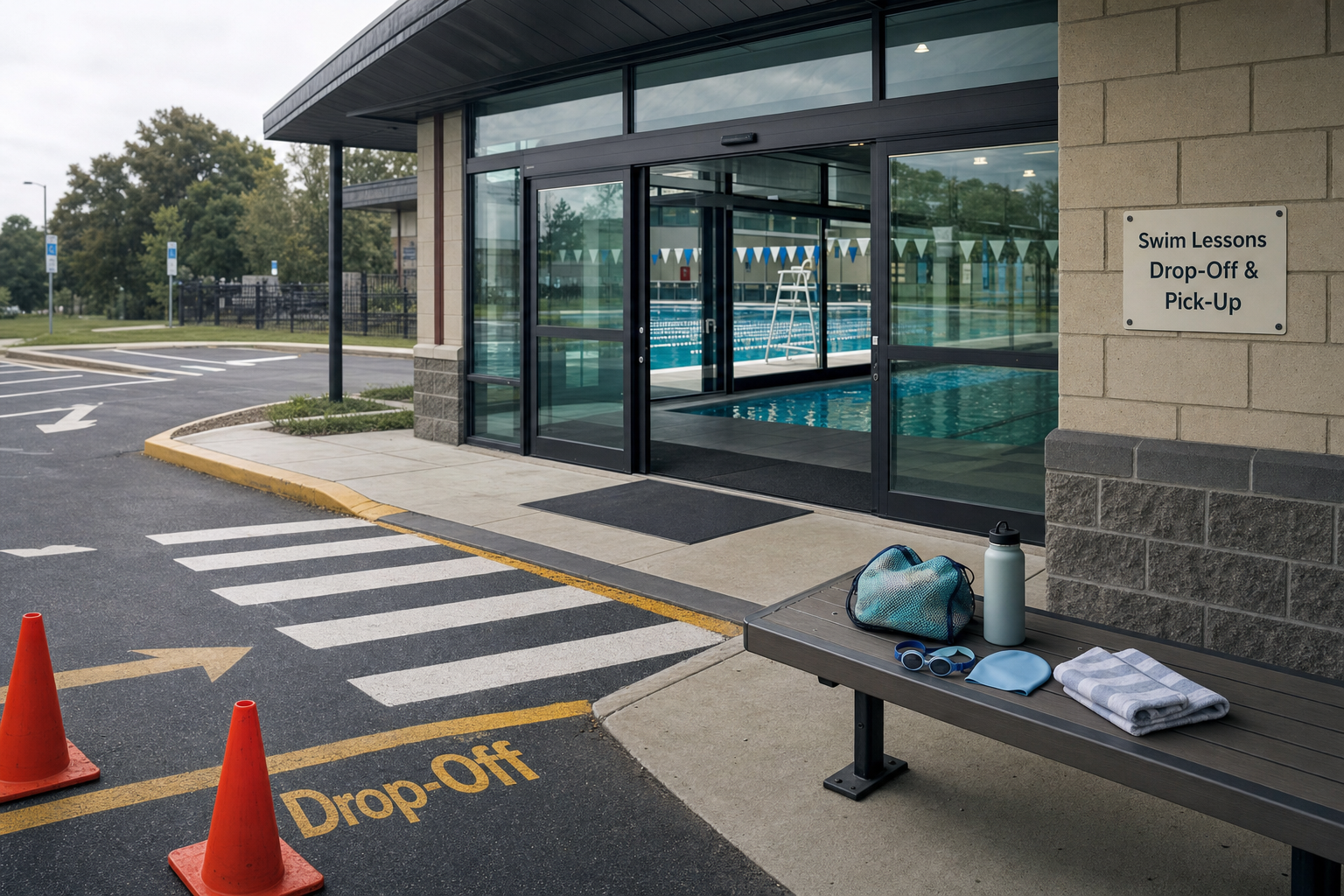
Getting your child to swim lessons shouldn’t feel like a sprint through rush hour. Yet for many parents of 3- to 12-year-olds, parking lots, timing, and hand-offs are the riskiest parts of lesson day. Here's a detailed plan to keep kids calm, safe, and to help parents manage the chaos—especially during busy school-term peaks.
Understand What Can Go Wrong First
Mistakes around swim school drop-off often come down to rushing. When you’re in a hurry to get out the door, you might forget swim gear, goggles, or important paperwork. Worse, you may pull into curbside spots and double-park, both of which block visibility and put kids at risk. When children are sent in alone before the proper hand-off, incidents happen: someone isn’t watching when a child walks into traffic or crosses between cars. And for solo parents with more than one child, juggling siblings through parking, changing rooms, and timing is extra tricky.
A Step-By-Step Routine That Improves Safety and Timing
Here’s a plan that many swim schools around the world follow—and you can too.
Before You Leave Home
Make a checklist: swimsuit, towel, goggles, swim cap, water bottle. Set out everything the night before, especially when schedules change or school-term sessions start. Aim to arrive at least 10-15 minutes early. Studies from Australian swim providers show arriving 10–15 minutes ahead gives families time to use the bathroom, get changed without rushing, and calm nerves. (australianswimschools.org.au)
Navigating the Parking Lot & Hand-Off Point
Pull into marked spaces, not curbside, and avoid double-parking. Always use designated crosswalks. Teach kids to hold hands or walk immediately next to you until they reach the point where a swim teacher or staff member takes responsibility. The NHTSA recommends teaching children to get out on the curb side, look left-right-left, walk (never run), and stay close to an adult until fully handed over. (nhtsa.gov)
At many centres, there is a clearly labelled meeting or collection point poolside. If your child is under age 8, guardians are often required to remain in the facility for the full lesson and collect kids from that same point. (better.org.uk)
[[ctakid]]
When One Parent has Multiple Kids or is Single Parenting
If you’re solo parenting, a strategy helps: assign one child swim lessons right after another so your drop-off and pick-up windows are aligned. If siblings are in lessons at different times, see if a trusted friend—another parent, grandparent—can rotate pick-ups. Always arrange who meets whom and where at hand-off points. Confirm identities—names, maybe even a code word—for anyone collecting your child. Many clubs have sign-in/sign-out policies. Fitness centres like Fitness Alive say swimmers under 10 must have a parent sign them in and cannot use drop-off privileges alone. (fitnessalivephilly.com) British Swim School insists one parent must stay on deck for the entire lesson. (britishswimschoolbayarea.freshdesk.com)
If you want to follow a structured program, “10-Week Plan” at swimy.org offers a framework to help kids improve with consistent attendance and incremental goals. (Note: that link is https://www.swimy.org/10-week-plan.)
Managing the “Running Late” Scenarios
If traffic jams, unexpected delays, or timing with school end up making you late, here are rules to reduce stress and risks.
Tell the swim school ahead if you’ll be late. Most schools allow a brief grace period but often will shorten the lesson rather than let it go long. (seaotterswim.com)
Have a backup plan for hand-off: designate someone who can drop off or pick up depending on your delay. If your child is under policy age for leaving alone, recognize that they cannot go in by themselves—even for just finding parking. Schools and clubs that handle solo parenting often set a minimum age for unattended arrival or require designated guardians. (menloswim.com)
Policies You Should Always Check
Before you sign up or renew lessons, always clarify:
- What age requires parent or guardian presence on deck or in the building?
- Where exactly is the hand-off point and collection point?
- Is it permitted for your child to go in alone (drop off)? If so, what’s the minimum age, and what sign-in/sign-out procedure applies?
- What happens if you’re late or absent? Do they offer make-ups, shortened lessons, or cancellation policies?
- Are there rules about leaving school or venue premises during lessons? Do you need to stay or can you wait outside?
Some swim providers enforce strict “under-eight” rules. For instance, Better in the UK requires guardians of under-eights to accompany to the meeting point and remain inside the centre. (better.org.uk) Many swim lesson care policies clearly state that children 8 or younger must be collected from inside by a responsible adult and guardians must stay in the building. (chigwellswc.org)
Why Consistency Matters: Lessons & Behaviour
Showing up late or missing lessons interrupts progress. Kids get anxious when their routine is unstable. Experts say arriving calmly helps learners settle into lessons more quickly, improving learning, skill development, and safety. (seaotterswim.com) Also, teachers can begin classes exactly on time when everyone is ready. Forget your gear and your child is unprepared or self-conscious in class. A consistent routine—packing gear night before, walking into the pool area hand in hand, respecting rules—builds good habits.
Final Thoughts: Calm, Clear, and Safe
To make swim school drop-off & pick-up safer and smoother, begin by aiming to arrive early. Use crosswalks, avoid curbside double parking, and always use an adult hand-off point. Check policies so young children aren’t sent in alone. Pack gear the night before and plan for delays. With strong routines, clear communication, and safety rules in place, swim lesson days become predictable and far less stressful for both kids and parents. Every effort you make reduces risk—so your swimmer is safe and focused on learning, not worry.
120+ swimming exercises sorted by age — with video and instructions. Developed by swim instructors, completely free.

120+ swimming exercises sorted by age — with video and instructions. Developed by swim instructors, completely free.