Make-Up Swim Lessons Without Losing Progress: A Parent's Guide for Babies (6-36 Months)
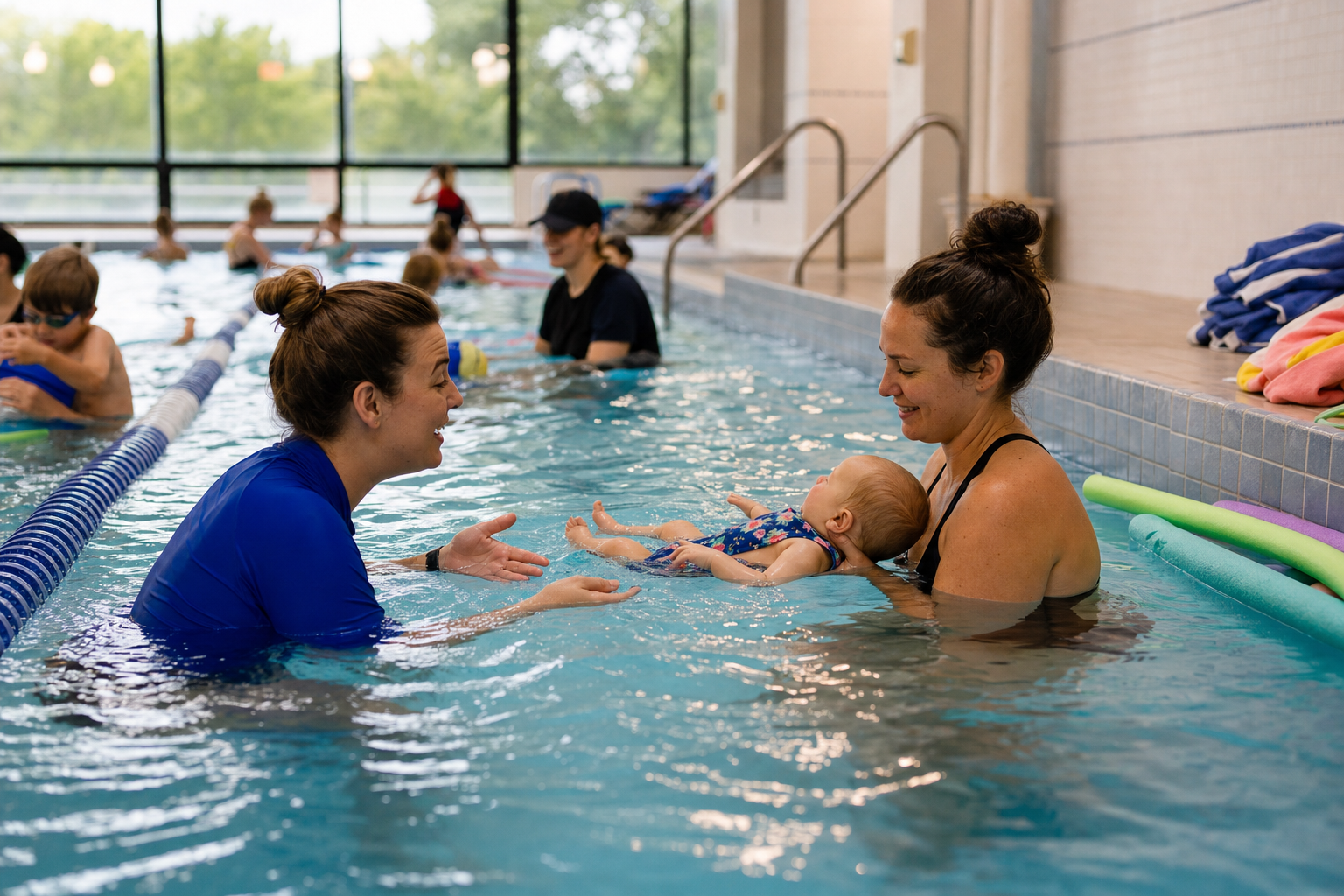
When your baby misses a swim lesson because of a nap, illness, travel, weather, or a pool closure, the worry often isn’t just about lost time—it’s about losing momentum. But rest assured: a few classes off doesn’t mean your baby will fall behind. Below are expert ways to safeguard progress, protect routines, and avoid pressure or fatigue, especially in that sensitive 6-36 month window.
How Many Swim Lessons Can Baby Miss Without Really Slowing Progress?
Babies at this age develop fast, but their energy, routines, and comfort matter more than perfect continuity. Experts agree that missing one or two lessons over a 10-week session generally won’t derail skill development. What causes trouble is missing lessons back to back, stacking absences from illness, or constantly shifting class times into nap windows. If your baby misses three or more lessons in a row, especially around critical learning (like floating or breath control), then you might notice hesitance or lost confidence.
Swim schools often limit the number of make-ups per session; two to four misses are frequently permitted (with advance notice) without significant impact on learning pace. (waterwisekids.com) When the baby skips lessons often enough that the class content becomes unfamiliar, that’s when effort slows, and parents or instructors sometimes try to “catch up”—often by doubling up lessons or forcing close-together sessions. That usually backfires: fatigued babies learn poorly and safety risks grow.
Safety First: When to Skip the Lesson
If your baby is unwell—fever, cold, diarrhea, vomiting—you should stay home. Many swim programs explicitly require a symptom-free period (often 24 to 48 hours) before resuming classes. Some illness policies even need a doctor’s note for make-ups. (sevenus.com) Also check with your pool about their illness policy, especially for contagious conditions or outbreaks. Going while sick spreads germs AND reduces your baby’s comfort and attention.
Travel, weather, or closures are also reasons schools often grant make-ups (though policies vary widely). Always ask, “What happens if classes are canceled due to pool or staff issues?” Check official policies so you know ahead if missed swim lessons can be made up. (swimkidswaco.com)
Keeping Routines Familiar Without Over-Practicing
After a missed baby swim lesson, parents often want to rush or double up classes. That can seem like a fix, but pushing too much, too fast often backfires. Over-practicing may exhaust baby muscles or overwhelm their senses, leading to fear of water rather than comfort. Instead, focus on consistency of exposure rather than compensating hours.
If you want a structured way to build water confidence at home, the 10-Week Plan guides you step by step.
Gentle water play at home or during family swims (if safe and clean) helps recycle skills. Singing splashy songs, playing floating games, or short supervised dips can maintain water comfort. These don’t replace lessons, but they keep routines familiar. Aligning these with existing daily rhythms—bath time, shower play, early evening—can feel natural and low stress.
[[ctababy]]
Another useful tool is the “10-Week Plan” from swimy.org, which helps families align swim schedules with nap windows, feeding routines, and post-swim rest. (swimy.org) That kind of rhythm preserves familiarity, so even if lessons are missed, everything else—the transitions, the warm-ups, the drying off—is similar.
Shift lesson times if necessary—but always check nap windows. A class that falls right into or immediately after nap time tends to be rough. Babies are less patient, less focused, and less able to recover. It’s much safer and more effective to gradually adjust to a better time rather than jam two lessons into one week and disrupt sleep.
How to Use Make-Up Classes Smartly
If your swim school offers make-ups, make them count. First, understand the school’s policy: how many baby swim make up class sessions per month? Do they expire within the session period? (waterwisekids.com) Use make-ups early after the missed class so the lesson content is still fresh in your baby’s mind and the instructor can reinforce the same skills.
Don’t double up lessons unless baby feeds, naps, and recovers well between them. A well-rested baby attending two lessons in quick succession might not show better progress than one who comes consistently rested once a week. Observe mood, appetite, energy. If your baby seems tired or disinterested, ease off.
Communicate with the instructor: explain why classes were missed (illness? travel?) so they can help bridge content gradually. Often instructors will offer review of the missed skills in class rather than forcing extra. Trust their judgment.
Common Pitfalls and How to Avoid Them
One trap: switching class times into a baby’s nap window because a slot opened up. Yes, it might fit your schedule—but this one change can lead to multiple missed lessons because baby won’t settle. Nap schedule stability is more critical than hitting every lesson. Another pitfall: doubling up back-to-back lessons to catch up. This sounds efficient but may overstimulate or fatigue your baby, reducing retention and enjoyment.
Also, pushing through illness or low energy simply to avoid missing a class can reduce progress. Babies who swim while sick may not learn well and recover more slowly. Another mistake: waiting until the end of a session to use up make-ups. By then, the content may have moved on and your child may feel adrift trying to catch up.
Moving Forward with Confidence
Consistency trumps perfection. If your baby misses occasional swim lessons, that’s normal and manageable. Focus on safety: only attend when healthy, avoid pushing into nap windows, and keep routines—pre-lesson meals, warm environments, gentle reviews at home—to support familiarity.
Communicating clearly with your swim school about their make-up and illness policies will save stress. Use any allowed make-up classes early, but don’t double up unless your baby is clearly up for it. And always let rest, comfort, and fun guide your decisions. Those are the anchors of real progress.
Missing lessons doesn’t need to mean losing ground. You’ve got this. Your baby will splash, float, and smile their way back to class stronger—without needing to sprint to catch up.
120+ swimming exercises sorted by age — with video and instructions. Developed by swim instructors, completely free.

120+ swimming exercises sorted by age — with video and instructions. Developed by swim instructors, completely free.