Baby Swim Progress Without 'Passing': Real Milestones from 6–36 Months
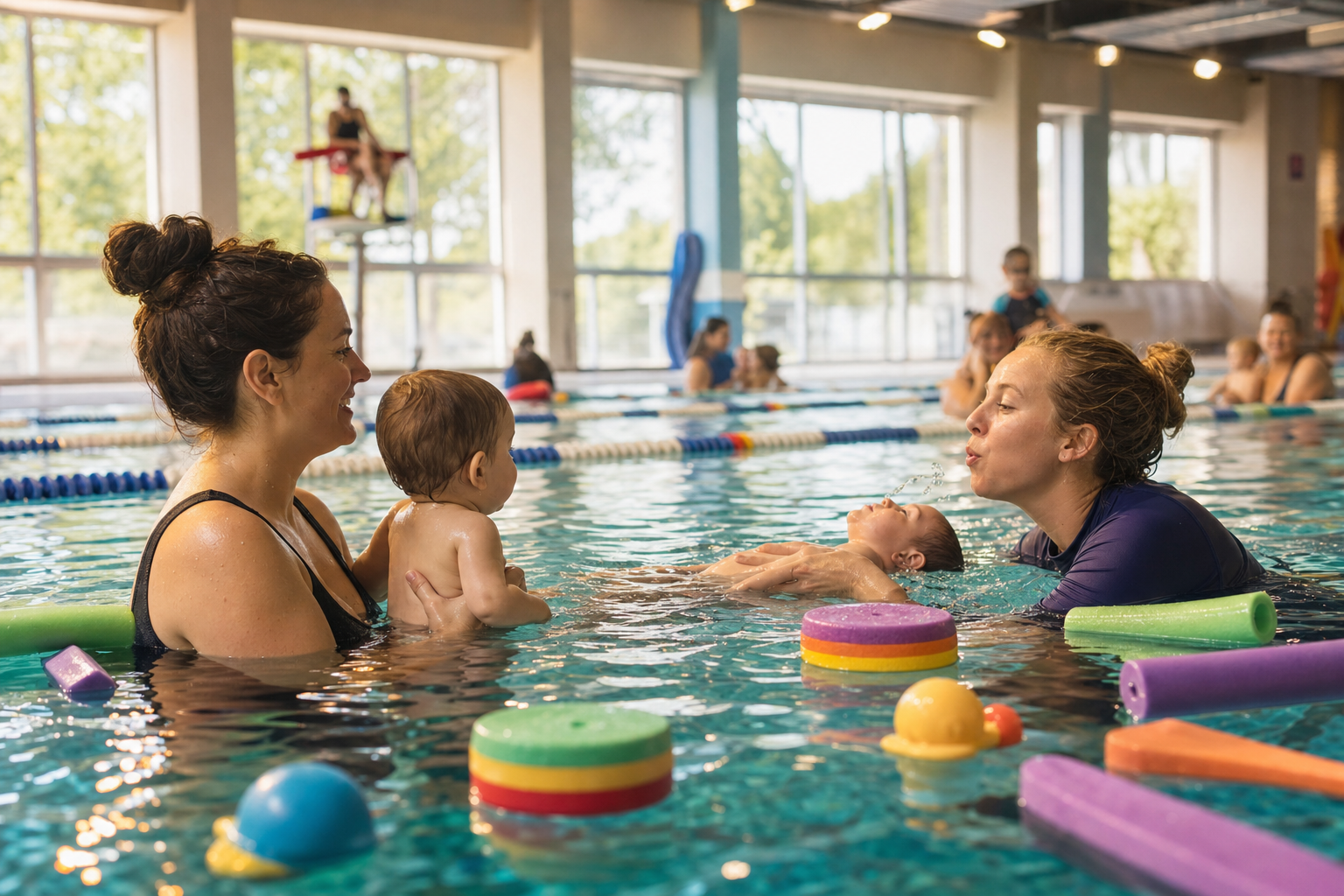
When your baby’s swim class report doesn’t come with a big checkmark, it doesn’t mean they’re failing. In fact, babies aged 6 to 36 months make progress every time they splash in the water—even if they don’t “pass” a level. What parents worried their child is behind need to know: comfort, trust, participation, and gradual exposure are the true markers of progress—not perfection or flawless performance.
What true progress looks like in infant and toddler swim lessons
From six months to age three, what counts most is confidence and comfort, not crossing pools or mastering strokes. In Red Cross parent-child classes, children up to three years old have parents or guardians in the water with them. These environments are safe and paced for each child.(redcross.org) At 6–18 months, you’ll see floating (with support), blowing bubbles, under-water exploration, and beginning leg kicks. By 18–36 months, toddlers often reach for toys underwater, paddle with arms, show breath control, and sometimes float independently—though still usually with support.
These milestones—comfortable being in water, experimenting with movement, showing curiosity rather than fear—are signs of “baby swim lesson progress.” If your child isn’t doing every activity yet, that’s okay. Early lessons are about building trust and reducing anxiety.
Age-appropriate signals of progress: what to expect from 6 to 36 months
Here’s a clearer guide to recalibrate expectations so you can celebrate wins even when skills seem slow:
6–12 months: At this stage, your baby holds their head up well, enjoys gentle splashes, tolerates water over face a bit, and begins simple kicking. Submersions, if offered, are very brief or entirely voluntary.
12–24 months: Toddlers explore actively, reach for objects underwater, might try push-off glides or tiny jumps into parent’s arms. Face submersion becomes more tolerated, floating may happen with minimal support.(babyswim.info)
24–36 months: Many toddlers can kick independently, glide a few feet with assistance, float back-to-front or front-to-back with less support, follow simple pool safety instructions, and may start attempting short swims or “swimming to the wall.”(babyswim.info)
If you want a structured way to build water confidence at home, the 10-Week Plan guides you step by step.
If skills seem stuck (for example, refusal of face submersion or floating), know that plateaus are totally normal. Nervousness, temperament, or even growth spurts affect coordination and willingness. It doesn’t mean your toddler is failing their class.
Why it’s normal (and okay) to repeat a level
When children are younger than 3 years, repeating levels or spending extra time on certain skills is not only common but often recommended. Skill acquisition in baby swim lesson progress depends heavily on frequency, consistency, and comfort.(inspiredswim.com)
[[ctababy]]
Parent-child aquatic programs are built around gradual exposure. Red Cross “Parent & Child Aquatics Levels 1 & 2,” ages 6 months to 3 years, orient little ones to the water and prepare them for the next steps—with no pressure to “pass” like in traditional school.(redcross.org)
Some swim schools offer structured programs like the 10-Week Plan from swimy.org, which focuses on comfort, repetition, and gradual skill building rather than speed or test-driven advancement. These kinds of plans help families see progress that matters—even if it’s not wrapping up a level in a single session.
Shifting comparison mindsets: because every baby is different
Many parents compare their child with older toddlers or classmates of different temperament and age. But development is rarely uniform. For example, a 12-month-old doing short glides isn’t directly comparable to a 30-month-old attempting independent kicks. Different milestones, different pace.
Comparison often leads to pressure, which turns a game into a test. Instead, watch for signs specific to your child’s age—like eagerness to enter the water, less crying or clinging, voluntary attempts to submerge face or float. These are real indicators of baby swim milestone achievements.(diventures.com)
Safety first: measuring progress with caution
It's important to state clearly: progress should never be measured by risky independence. Babies and toddlers are never expected to swim alone or to rely on confidence in the water for safety. All swim classes recommended by the Red Cross or similar organizations stress parent participation, constant supervision, and building safety awareness over distance or time alone.(redcross.org)
Also ensure water temperature is appropriate (warm pools for young children), sessions are short enough, and instructors are skilled in infant aquatic safety. Your baby’s reactions are reliable signals of readiness or overstimulation.
Tips for parents to support meaningful swim progress
You can do a lot at home or during class breaks to reinforce the right kind of progress. Be consistent—swim regularly, even if for just one class per week. Celebrate small wins like fewer tears, a deliberate kick, or holding face in water rather than demanding big skills immediately.
Talk to the instructor about what specific goals are realistic for your child this season. Look for programs that emphasize gradual exposure and sensory comfort over “passing a level.” Make sure your child sees you calm and confident—your mood matters.
Parents worried about “toddler failed swim lessons” or “baby not passing” should know: success in baby swim classes isn’t about a certificate. It’s about comfort in the water, trust in caregivers and instructors, engagement over fear, and gradually building skills at your baby’s pace. Keep your eyes on those age-appropriate signs of progress—those are the real “parent baby swim milestones” every parent should learn to value. Your child is not behind. They’re swimming on their own beautiful timeline.
120+ swimming exercises sorted by age — with video and instructions. Developed by swim instructors, completely free.

120+ swimming exercises sorted by age — with video and instructions. Developed by swim instructors, completely free.